The Newport I had pictured was green.
Manicured lawns, ocean light, white facades glimpsed through iron gates. Something out of Gatsby. I arrived at the end of March expecting spring.
When I stepped onto the Cliff Walk, the trees had no leaves.
Bare branches. Gray sky. The Atlantic came straight at me off the water. The estates began appearing to my left, and several were under construction — scaffolding, tarps, work signs. Nothing like what I’d imagined.
Then The Breakers came into view.
It wasn’t a ruin. But it felt like one. The building was intact, imposing, exactly as advertised. It stood alone on the cliff under a gray sky, waiting for a season that hadn’t come.
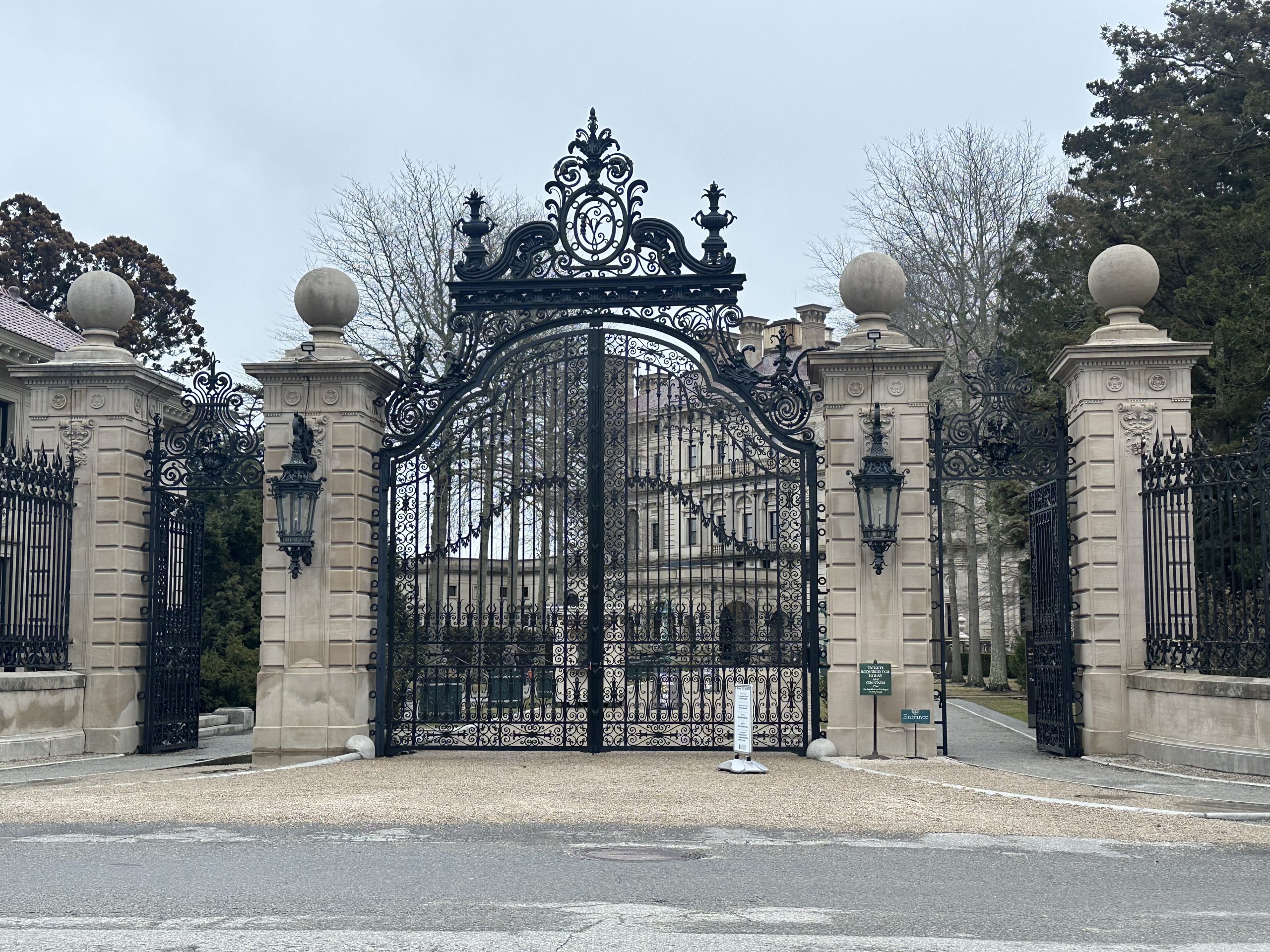
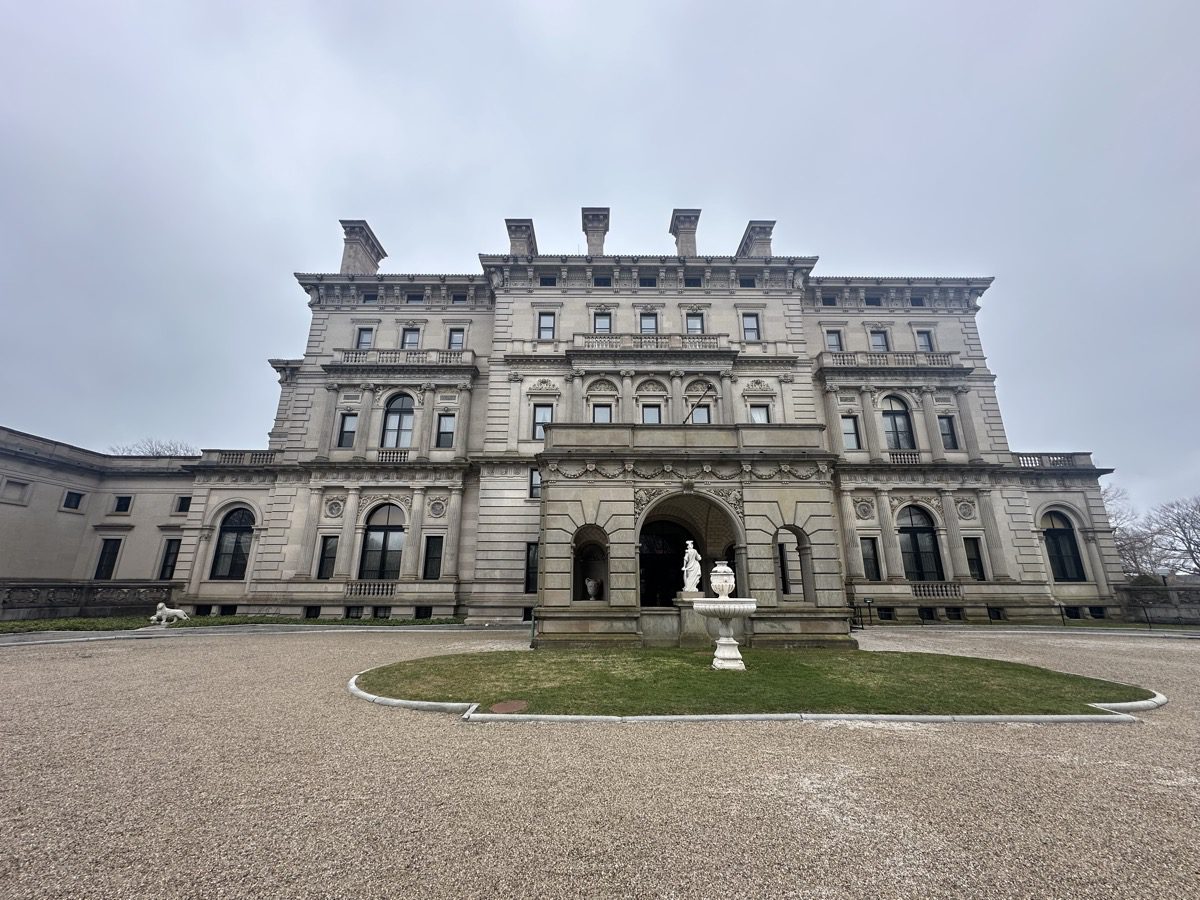
The Cottage
Cornelius Vanderbilt II built this house.
He was the grandson of the Commodore — the man who started with a borrowed boat and ended up controlling every railroad entering Manhattan, who built the original Grand Central Depot in 1871. Cornelius II purchased this site in 1885 for $450,000. Seven years later, the house that stood here burned down. He summoned architect Richard Morris Hunt and gave him one instruction: build something that cannot burn.
Limestone and steel. Not a piece of structural wood anywhere. The boilers were buried underground, away from the house entirely. Construction began in 1893 and finished in 1895.
Seventy rooms. Five floors. Fourteen acres on the cliffs above the Atlantic.
They called it a summer cottage.
Inside
The Great Hall stopped me first.
Fifty feet in every direction. A red-carpeted staircase curving upward through arches stacked on arches, the whole room designed to make an entrance worth making. Everyone around me looked up. So did I, at first.
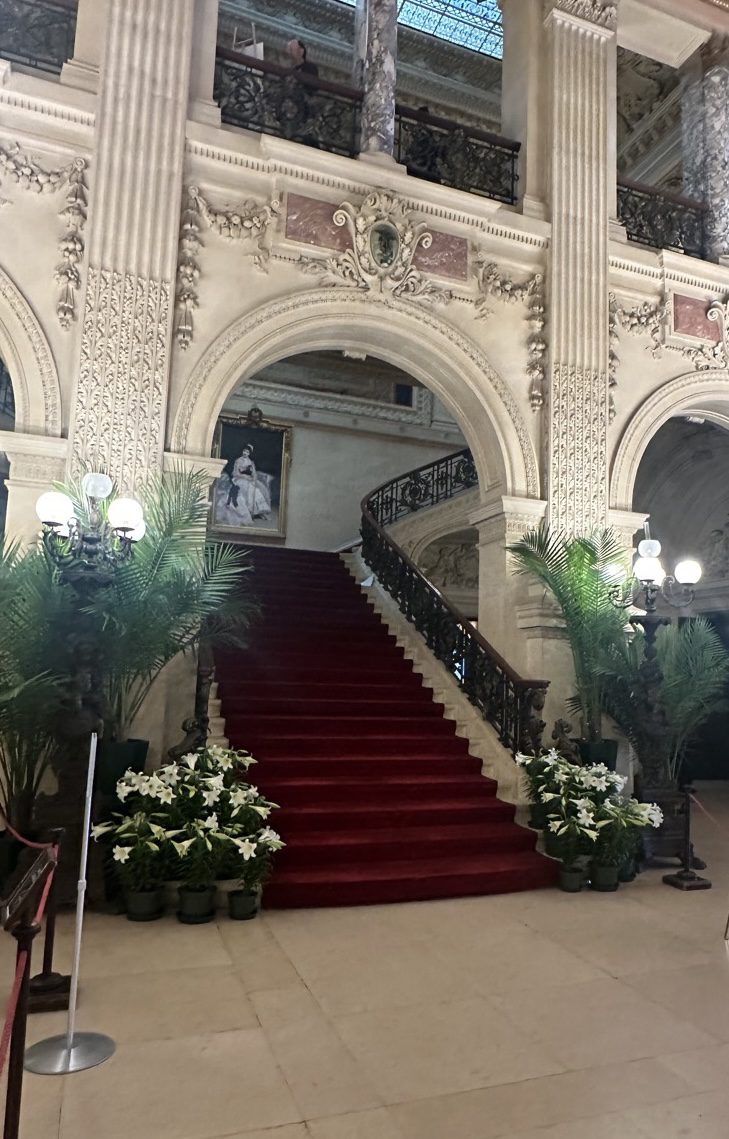
The rooms kept coming. Crystal chandeliers, gilded ceilings, crimson drapes, marble fireplaces. It went on and on.
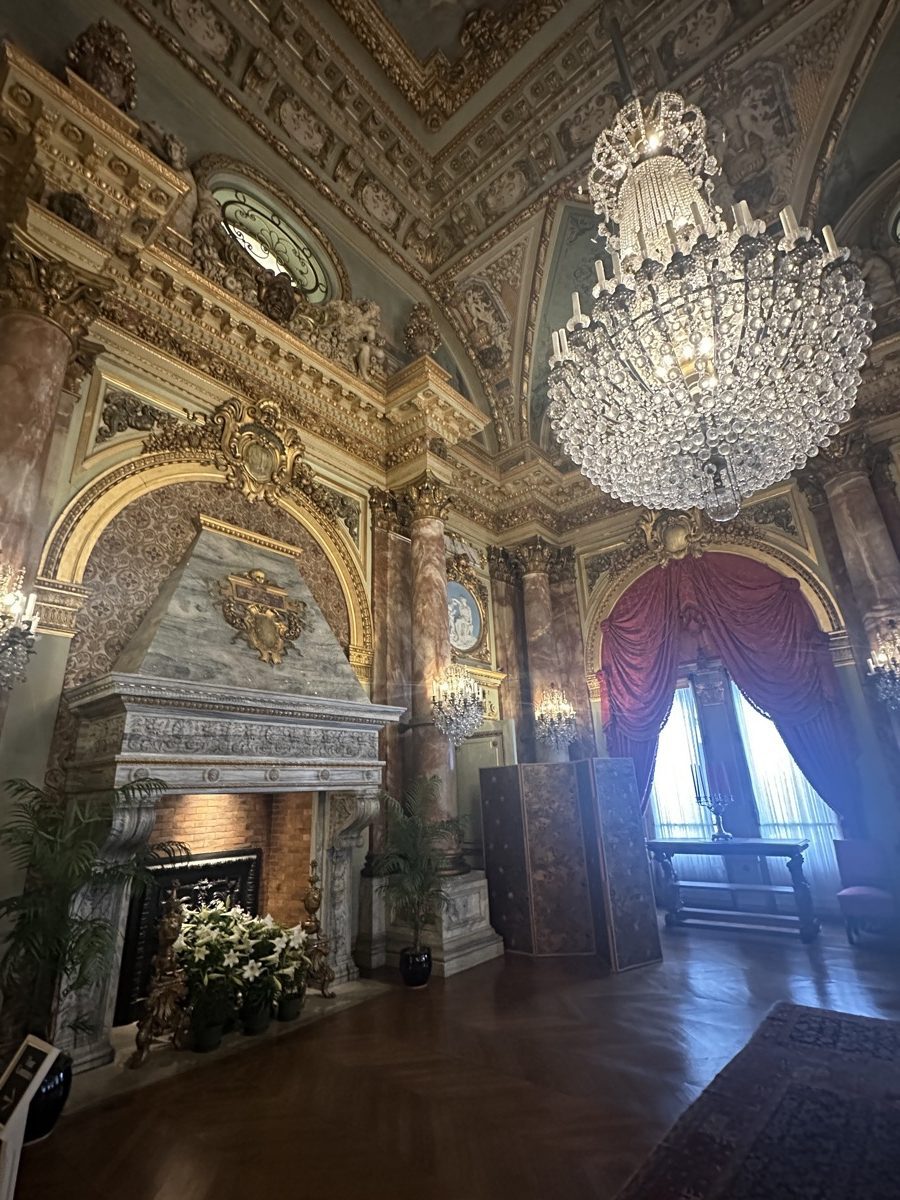
The materials were the finest available. The craftsmanship was beyond question. And yet something was missing. I couldn’t name it.
The Hidden Rooms
Then I stopped under the staircase.
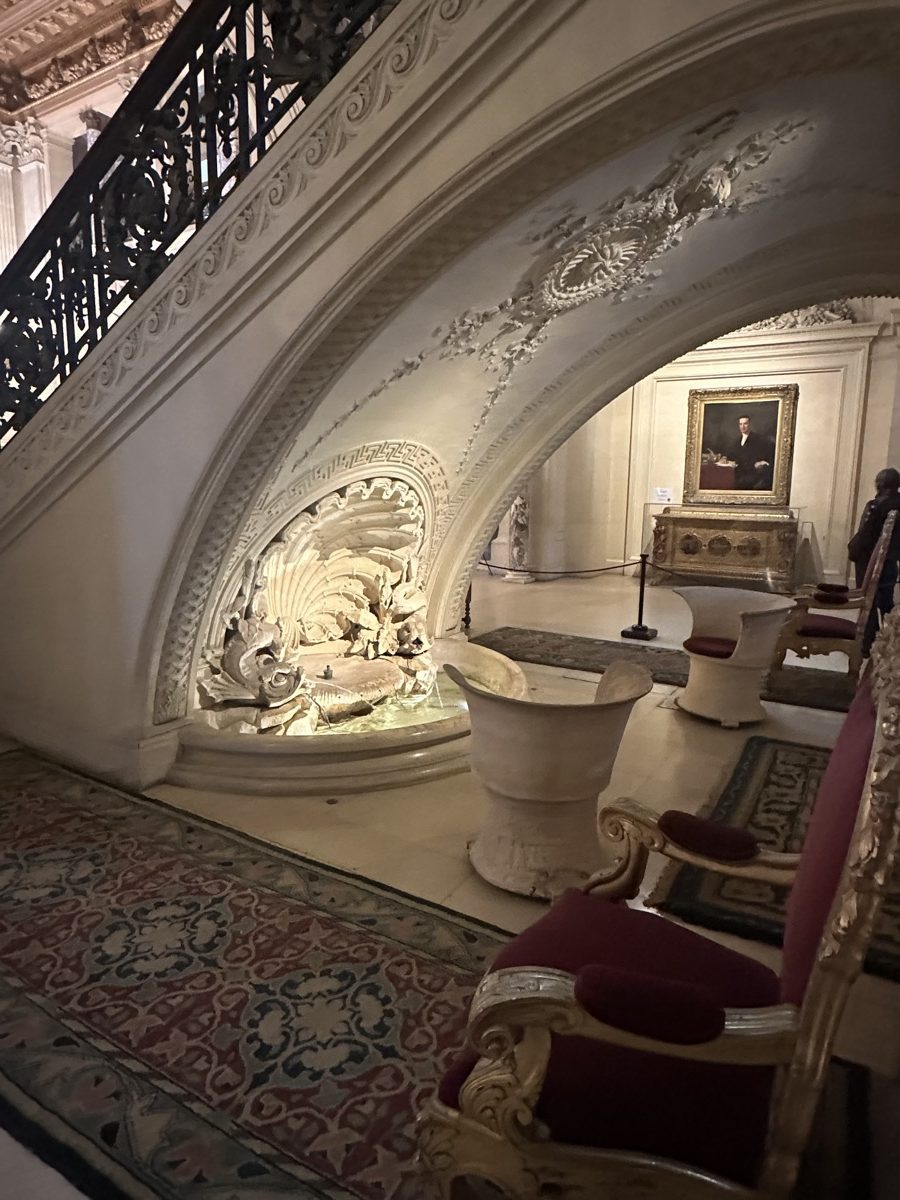
Set into an arch beneath the grand stairs was a grotto — a carved marble tableau of seashells and dolphins, lit from within, with water trickling somewhere inside. No one else stopped. The other visitors walked past without slowing. There was no sign pointing to it, no audio guide entry.
Nobody was going to notice it. That was, apparently, beside the point.
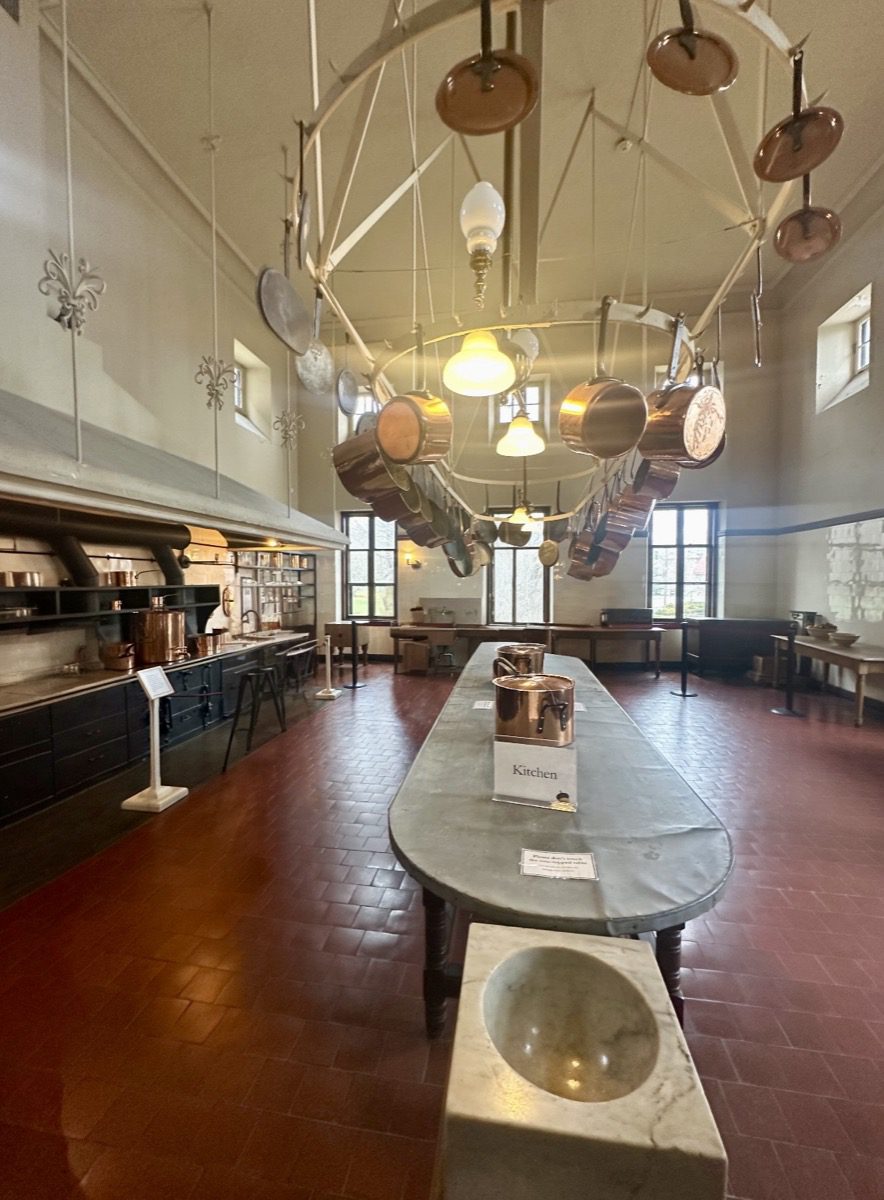
The kitchen was in a separate wing.
It had been built away from the main house as a fireproofing measure — nothing was going to burn this place down a second time. When I walked through the door, I had the distinct feeling of stepping somewhere I wasn’t supposed to be. Copper pots hung in rings from the ceiling. A cast-iron range the length of a wall. A zinc-topped work table. Terra cotta tile floors.
How many people worked in this room, I wondered. And did the family ever come in here — even once?
The guests certainly never did. The owners, probably not either.
The Acorn Again
On a column base nearby, I found an acorn.
The same emblem I had first noticed in Grand Central Terminal — carved into the clock, cast into the chandeliers, worked into the stone around the water fountains. The railroad terminal in the middle of Manhattan and the palace on the Newport cliffs, connected by the same symbol. Great oaks from little acorns grow.
I walked out to the ocean terrace. The wind was strong. Gray water, gray sky. No green anywhere. No Gatsby. But standing there, facing the Atlantic, I understood something about why this spot was chosen — why the house faces exactly this way. The wind and the water and the sheer fact of being here, above all of it. Everything else inside was decoration for this moment.
I was, I’ll admit, a little envious.
What Came After
Cornelius II lived in this house for four years after it was completed.
He died of a stroke in 1899. He was fifty-six. His wife Alice maintained the house alone for thirty-five years after that, until her death in 1934 at eighty-nine. By then the property taxes had risen to $83,000 a year. Their daughter Gladys inherited the house, but her husband — a Hungarian count — had his assets seized during World War II.
In 1948, Gladys opened the first floor to the public through the Preservation Society of Newport County, using the ticket revenue to cover maintenance costs. The Society purchased the house outright in 1972. In 2018, the last Vanderbilt descendant moved out of the third floor.
The house stayed. The family left.
When the Commodore died in 1877, his fortune was roughly $100 million. His son William doubled it — the only descendant who ever increased the family wealth. After that, the generations built. Then spent. By 1947, every Vanderbilt mansion on Fifth Avenue had been demolished. In 1970, the New York Central Railroad — the engine of the entire fortune — went bankrupt. In 1973, 120 Vanderbilt descendants gathered for a family reunion. Not one of them was a millionaire.
Great oaks from little acorns grow.
It had taken far less time to go the other way.
I walked back out onto the Cliff Walk. The Breakers was still there behind me, exactly as it had been. Wind off the water. Tourists with their cameras. The trees still bare.
Somewhere inside, beneath the grand staircase, a light was on in the grotto. The water was still trickling. Nobody was looking at it.
44 Ochre Point Avenue · Newport, Rhode Island
Open daily. Hours vary by season — verify at newportmansions.org before your visit.
Audio tour app available for download. Cliff Walk entrance is a short walk from the house.
Spring and summer are peak season. Late March visits offer smaller crowds — and a different kind of atmosphere.
Leave a Reply