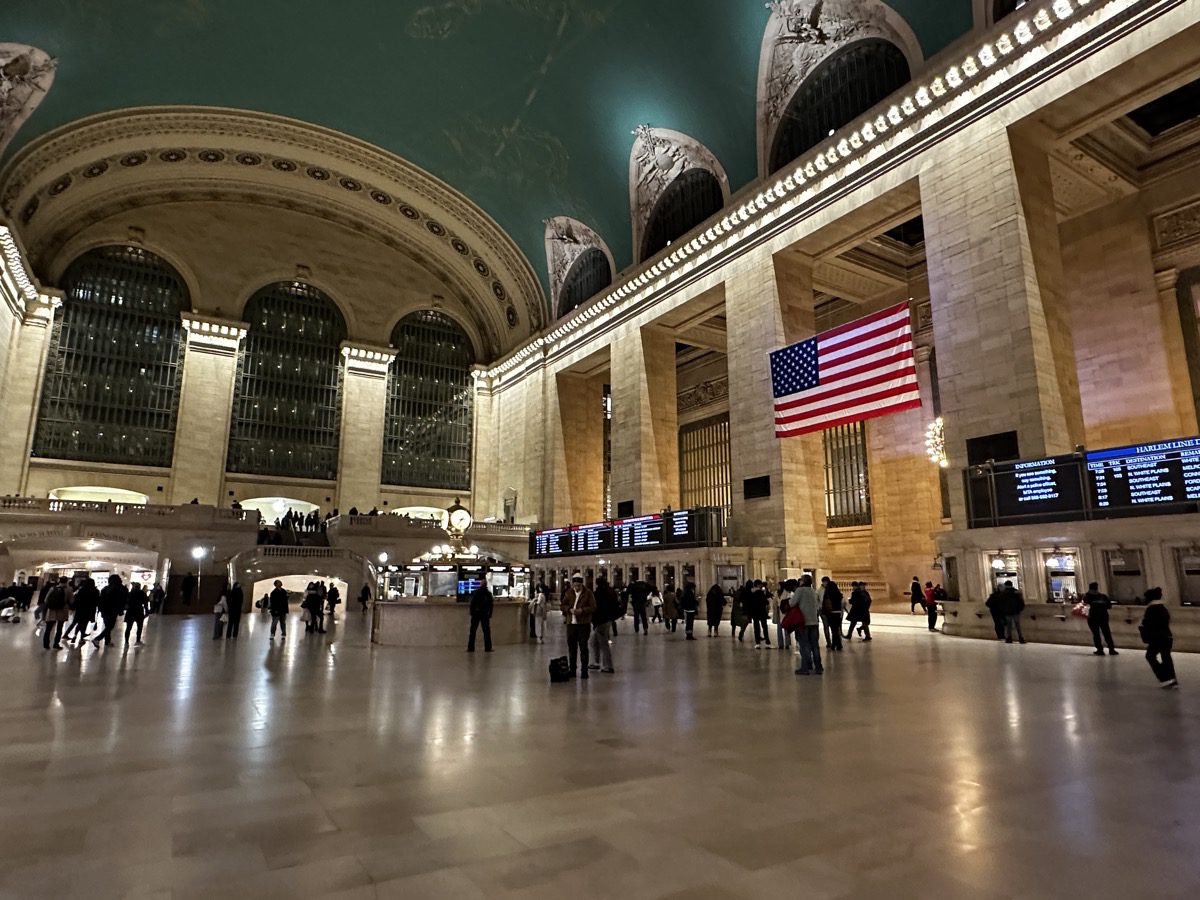
The first time I walked into Grand Central Terminal, I was taking notes.
It was an architecture class. The professor led us into the main concourse and pointed up at the ceiling. Beaux-Arts. Limestone. The proportions of the arches. I wrote it all down. And I saw nothing. At twenty, your eyes are too busy moving forward to actually look at anything.
That was twenty years ago.
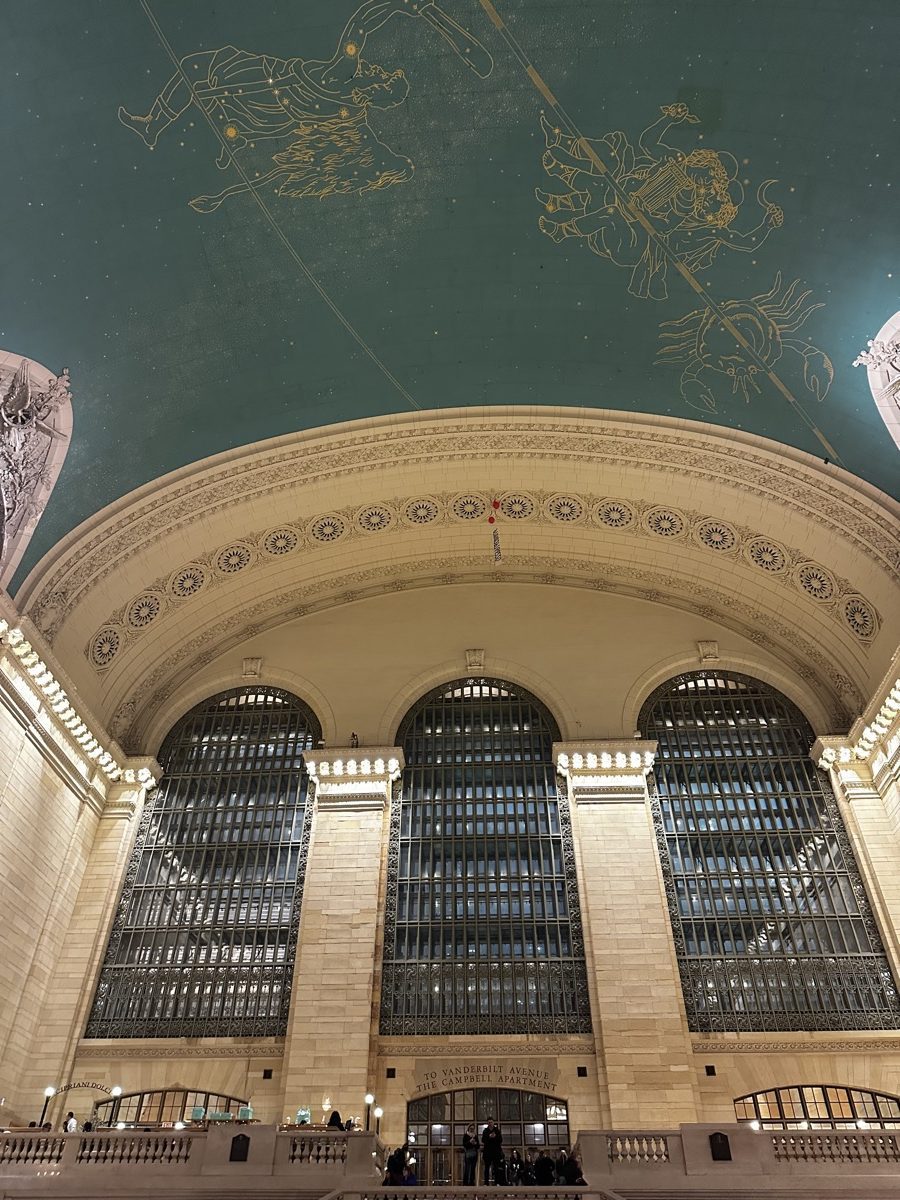
When I came back, I stopped in the middle of the concourse and looked up. The ceiling was higher than I had ever let myself notice. A turquoise vault scattered with gold constellations. Chandeliers pouring light down onto the floor. Everyone around me was moving. I wasn’t. So this is what he was pointing at. I had been standing right here, pen in hand, and missed it entirely.
There aren’t many buildings like this left in New York.
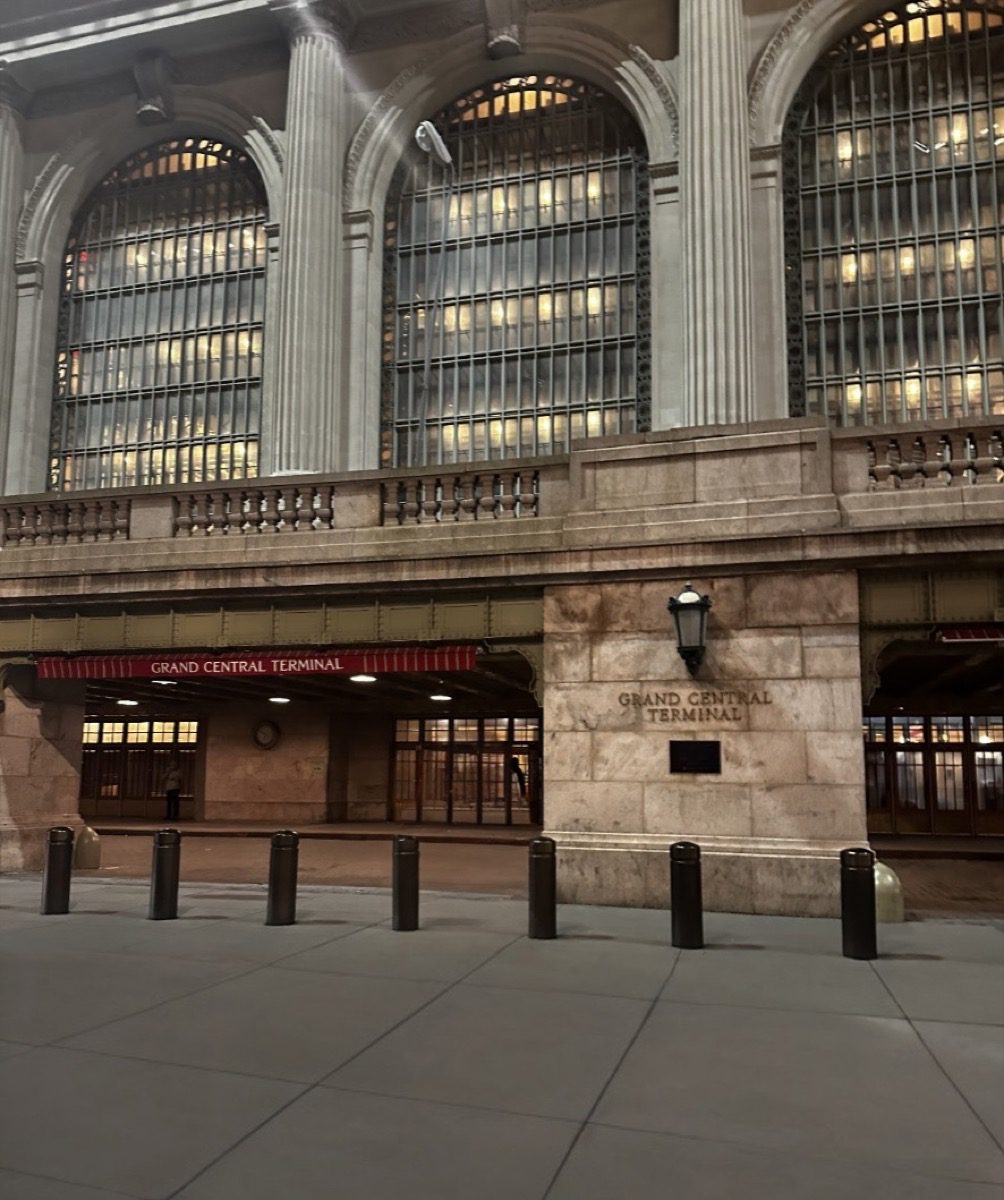
The Name
The name started showing up everywhere.
One Vanderbilt — the tower that went up directly beside Grand Central, with the observation deck that everyone in New York has been talking about. Summit. I rode the elevator up one afternoon, half-listening to the building introduction playing overhead. Vanderbilt. Through the glass, the city spread out below me. Directly underneath was the roof of Grand Central Terminal — I could see the whole shape of it from up there. I noted this with mild interest and moved on.
I didn’t ask whose name was on the building.
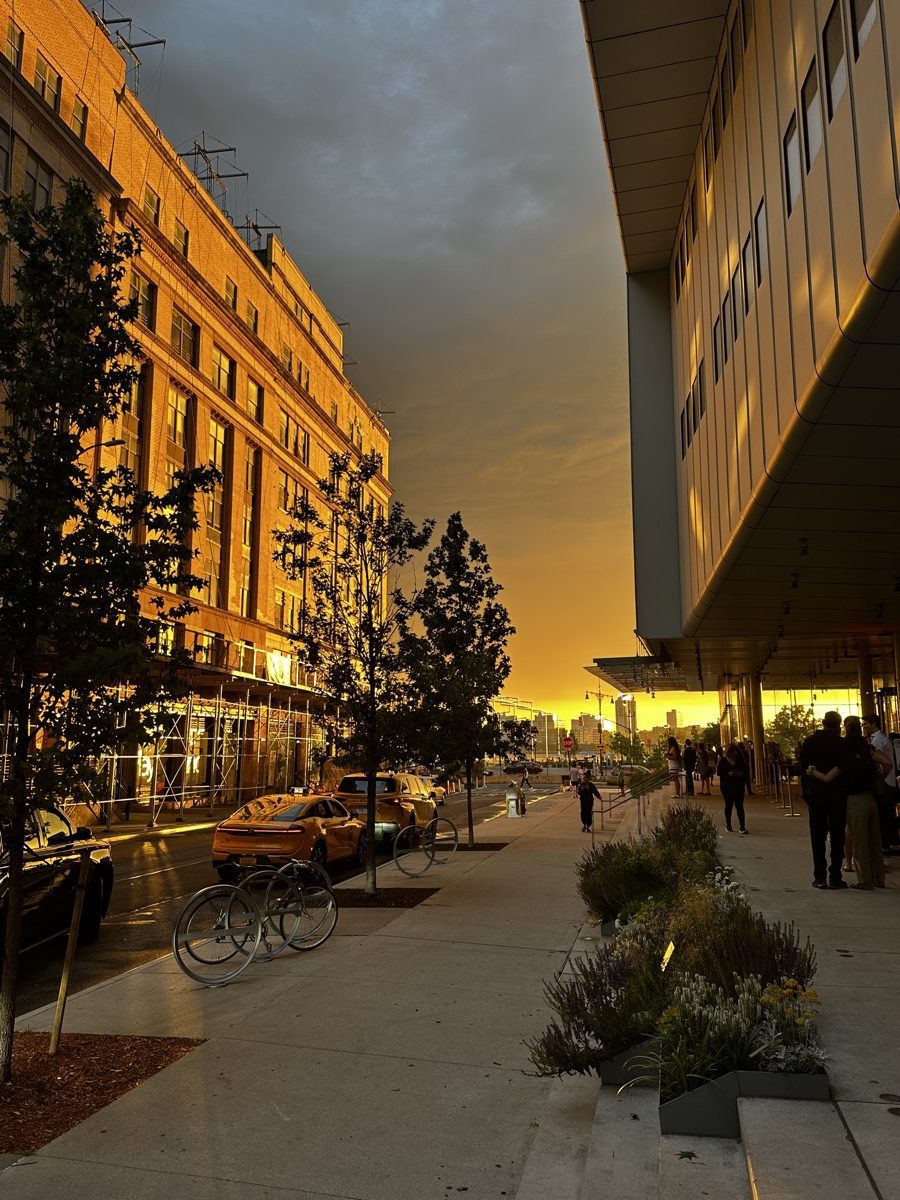
Then there was a face at the Whitney Museum.
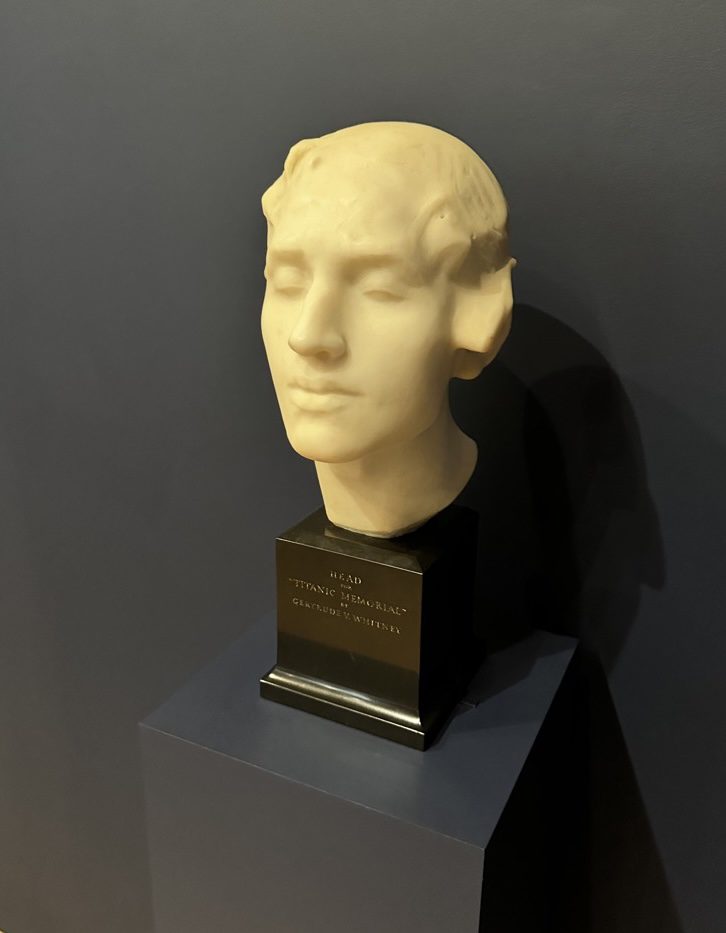
I was moving through a gallery when I stopped at a sculpture near the lobby. A marble head on a dark pedestal. The label read: Gertrude Vanderbilt Whitney. Head for Titanic Memorial, 1922. The museum is called the Whitney. Her other name was Vanderbilt. I read further. Gertrude Vanderbilt Whitney had tried to donate her collection to the Metropolitan Museum of Art. They said no. So she built her own institution, and put her name on it.
The label also said this: the work held personal significance because she had lost a brother in the sinking of the Lusitania during World War I.
Vanderbilt. Vanderbilt. Vanderbilt.
The name kept finding me. I heard there was a prominent university in Tennessee that carried it too. The dots were accumulating, scattered and unconnected.
Who exactly was Vanderbilt?
The Commodore
I found out while writing this blog.
I was researching Grand Central Terminal — following one document into another — when I stopped at a single line. Built by Cornelius Vanderbilt, 1871.
The building I first walked into as a student, pen in hand. The roof I had stared down at from the Summit without a second thought. The concourse I had walked through so many times it had become invisible to me, the way familiar things do.
It had all been Vanderbilt. From the beginning, before I knew to look.
Cornelius Vanderbilt was born in 1794 on Staten Island. His father ran a small boat, ferrying cargo across the harbor. Cornelius left school at eleven. At sixteen, he borrowed money from his mother and bought a single sailboat — a small vessel that crossed between Staten Island and Manhattan. Carrying passengers. That was how it started.
He moved from sail to steam. When competitors found him too difficult to beat, they paid him — substantial sums — simply to leave their routes alone. He took the money and opened new ones. By his fifties, he had turned his attention to railroads, acquiring the Hudson River Railroad and the New York Central by 1867 and consolidating effective control over every rail line entering Manhattan. His peers called him the Commodore — a naval honorific that had followed him since his days on the water. A title for a man who had started with one borrowed boat.
In 1871, he opened Grand Central Depot at 42nd Street, at what was then the northern fringe of developed Manhattan. His own advisors thought he was building too far out. He built it anyway. When he died in 1877, his fortune was estimated at roughly $100 million — equivalent, by some calculations, to one-eighty-seventh of the entire U.S. money supply.
The Building
The building we stand in today is not the one Cornelius built.
He died in 1877. The current terminal was designed starting in 1903 and opened in 1913, financed by the generation that followed him. One of the two firms brought in to design it — Warren & Wetmore — was co-founded by Whitney Warren, a cousin of the Vanderbilt family. The family had a hand in choosing who would build their monument, and then made sure that monument knew whose it was.
Vanderbilt Hall. Vanderbilt Avenue. The name is worked into the building at every turn.
And yet the man himself stands apart from all of it. Cornelius Vanderbilt’s bronze statue — eight and a half feet tall — is mounted on the terminal’s south facade, above the Park Avenue Viaduct. Cars pass beneath him at speed. Almost no one looks up. He stands there watching over a building that carries his family’s name in a dozen places, from a spot the city has largely forgotten to notice.
The Acorn
I stood in the main concourse and looked up one more time.
The constellation mural covers the full vault — turquoise ground, gold stars, the sweep of the zodiac. But the stars are backwards. East and west are transposed; the whole map is a mirror image of the actual sky. Shortly after the terminal opened in 1913, a commuter wrote in to point this out. The Vanderbilt family’s response was brief: the ceiling had been painted from God’s vantage point, looking down at the constellations from beyond them. The real explanation is simpler. The painter had laid his sketch flat on the floor while he worked, and the image came out reversed. The family knew this. They kept the other story anyway.
It was only after all of this that I noticed the acorns.
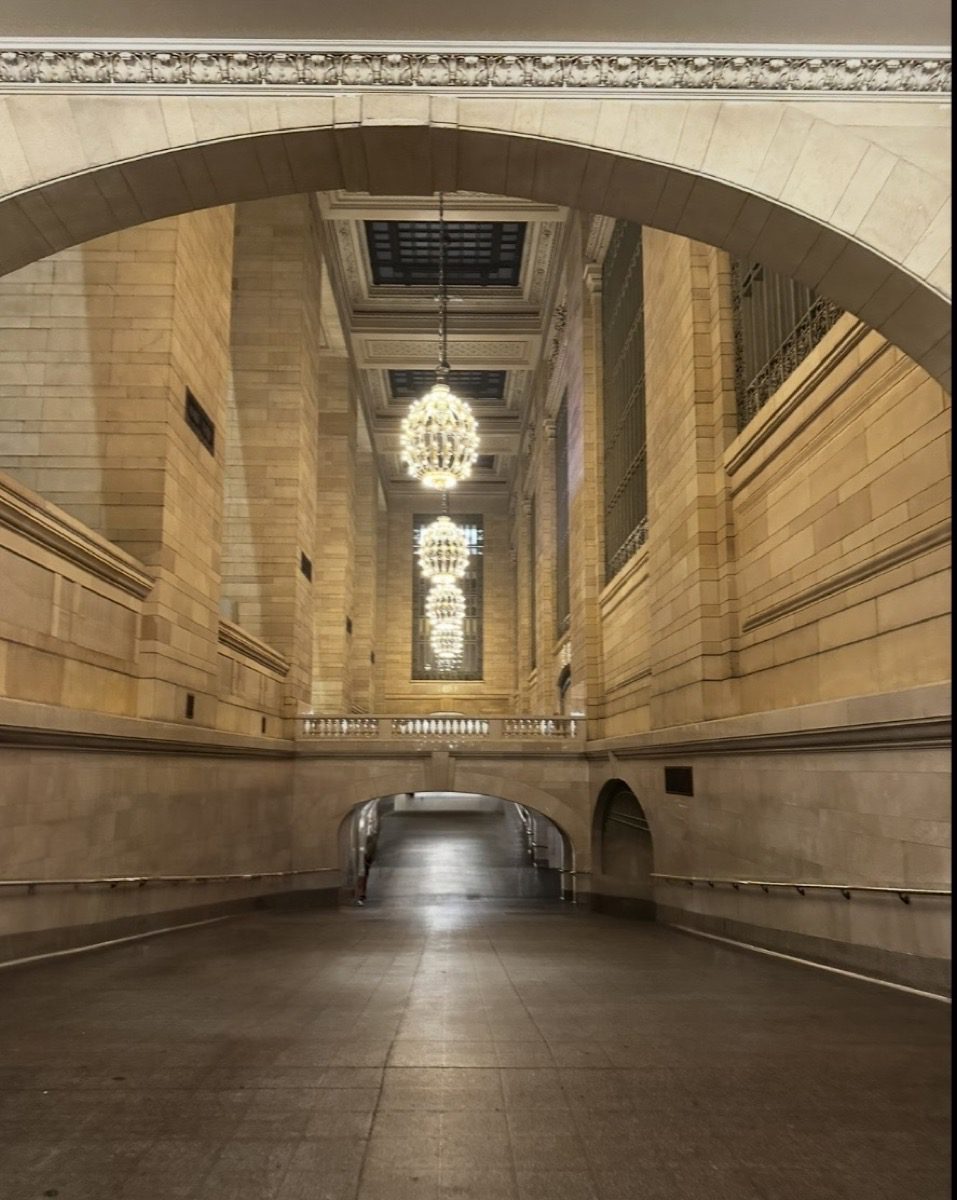
They are everywhere in Grand Central, hiding in plain sight: carved into the column bases, cast into the chandeliers, set atop the four-faced clock at the center of the concourse, worked into the stone around the water fountains. The Vanderbilt family emblem. A dynasty that had built itself from nothing — no inherited title, no ancestral crest — chose its own symbol, along with the motto that came with it.
Great oaks from little acorns grow.
When Cornelius Vanderbilt adopted that motto, he was narrating his own life. A borrowed sum. A single boat. A fortune that would make him, by some measures, the second-wealthiest individual in American history. He wasn’t wrong.
The acorn became the oak. What came after is a different story — and it’s in Newport.
Leave a Reply