Morgan: The Room He Built for HimselfManhattan was empty that day. Wind chill of minus twenty-three. I needed to be inside something. I opened a door — and found a Renaissance church on 36th Street.
That day, Manhattan was empty.
Wind chill of minus twenty-three. I know every season this city has. I had never seen streets like that. I needed to be inside something.
I opened a door — and the room was full. Same city, different world. Everyone quiet, all of them looking up.
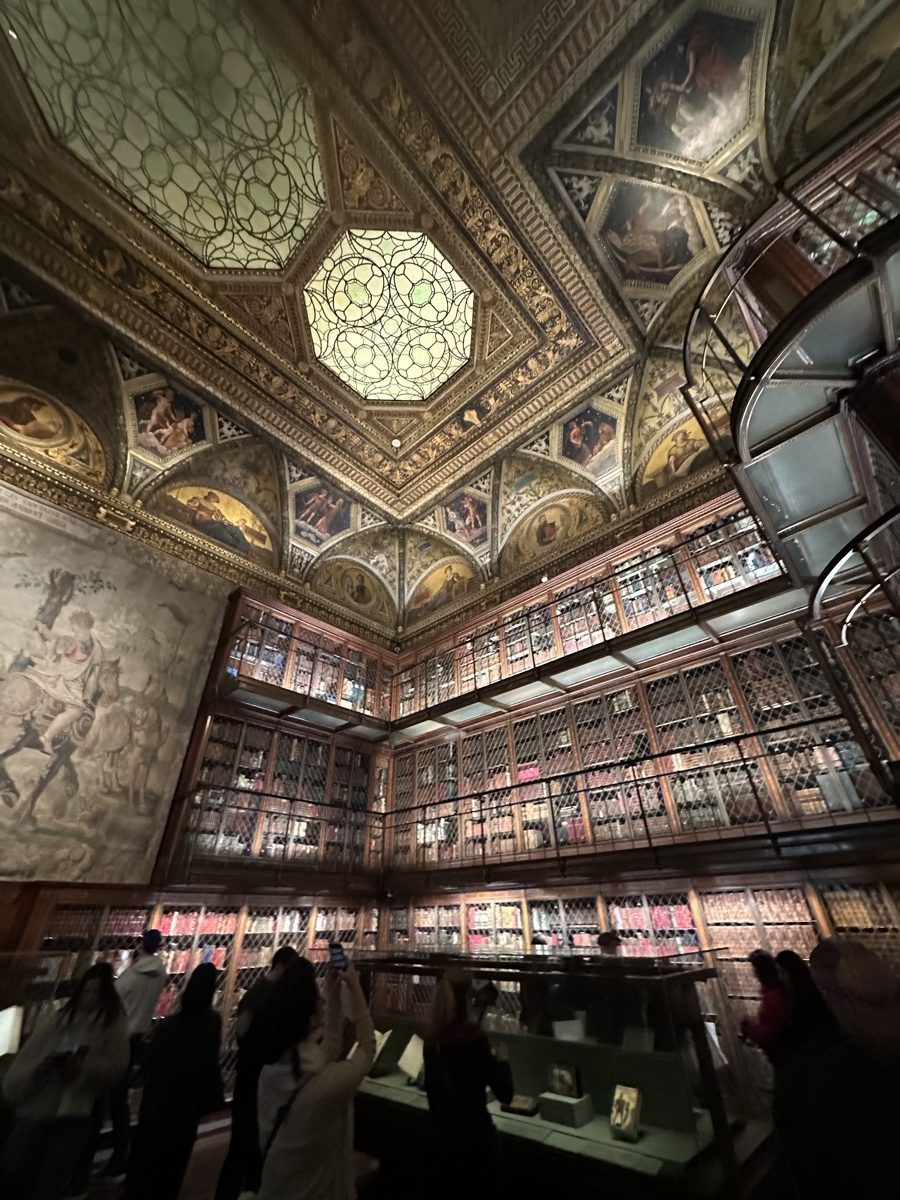
The ceiling stopped me.
Frescoes. Gold lattice. A stained-glass skylight at the center. It felt like a Renaissance church. Someone had built this on 36th Street in 1906, when the rest of Manhattan was racing toward the sky.
The moment the door opened. Everyone was looking up. Photo: Serendipity Gaze.
The Study
Pierpont Morgan built this as a private study. Not open to anyone. The man who ran the American economy from 23 Wall Street came here afterward — alone, after hours. Outside, he explained nothing. This room was no different.
He traveled Europe constantly, and everywhere he went he found things that had lasted centuries. Cathedrals. Monastery libraries. Illuminated manuscripts. The numbers on Wall Street change every morning — he knew that better than anyone. The space he made for himself looked like the Renaissance.
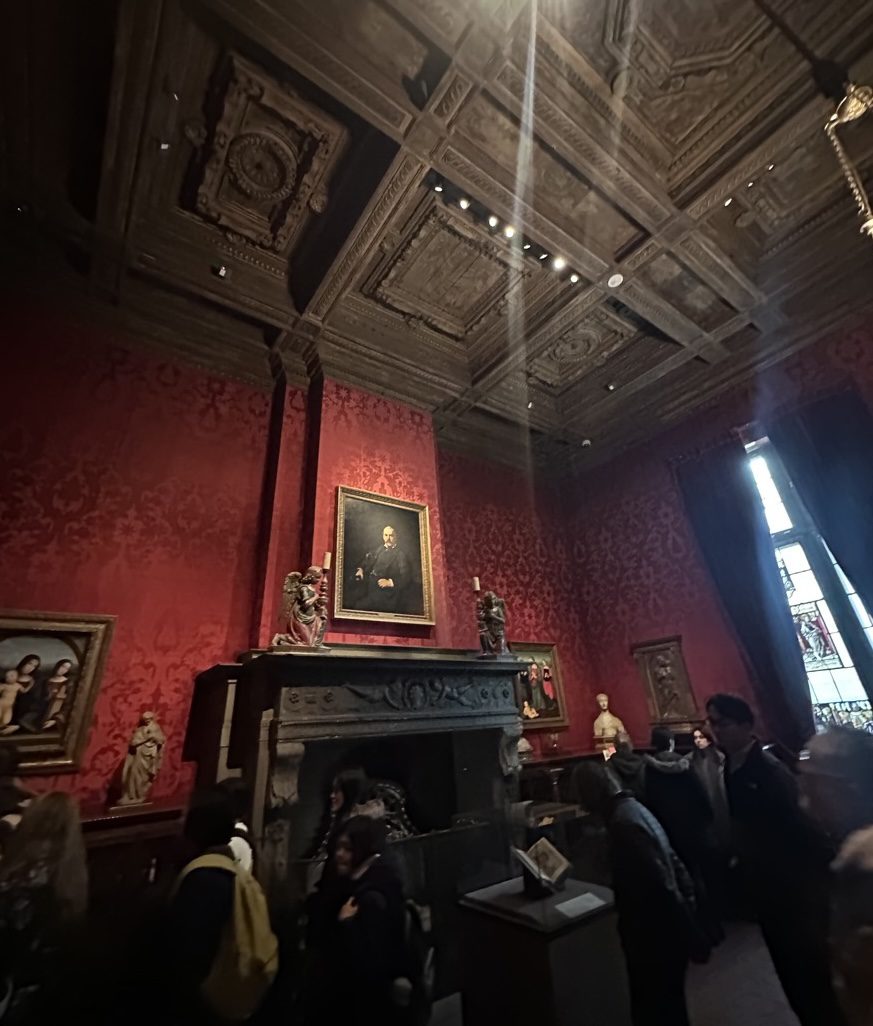
There is a red room. Walls in damask, a black marble fireplace, and above it — his portrait. Morgan sits with his hands folded. Not looking at the camera. Visitors took photographs in front of him. He still didn’t look.
What did he think about, alone in this room.
The red room. His portrait above the fireplace. He is not looking at the camera. Photo: Serendipity Gaze.
The Collection
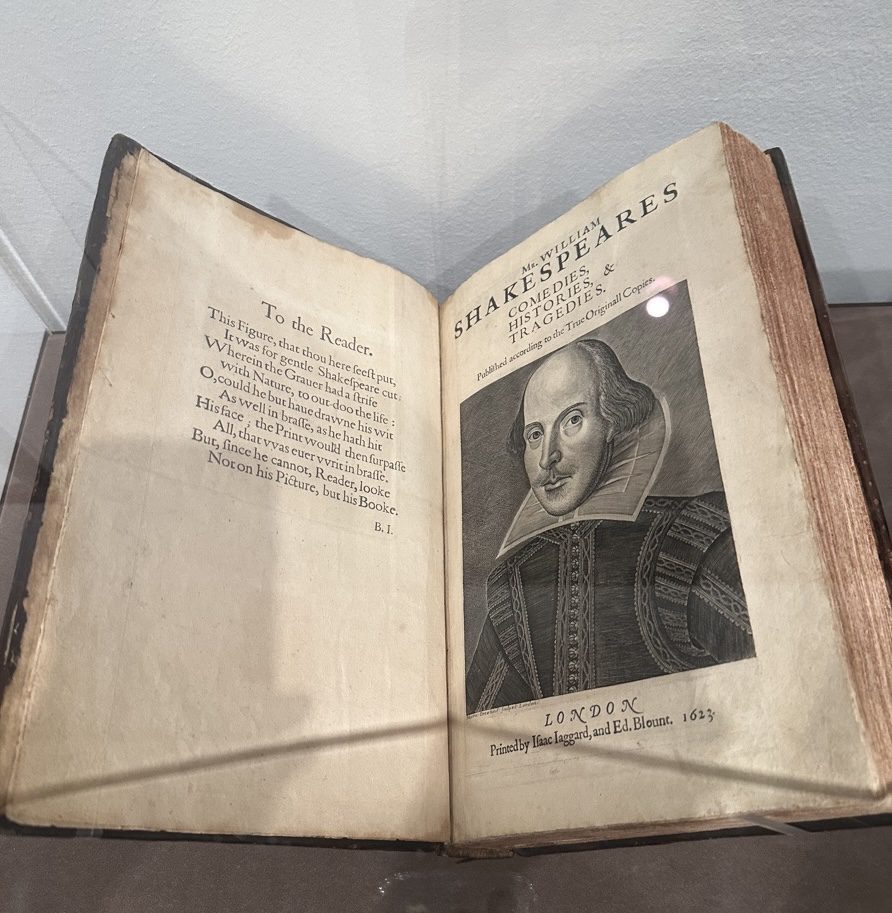
Inside a glass case, a book.
1623. Seven years after Shakespeare died, two of his fellow actors gathered his plays into a single volume — the first time anyone had. The First Folio. Two hundred and thirty-five copies survive in the world. One of them was here, in a building on 36th Street, because Pierpont Morgan bought it.
He bought Beethoven manuscripts. A medieval Book of Hours made in Paris in the 1460s. A handwritten letter from Einstein, dated 1917, working through what would become his theory of spacetime. A Gutenberg Bible. He acquired them from auction houses, from European aristocratic families, from monasteries that needed the money.
People called him a collector. He didn’t like the word. He preferred to say he was preserving things. Whether that distinction matters is hard to say. What’s harder to explain is this: the man who single-handedly stopped the Panic of 1907 — who the President telegrammed, who assembled twenty-five million dollars in ten minutes — came here in the evenings and turned the pages of a book printed four hundred years ago.
What was he looking for.
Shakespeare First Folio, 1623. One of 235 surviving copies in the world. Photo: Serendipity Gaze.
The Last Chapter
He died in a Rome hotel in 1913. When his estate was valued, people were surprised — more than half of it was art. Not securities. Not real estate. Paintings, books, musical scores. His son gave much of the collection to the Metropolitan Museum. The rest he left with this building, for whoever wanted to come.
The room he had never opened to anyone became, at last, a place anyone could enter.
I stood there for a long time, looking up. The ceiling hadn’t changed. The frescoes were the same ones he had chosen, the same ones he had sat beneath, alone, after the markets closed. Why he built his Renaissance here — on 36th Street, in a city that had no use for the past — I never worked out.
Maybe he hadn’t either.
Did You Know — The Carnegie Connection
The most consequential business deal in American history was negotiated in this building. In 1901, Morgan purchased Carnegie’s steel empire for $480 million — more than the entire annual budget of the United States government at the time. The company that emerged, U.S. Steel, was the world’s first billion-dollar corporation.
Gaze’s Pick — Where to Stay
The Fifth Avenue Hotel250 Fifth Avenue · NoMad · $$$$The building was designed by McKim, Mead & White — the same firm Morgan hired to build his library. A Gilded Age bank building, now a hotel. Same era, same architects, a different kind of collection.Explore →
Taste — Where to Eat
Keens Steakhouse72 West 36th St · Midtown · $$$$Founded in 1885, five minutes from the Morgan Library on foot. J.P. Morgan was a regular — he kept his pipe here, checked in with the pipe warden after dinner, as members did. Ninety thousand clay pipes still hang from the ceiling. His is one of them.Explore →
Plan Your Visit
225 Madison Avenue, between 36th and 37th Streets · Subway: 6 to 33rd St
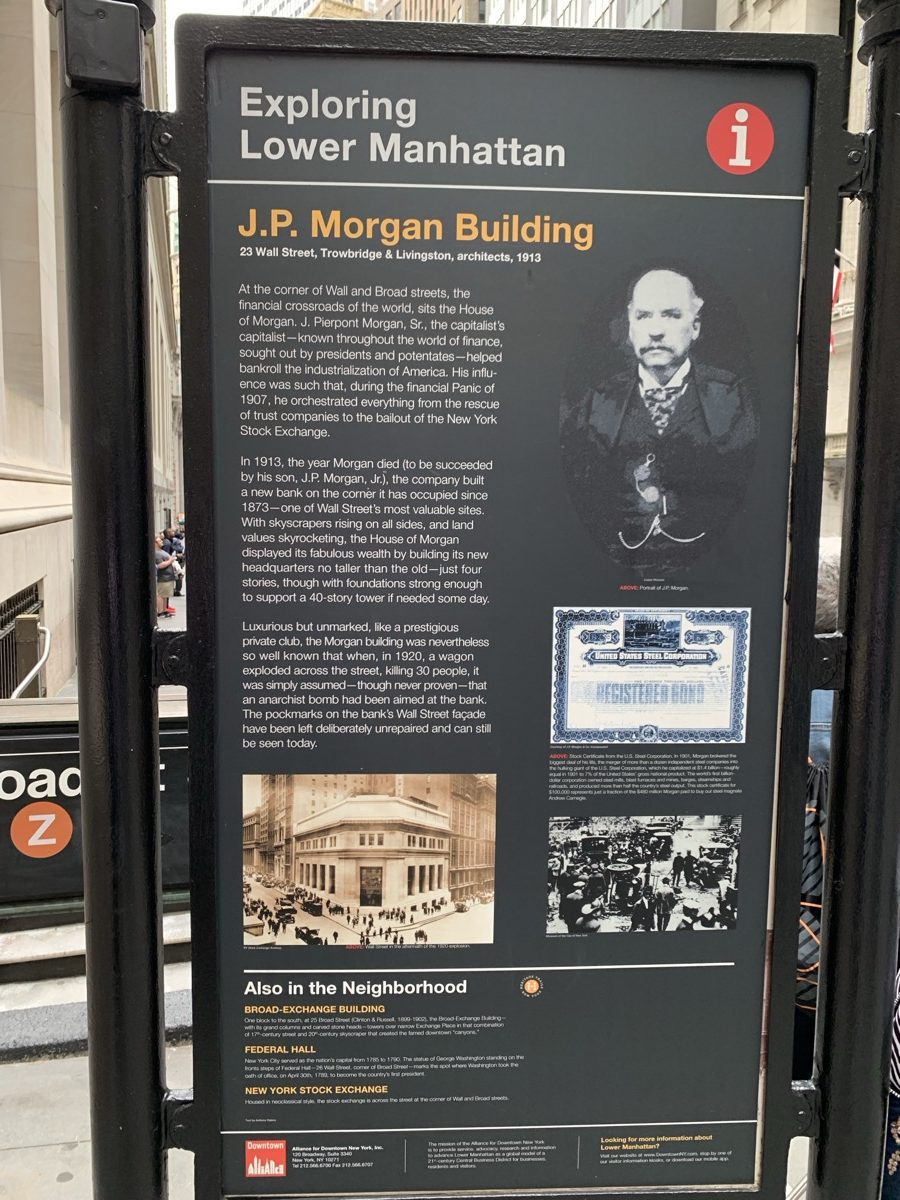
The Man Who Had No Name on the DoorEvery tourist on Wall Street faces the same direction. I turned the other way — and found a building with no sign, no name, and small holes in the stone I couldn’t explain.
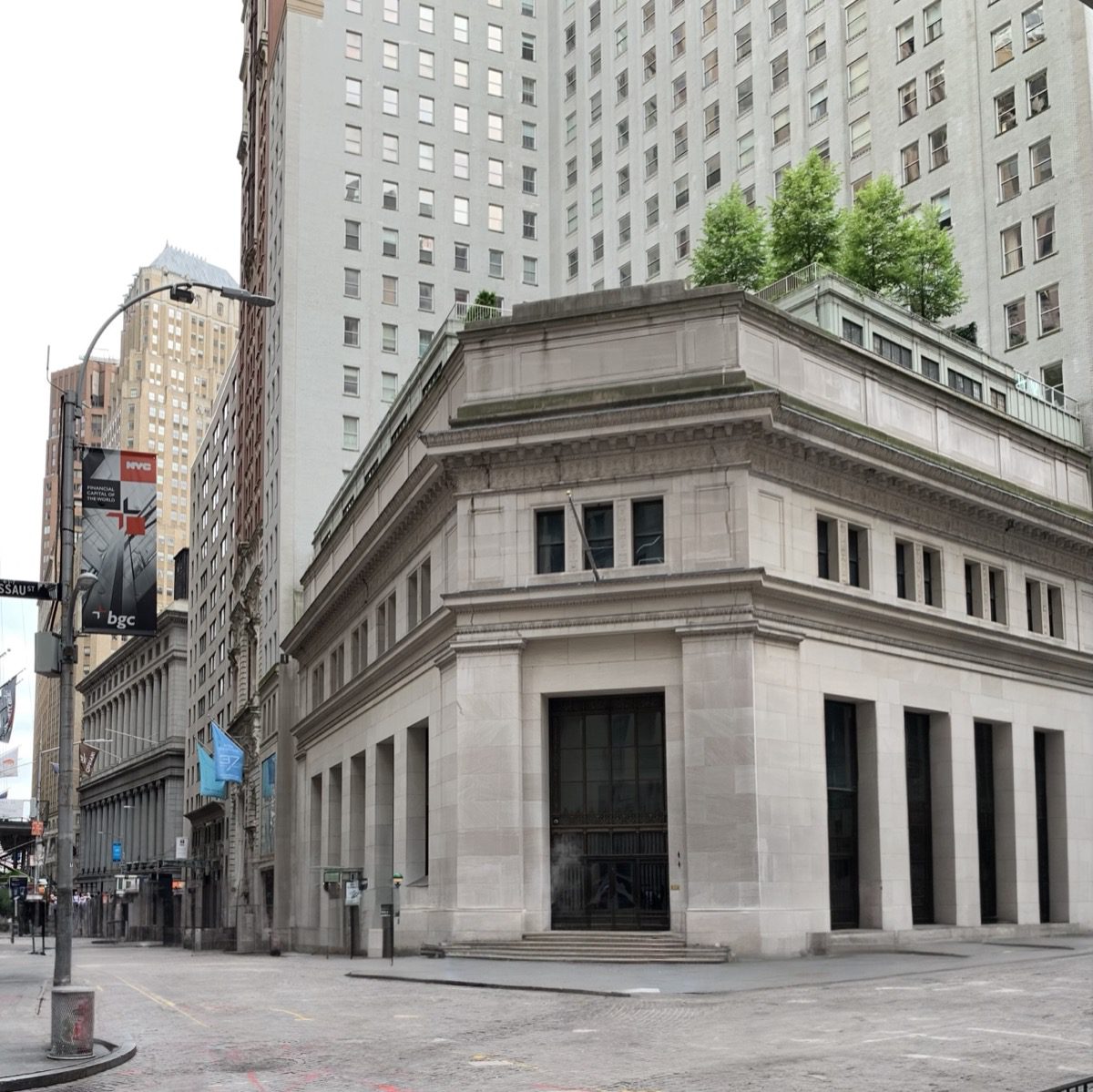
The building at the corner of Wall and Broad has no name on the door. Four stories of pink Tennessee marble, barely visible between the towers. I almost didn’t stop.
Something made me take a photo anyway. I didn’t know why at the time.
The Corner
Every tourist on Wall Street faces the same direction. The New York Stock Exchange — columns, flags, the whole performance. I turned the other way.
No sign. No logo. A low marble building that seemed almost out of place, dwarfed by everything around it. And scattered across the facade, small holes in the stone. Irregular. Deliberate-looking.
I took the photo and kept walking.
23 Wall Street. The Corner. No name, no sign — and for a long time, none was needed. Photo: Serendipity Gaze.
The Question
Back home, I looked it up. Two things didn’t make sense.
Why four stories. This was the most expensive piece of land in America. Skyscrapers were going up on every side. Wall Street’s logic has always been vertical. Morgan built four floors. He did engineer the foundations to support forty.
He just didn’t feel the need to go any higher.
And why no name on the door.
Because everyone already knew. In New York, in London, anywhere serious money moved — this corner required no introduction. There is a kind of power that announces itself by refusing to announce itself. J.P. Morgan understood this better than anyone.
The only explanation the building ever offered. Photo: Serendipity Gaze.
The Panic
In the autumn of 1907, the President of the United States sent a telegram to a private citizen.
Do whatever you think is necessary.
The man was seventy years old. He was playing cards.
The economy had been unraveling for weeks, starting with a single mid-sized bank — Knickerbocker Trust — and a rumor that it had lost everything on a copper bet. No one had time to verify it. The lines outside told their own story. People withdrew what they could before realizing, too late, that the money was already gone.
Knickerbocker failed within three days.
The contagion moved fast. The president of the New York Stock Exchange came personally to find Morgan. He said the Exchange might have to suspend trading by afternoon. There was no money left.
Morgan looked up. “How much?”
“Twenty-five million dollars.”
He had it assembled in ten minutes. The Exchange stayed open.
The panic wasn’t finished. Morgan began calling the city’s senior bankers to his private library — locking the door, working through the nights, deciding who would be saved and who would be allowed to fail. On one side of the room, men in evening clothes stared at ledgers until dawn. Morgan played solitaire. When someone approached to report on the situation, he answered without lifting his eyes from the cards.
Everyone was waiting on that answer. The President. The bankers. The country.
An agreement was reached. The panic subsided.
He had never held office. Never been appointed to anything. Just a seventy-year-old man with a card game and a room full of frightened executives.
The President who sent that telegram was Theodore Roosevelt — the great trust-buster, the man who spent years fighting the power of people like Morgan. When the moment came, there was no one else to call.
Congress drew the obvious conclusion. In 1913, the Federal Reserve was created to do permanently what Morgan had done once, informally, at his own discretion. That same year, Morgan died in a hotel in Rome. Seventy-five. He never saw the building completed.
The day his body passed through Wall Street, the stock market closed for two hours. The kind of honor usually reserved for heads of state.
His library still stands. 36th Street, Midtown.
The Bomb
Seven years after his death, someone tried to leave a mark on the building.
During the First World War, J.P. Morgan & Co. had served as the official purchasing agent for the British and French governments — brokering some three billion dollars in war supplies. To certain people, that made it a symbol worth targeting.
September 16, 1920. Just after noon. A horse-drawn cart pulled up across from 23 Wall Street and stopped. The driver stepped down and walked into the lunch crowd. Minutes later, it exploded. Thirty-eight people died. The perpetrators were never identified. The case is still open.
J.P. Morgan & Co. opened for business the next morning. They decided not to repair the marks in the marble. They would stay exactly as they were.
Those are the holes I photographed without knowing what they were.
Stand in front of that wall and you might feel both things at once — the pride of a man who never felt the need to justify himself to anyone, and the rage of someone who needed, just once, to leave a mark on something that refused to be marked.
Did You Know — The Name Behind the Name
The “Chase” in JPMorgan Chase traces back to a company founded in 1799 by Aaron Burr — the man who killed Alexander Hamilton in a duel. Two hundred years later, the two names merged into the world’s largest bank. The history of that duel is still in the name.
Now
The building has been empty for over thirty years. Various plans came and went — condominiums, a retail flagship, a bowling alley. All of them collapsed into legal disputes. The current owner is Sonangol, the Angolan state oil company. The most consequential address in American financial history sits largely vacant.
Did You Know — 23 Wall Street, 2024
The building that once needed no name now has no name — in a different sense. Its current owner is Sonangol, Angola’s state oil company. A bowling alley, a fitness chain, a luxury retailer: every prospective tenant has ended in litigation. It remains empty.
The name J.P. Morgan still appears on the world’s largest bank. The Morgan family has had no involvement with it since the mid-1970s.
A name without a dynasty. A building without a name.
Gaze’s Pick — Where to Stay
The Wall Street Hotel88 Wall St · Financial District · $$$$The building’s predecessor was the Tontine Coffee House — where, in 1792, a group of merchants drafted the rules that became the New York Stock Exchange. The very institution Morgan saved a century later. Travel + Leisure named it the top hotel in New York City in 2023.Explore →
Taste — Where to Eat
Saga70 Pine St, 63rd Floor · Financial District · $$$$Two Michelin stars. The dining room sits sixty-three floors above the Financial District — which feels, after a post about a man who built four stories when everyone else was building forty, like exactly the right place to end the evening.Explore →
The Cost of EverythingHe built an empire. The world tried to dismantle it. But on the day they did — he became the richest man in human history.
The Money
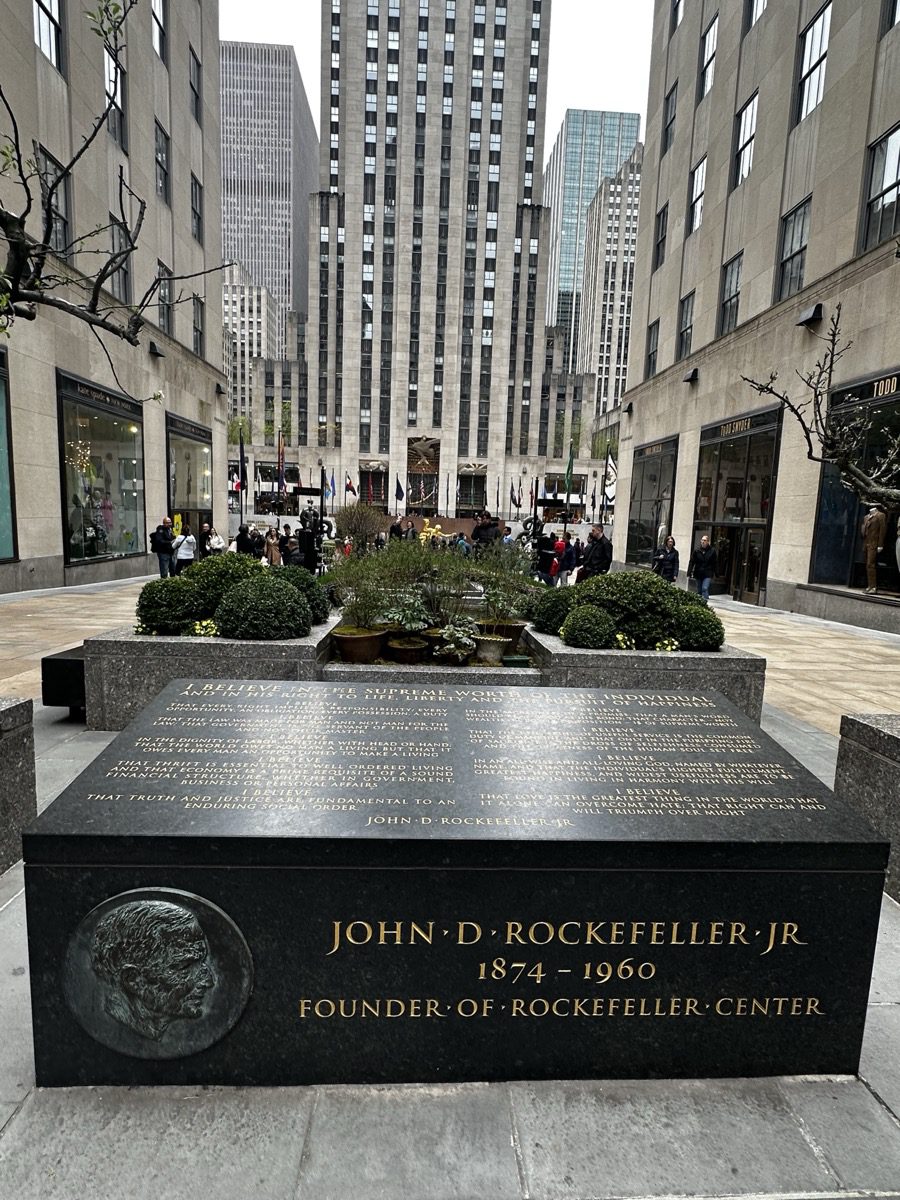
The plaque is small.
Rockefeller Center plaza, right beside the Christmas tree. Most people walk past without stopping. Few stand there long enough to read the name.
I stood there for a while. And one question wouldn’t leave me.
Where did all the money come from — the money that built all of this?
The Massacre
1872. Cleveland.
In six weeks, twenty-two competitors disappeared. Not a shot fired. Rockefeller had struck a secret deal with the railroads. His rivals’ shipping costs doubled. His own went down. No one could survive.
When a hesitant competitor sat across from him, Rockefeller quietly opened his ledger.
“These are our numbers. Will you join us — or kneel before them?”
History calls it the Cleveland Massacre. That was how ninety percent of America’s oil market ended up in one man’s hands.
The Verdict
1911. The Supreme Court drew its sword.
Break Standard Oil into thirty-four companies. The monopoly monster would be executed.
Rockefeller heard the news on a golf course. He didn’t flinch. He quietly made some calls. Buy the stock. Now.
The shares of all thirty-four companies surged. He still held twenty-five percent of each. His fortune went from $300 million to $900 million. The day he lost in court was the day he became the wealthiest person in human history.
ExxonMobil. Chevron. ConocoPhillips. All of them are fragments of that executed monster.
Did You Know
At his peak, Rockefeller’s fortune equaled 1.5% of America’s entire GDP. In today’s terms, that’s roughly $400 billion — more than Elon Musk, more than Jeff Bezos. The title of the wealthiest private individual in human history still belongs to him. Theodore Roosevelt later joked: “Wall Street’s prayer has become — ‘O merciful Providence, grant us another dissolution.’”
The Ledger
What did he do with the money?
He funded a cure for yellow fever. He founded the University of Chicago. He endowed Spelman College, a school for Black women who had nowhere else to go. Rockefeller University still produces Nobel laureates today.
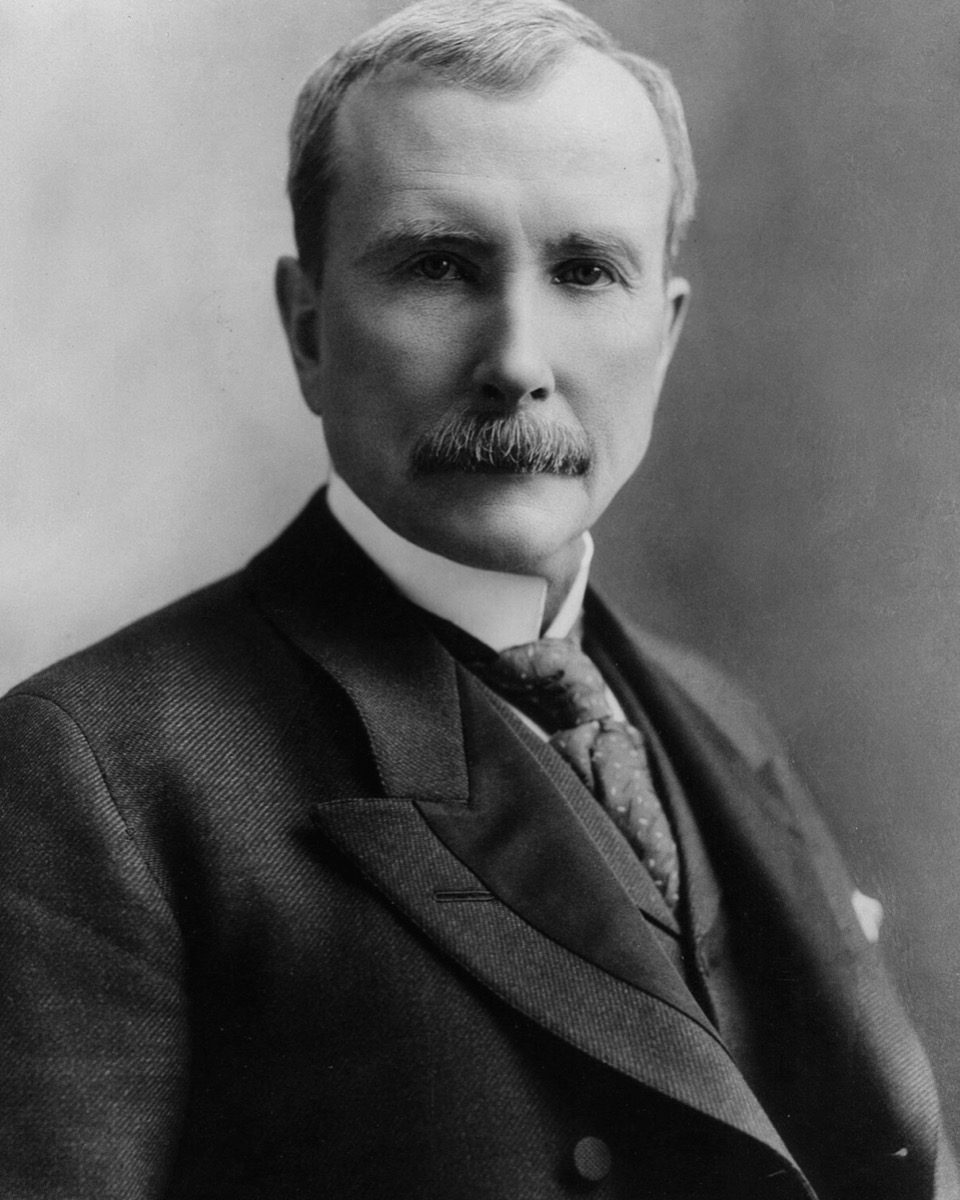
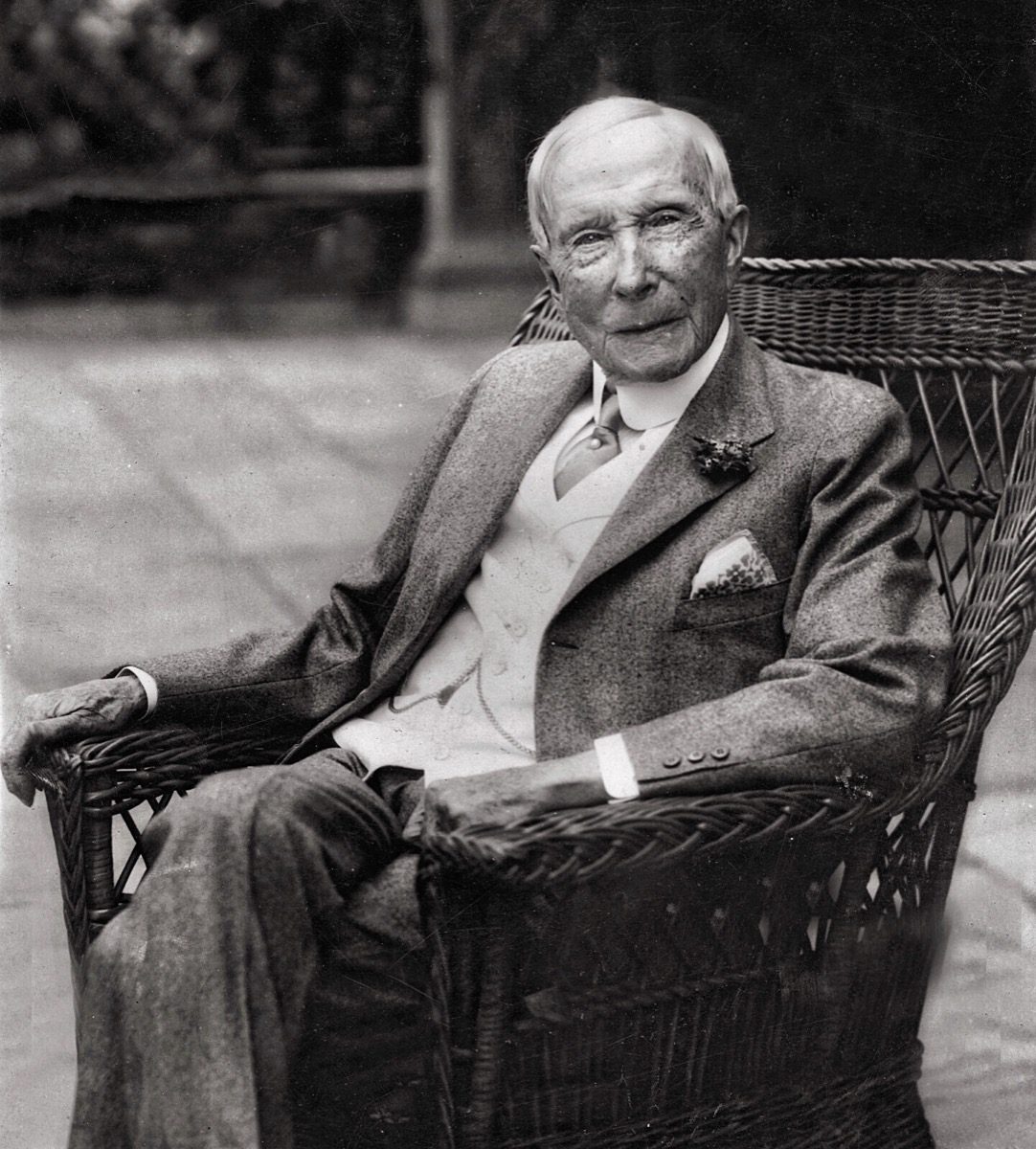
John D. Rockefeller, age 49. The man who built the monopoly — at the height of his power. Photo: Public Domain.John D. Rockefeller in old age. The man who gave it away — and never once thought he’d done anything wrong. Photo: Public Domain.
Same person.
Rockefeller never believed he had done anything wrong. He went to church every week. He handed out dimes to strangers on the street. He believed the money he had made was entrusted to him by God. The money wrung from those he had crushed went on to save lives their descendants would never trace back to him. He stood before that contradiction until the end — and never wavered.
The Bill
2016. Rockefeller’s heirs sold every share of ExxonMobil they held.
In their statement, they called the company’s conduct “morally reprehensible” — ExxonMobil had known about the dangers of climate change for decades, they said, and had spent those decades funding campaigns to deny it. ExxonMobil fired back, calling the heirs’ actions “a conspiracy against us.”
The descendants of the founder stood against the company he built.
The lights of the plaza burn as bright as ever tonight.
Standing beneath them, it’s worth asking —
What exactly is the price of something this beautiful?
American History · No. 9Jackson Hole · WyomingRockefeller
Beyond the WindowThe most powerful economic meeting in the world is held in a log lodge in a national park. Someone put it there. That someone has a name you already know.
The meeting that moves the world economy is held here, they said. I assumed it would be state of the art. Real-time market screens. Microphones. Translation earpieces. Flags of every nation.
When I arrived in Jackson Hole — it was logs.
Rockefeller’s name had come this far.
The Lodge
Stone walls, wooden beams, low ceilings. A taxidermied grizzly bear in the lobby. A European central bank governor wheeling luggage in beside an American tourist who rode up on a Harley. A lodge inside a national park. Open to anyone.
For the venue of the world’s most influential economic symposium — it was too modest.
I stood inside for a long time. Then I saw the window.
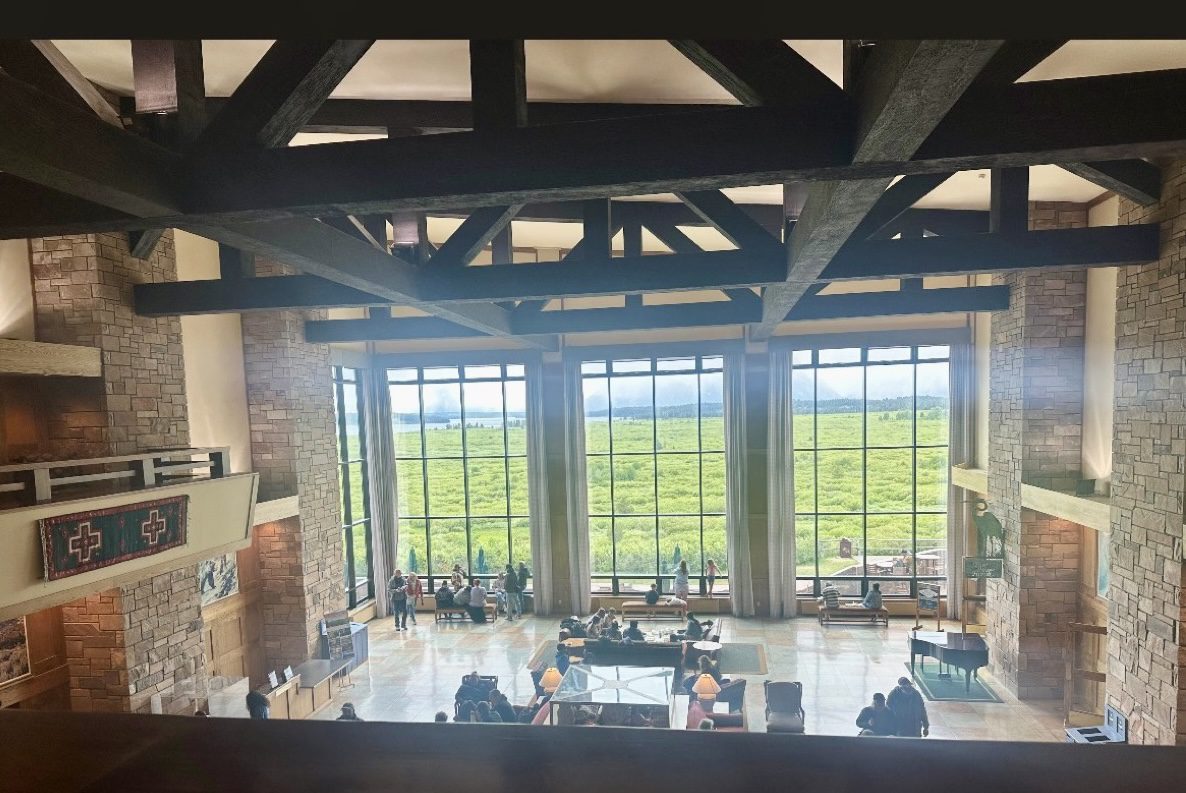
Jackson Lake Lodge — the venue of the Federal Reserve’s annual economic symposium. Through that window, Grand Teton. Photo by Gaze.
The Window
I had nothing to say.
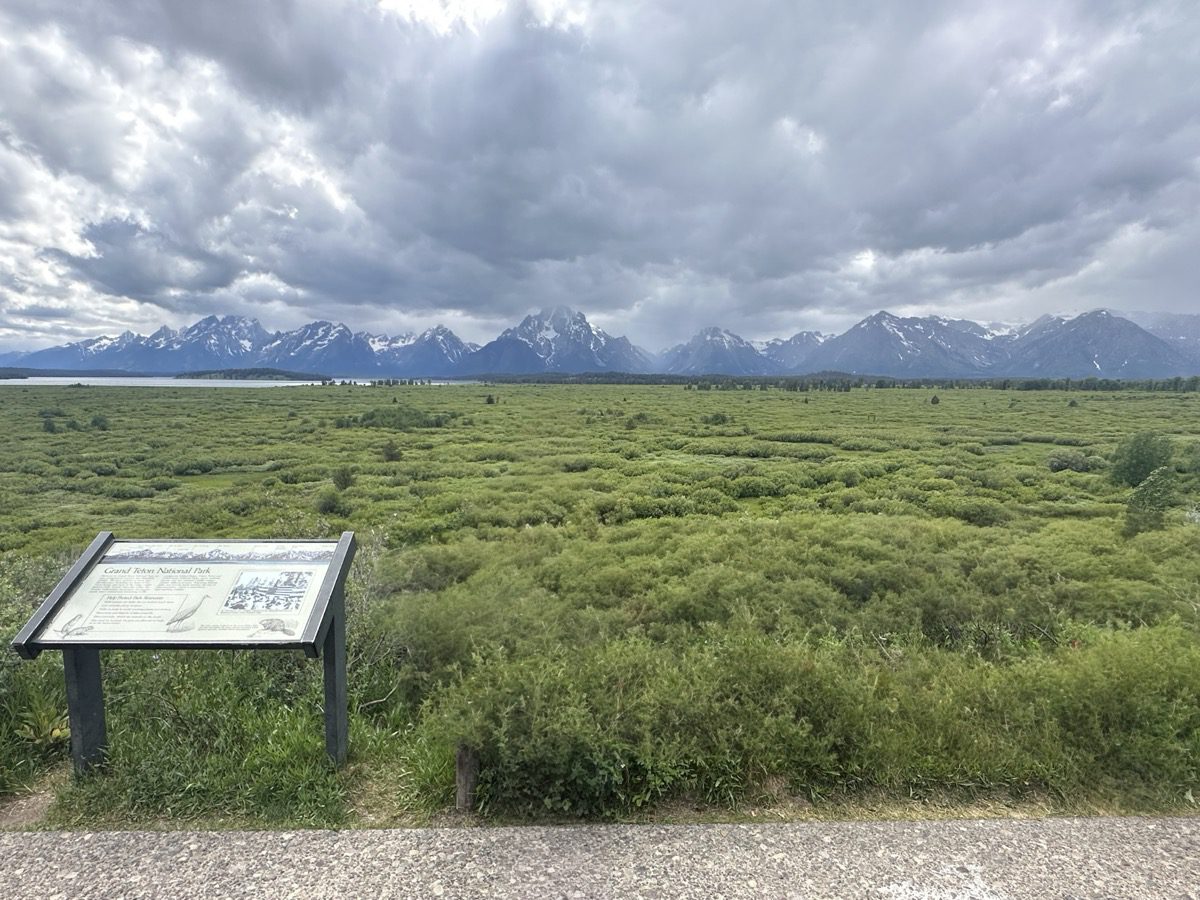
Beyond the floor-to-ceiling glass, Grand Teton stood. That day it was overcast. The three peaks weren’t completely clear. It didn’t matter. It was overwhelming — one of the most spectacular views I have ever seen.
The meeting that moves the world economy is, in front of those mountains, just a small building.
Grand Teton National Park. Overcast that day — the three peaks not fully visible. Still overwhelming. Photo by Gaze.
Did You Know
The Federal Reserve’s symposium has been held in Jackson Hole since 1982. The Kansas City Fed wanted to invite then-Fed Chair Paul Volcker to attend. Volcker was an avid fly fisherman. Jackson Hole is famous for fishing. “If we hold it there, he’ll come” — that was how it started. Volcker showed up to the opening dinner in his fishing gear. That became a tradition lasting more than forty years. Today, representatives from 70 countries attend. One economist’s hobby shaped where the world’s most watched central banking conference is held.
The Land
But how did this national park come to exist?
1926. A man came to this valley for the first time. Yellowstone superintendent Horace Albright took him on a tour of Jackson Hole. The man was overwhelmed by what he saw. He made a decision on the spot — he would buy this land and turn it into a national park.
That man was John D. Rockefeller Jr.
The son who inherited his father’s name. But he hid his own. He created a shell company — the Snake River Land Company. Nobody knew Rockefeller was behind it. If the name got out, land prices would explode. Quietly, over twenty years, he assembled 33,000 acres.
Then he tried to donate it to the federal government.
The Wyoming state legislature blocked it for twenty years. “Rockefeller’s people are trying to monopolize our land,” they said. In 1942, Rockefeller issued an ultimatum — “If the government won’t take it, I’ll sell it on the open market.” President Roosevelt designated it a national monument. In 1950, under President Truman, it became a full national park.
The road at the entrance to this national park is now called the John D. Rockefeller Jr. Memorial Parkway. He tried to hide his name. History remembered it anyway.
The Irony
Then something happened.
It became a national park. Ninety-seven percent of the land became public. Only three percent remained available for private ownership. With supply so limited, land prices exploded. Billionaires poured into Wyoming — no state income tax, no corporate tax.
Teton County is now the highest per capita income county in the United States. The top one percent earns 221 times more than the bottom ninety-nine. Median home price: seven million dollars. A billionaire’s tax haven.
He tried to protect nature — and created a paradise for the ultra-wealthy.
Was this what Rockefeller wanted?
Gaze’s Pick — Where I Stayed
Jackson Lake Lodge101 Jackson Lake Lodge Rd · Grand Teton National Park · $$$The lodge where the Federal Reserve’s annual symposium is held — and where anyone can book a room. The same building, the same lobby with the grizzly bear, the same floor-to-ceiling window facing Grand Teton. Every August, the world’s central bankers sit in front of that view. The rest of the year, it’s open to everyone else.Explore →
Taste — Where I Ate
Snake River Grill84 E Broadway · Jackson Town Square · $$$$The name is not a coincidence. The Snake River is the river that runs through this valley — and Snake River Land Company was the shell company Rockefeller Jr. used to secretly buy up 33,000 acres of this land. That company’s name is now a restaurant on the Town Square. Nominated for a James Beard Award. Locals come here to celebrate. The elk and the local ranch beef are the things to order.Explore →
American History · No. 8New YorkRockefeller Center
The PlaceEvery year, the tree changes. Every year, the world looks at the same spot. Someone made this place. It’s worth asking who.
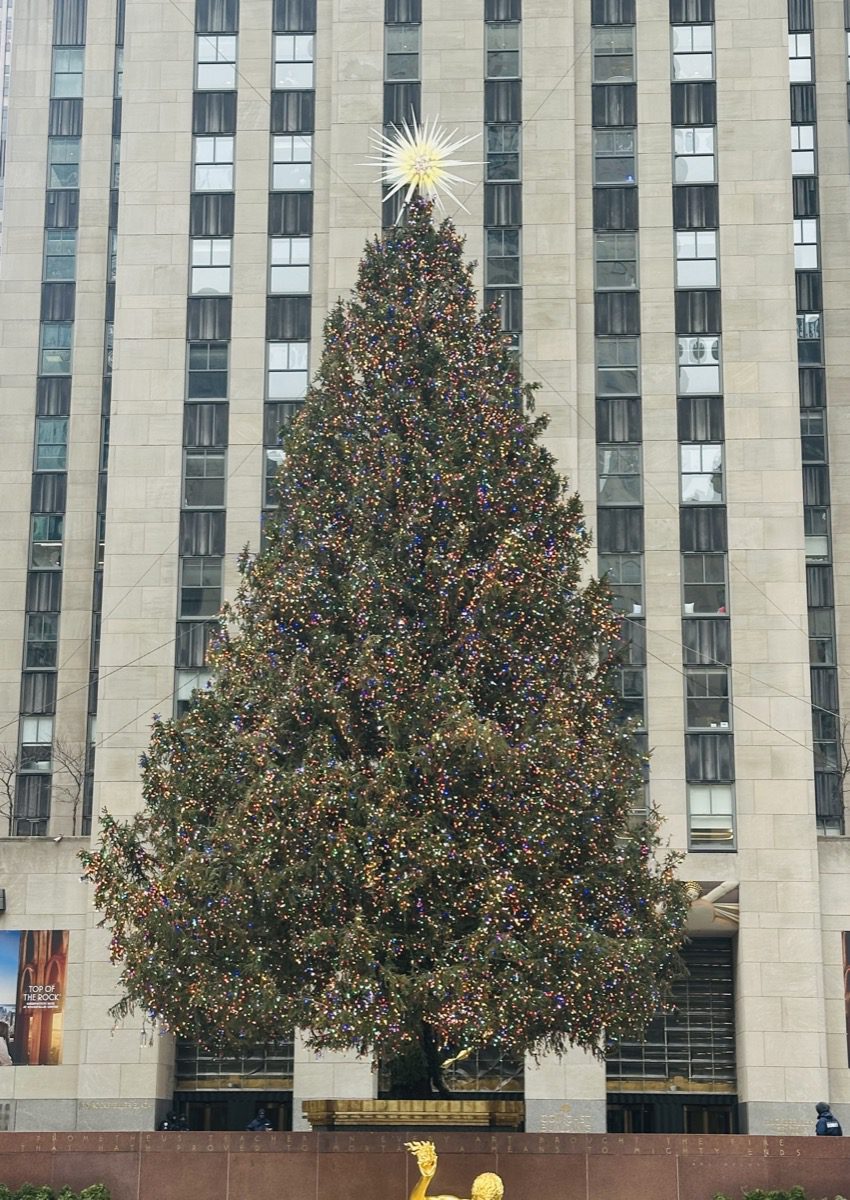
The tree changes every year.
Somewhere in America, the tallest and finest Norway spruce is chosen, cut, and brought to New York. Tens of thousands of lights are strung on its branches. It is lit. In January, it disappears. Next year, a different tree comes.
And yet the whole world looks at the same spot every year.
The Tree
Every year in late November, the news carries word of the lighting ceremony. My birthday falls around then. It arrives all at once — the birthday, Christmas coming, the year ending. The season when anticipation and regret always coexist.
No one decreed this. No one knows exactly when it started. It’s simply understood — at Christmas, you see the Rockefeller tree. An unspoken agreement held by the whole world.
I never once thought to ask: who made this place?
The Rockefeller Center Christmas tree. The tree changes every year. The place does not. Photo by Gaze.
The Workers
Go back to December 1933.
The Great Depression. Twenty-five percent unemployment across America. In New York alone, 750,000 people had lost their jobs. And in the middle of all this, a massive construction project was underway in Midtown Manhattan. Fourteen buildings. The largest private construction project in history.
That December, the construction workers — the men who had spent their days hauling steel beams — set up a tree in the plaza before they went home. They decorated it with paper, tinfoil, and tin cans. That was everything.
That was the beginning of this place.
Did You Know
On September 20, 1932, a photograph was taken on a steel beam 69 floors above the construction site — 850 feet in the air. Eleven men sitting on the beam’s edge eating lunch. No safety equipment. New York spread out beneath their feet. Their expressions are remarkably calm. There was an unwritten rule on construction sites then: when building a skyscraper, you estimated a certain number of deaths per floor. They came anyway. Fifteen dollars a day — seven times a factory worker’s daily wage. The photograph is called “Lunch Atop a Skyscraper.” The most famous lunch photograph in history.
Top of the Rock
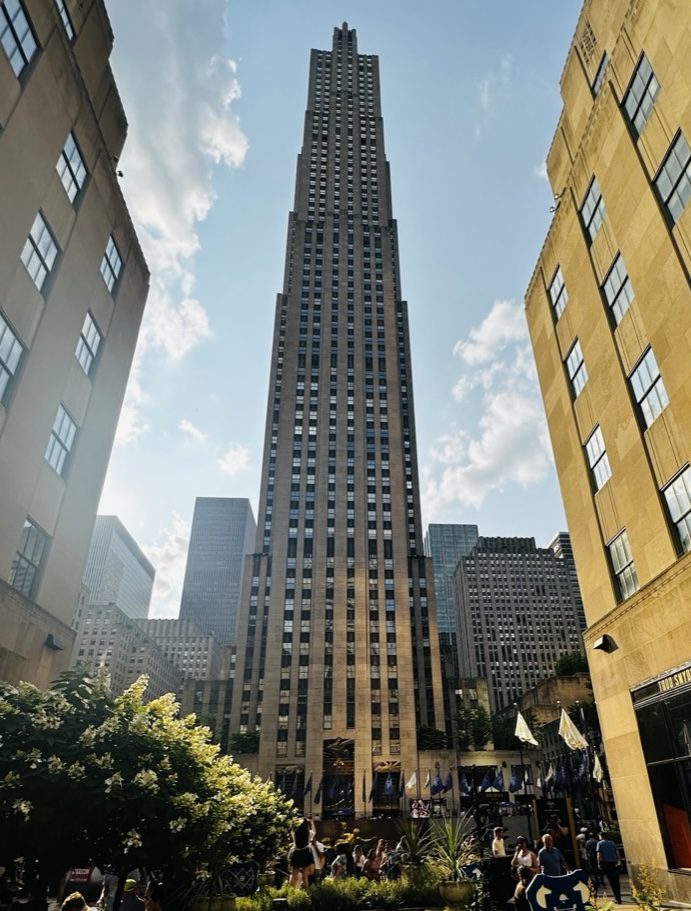
30 Rockefeller Plaza — the center of Rockefeller Center, and home to Top of the Rock. Photo by Gaze.
There is an observation deck at the top of that building.
In 2005, Top of the Rock had just opened. At that point, there were only two places in New York where you could see the city from this height. The Empire State Building, and here.
I stood at the glass wall. New York’s nightscape spread out like stars across the sky. And in the middle of it all, the Empire State Building stood alone.
Rockefeller Center is the symbol of Christmas. The Empire State Building is the symbol of the New York skyline. But the best place to see the Empire State Building is from the top of Rockefeller Center.
The Name
John D. Rockefeller Jr., 1874–1960. Founder of Rockefeller Center. The man who built the place — and initially didn’t want his name on it. Photo by Gaze.
Behind all of this is one name.
Rockefeller. Among the names of capitalists, is there another known so widely — and so familiarly — across the entire world? Every Christmas, the whole world sees the plaza bearing this name. Warm, spectacular, beautiful.
And yet the man who built this place initially didn’t want his name attached to it. He wanted to call it “Metropolitan Square.” A publicist persuaded him — the Rockefeller name would attract tenants. That is how the name was placed here.
Rockefeller University, the Cloisters, MoMA, the UN headquarters site, Lincoln Center. This name is written across New York’s skyline.
But what kind of person was the one who first made this name?
That story begins somewhere unexpected.
Gaze’s Pick — Where I Stayed
The Peninsula New York700 Fifth Ave · Midtown · $$$$Opened in 1905 — the same era Standard Oil dominated America. A short walk from Rockefeller Center on Fifth Avenue, with a rooftop bar that looks out over the Midtown skyline. The building has watched this neighborhood change for more than a century. It was here before the Christmas tree tradition began.Explore →
Taste — Where I Ate
Le Rock45 Rockefeller Plaza · Midtown · $$$Inside Rockefeller Center, in an Art Deco space that has been part of the complex since it opened. The French brasserie that now occupies it earned three stars from the New York Times. The room feels like it belongs to another era — which, in a way, it does. You’re eating inside the building the workers built during the Great Depression, in a space designed to last.Explore →
National Archives: The Original PageThe ink has faded. The parchment has aged. And yet, behind bulletproof glass in a darkened room, the words that made a nation still hold their ground.
Winter in Washington D.C. turns everything gray. The sky, the stone, the faces of strangers.
I arrived at the National Archives on a December morning and found a line already stretching along Constitution Avenue. People stood in silence, collars turned up against the cold. Some were tourists. Some were students. Some had come alone. No one complained. The wait stretched past thirty minutes.
I found this strange. We had all seen photographs of what waited inside — printed in textbooks, posted online, reproduced ten thousand times over. And yet here we stood, in the cold, waiting.
The Line in Winter
Entrance was like passing through an airport. Bag off, belt off, eyes forward through the security checkpoint. The guards were quiet and thorough. My body understood, before my mind caught up, that this was not an ordinary museum.
Did You Know
The National Archives building was designed by architect John Russell Pope — the same architect behind the Jefferson Memorial — and completed in 1937. Pope envisioned it as a temple to American democracy. The Rotunda lighting is dimmed to the equivalent of two candles at one foot: the minimum needed to see the documents without damaging them. The Declaration of Independence, the Constitution, and the Bill of Rights have been on permanent display here since 1952, sealed in argon-filled, bulletproof encasements monitored by technology developed for NASA.
The Shrine
The Rotunda swallowed the light the moment I stepped inside.
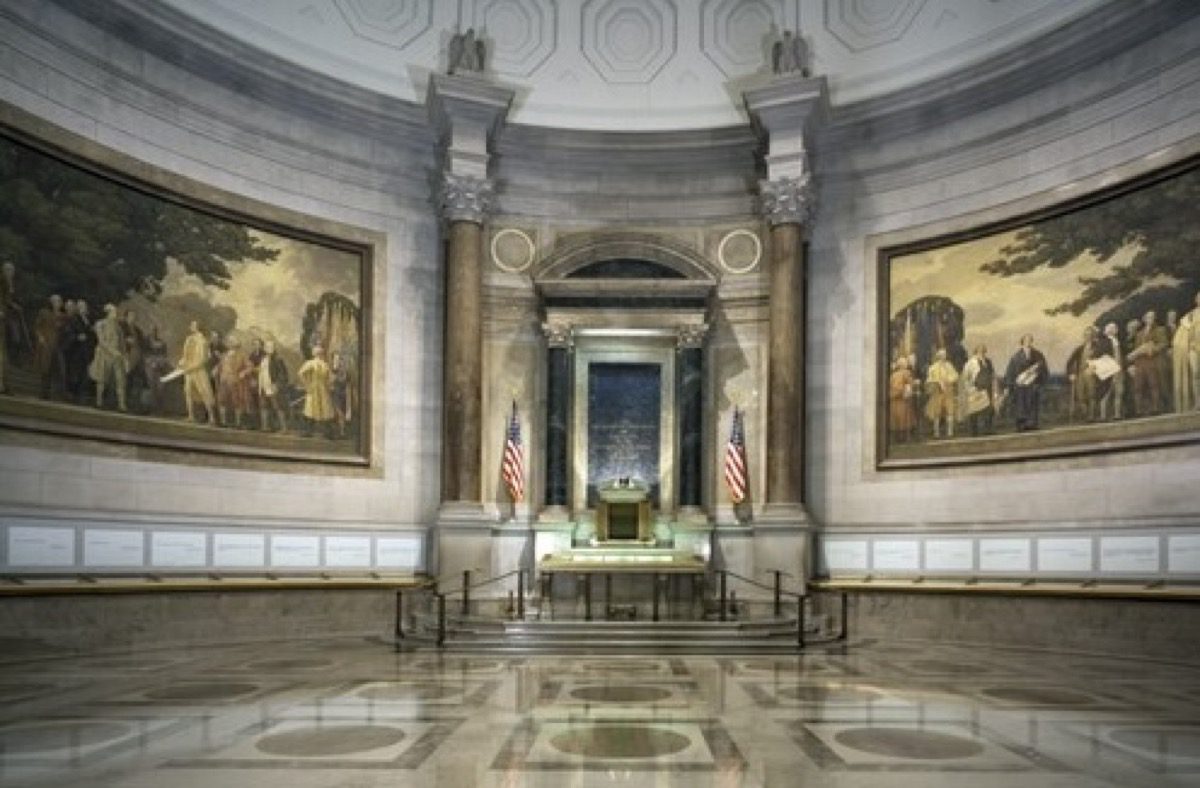
It was not darkness — it was control. The air itself felt deliberate, cooled and filtered. The domed ceiling curved overhead. Along the curved walls, two enormous murals by Barry Faulkner depicted the Founders: Jefferson presenting the Declaration, Madison offering the Constitution. Their figures watched from the shadows.
The word that came to me, unbidden, was shrine. A shrine built by a nation for itself. And at the altar, behind bronze-framed bulletproof glass, the parchment waited.
Rotunda for the Charters of Freedom. The Faulkner murals flank the document cases at the center. No photography was permitted during my visit. Photo: Carol M. Highsmith, Library of Congress. Public Domain.
The Handwriting
I had been to Philadelphia. I had stood in Independence Hall — the room where the Declaration was debated and signed in the summer of 1776. I had seen the Liberty Bell. What I felt there was the weight of place: the floors, the walls, the windows, the specific air of a room where history happened.
What I felt here was different.
Behind the thick glass, the Declaration of Independence lay on its parchment. The ink had faded — more than I expected. Some lines had thinned to near-invisibility. The paper had aged into something closer to skin than document. I pressed my face toward the glass.
This was their handwriting. Jefferson. Franklin. Adams. These names that had lived in textbooks, remote and untouchable — the letters on this page came from their hands. A quill dipped in ink, pressed to parchment, drawn across in the particular way that each man held a pen.
I came specifically for the Declaration. Not for the building, not for the archives, not for the other documents — though I paused at the Constitution, and again at the Bill of Rights. I came because I had stood in the room where it was written, and now I wanted to see the thing itself.
No cameras were permitted. I put nothing away to take home. I only looked, for as long as I could.
Original
Independence Hall is where it was declared. The National Archives is where it exists. One is the place of the act. The other is the place of the object.
A reproduction carries the same words. A high-resolution scan shows more detail than my eyes could find through that glass. And yet something is present in an original that a copy cannot transmit. Not information. Something else — perhaps simply the bare fact of its survival. This document passed through wars, through fires, through decades of careless storage. It is still here. That changes how you read the words.
When I walked back out into the gray winter air, the line had not shortened. People were still waiting, still silent, still patient in the cold.
You do not wait thirty minutes in December to see information. You wait to see the original.
MLK Memorial: Out of the Mountain of DespairLincoln sits under a roof. Jefferson stands inside a dome. MLK is just out there — rain, snow, wind, everything. At first I thought that was strange. Then I thought: that’s exactly right.
Coming out of the Lincoln Memorial, I walked along the Tidal Basin. The MLK Memorial was supposed to be somewhere here.
The Washington Monument, the Lincoln Memorial, the Capitol — all on the same axis, at the center of everything. The MLK Memorial was one step to the side of that. Tidal Basin, quieter, a little removed.
I thought at first it was just a space issue. But walking back out, I started to think differently.
A Step to the Side
MLK was an outsider while he was alive. The FBI surveilled him for years. The government watched him with suspicion. In a 1966 poll, 63% of Americans viewed him unfavorably. Everyone respects him now — but when he was alive, he was outside that central axis.
The memorial’s location resembles that life.
Did You Know
Completed in 2011 — the most recently built memorial on the National Mall in Washington D.C. And the first African American to receive a solo memorial there. The location is a five-minute walk from the Lincoln Memorial steps — the exact spot where King delivered “I Have a Dream” in 1963. That was not a coincidence.
Out of the Mountain
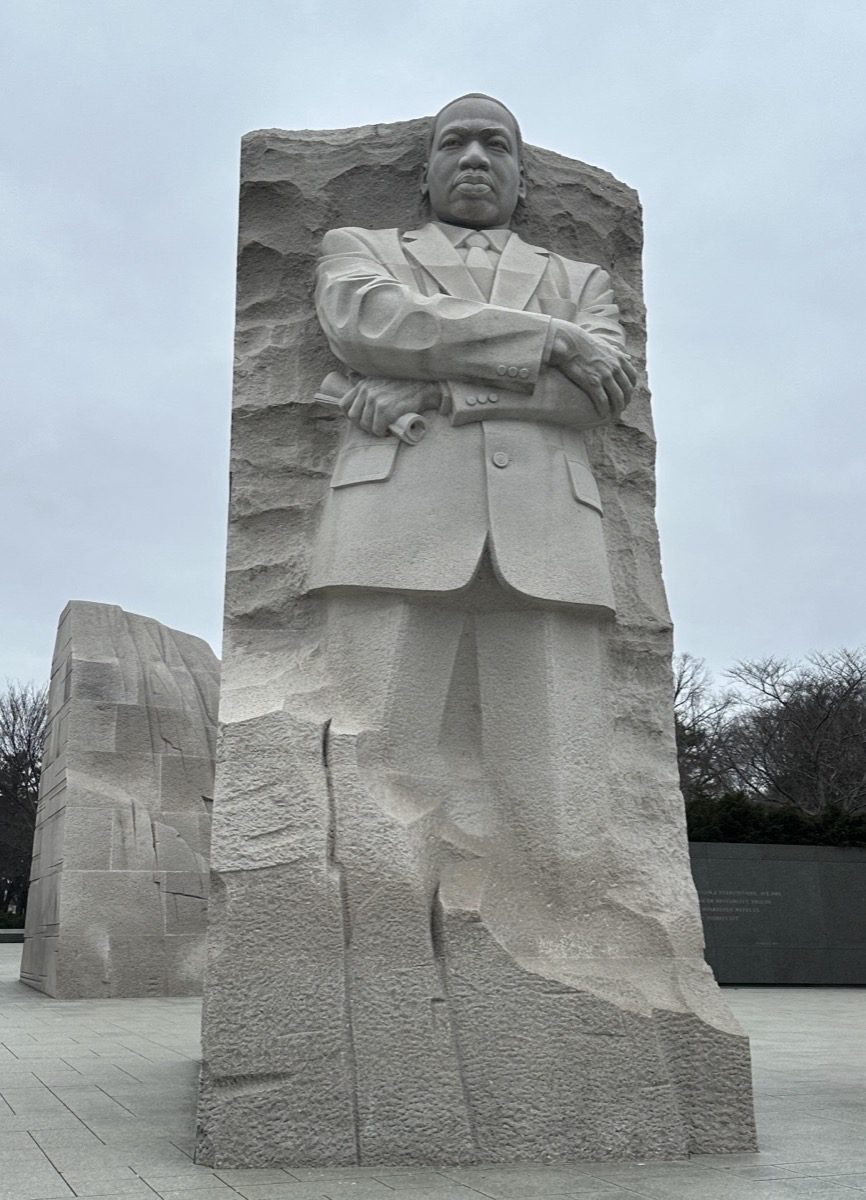
Out of the mountain of despair, a stone of hope. Photo by Gaze
When the statue came into view, I stopped.
30 feet tall. Standing as if carved straight out of a mountain. Arms crossed. Looking straight ahead. Lincoln’s gaze felt like a question — are you doing okay? This was different. This was the face of someone who had already decided. Who knew what was coming and was going anyway.
Behind the statue, two rocks split apart. This isn’t decorative. It comes directly from the 1963 “I Have a Dream” speech.
“Out of the mountain of despair, a stone of hope.”
The split rock is the mountain of despair. The statue emerging from it is the stone of hope. The entire memorial was built from that one sentence.
Lincoln sits protected inside a memorial with a roof and columns. Jefferson stands sheltered beneath a dome. MLK just emerged from the mountain — no roof, no cover, taking the rain, the snow, everything.
That was his life. Nobody protected him. Nobody sheltered him. And he didn’t move.
Tidal Basin
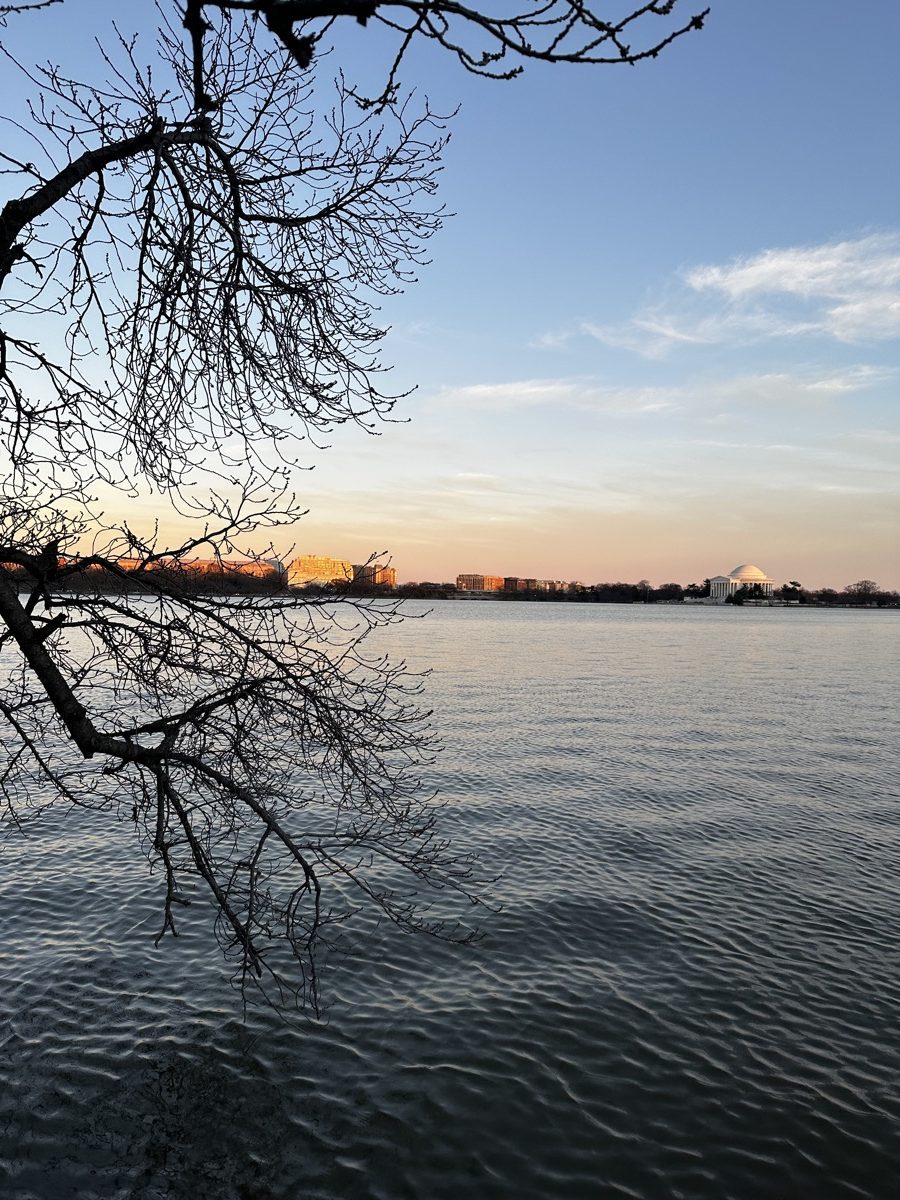
Tidal Basin at sunset. Across the water, the Jefferson Memorial. Photo by Gaze
Coming out of the memorial, I stood at the water’s edge.
The Tidal Basin. Connected to the Potomac River. Across the water, the Jefferson Memorial — white dome, quiet, still.
Jefferson wrote the Declaration of Independence. “All men are created equal.” The man who wrote those words owned slaves. The man who spent his life demanding those words be honored is standing right here.
Same waterfront. Facing each other.
In spring, cherry blossoms fill this path. That day it was still winter. Bare branches, quiet water, the last of the light fading. It felt right that way.
Epilogue
Lincoln ended slavery through war. But emancipation wasn’t equality. A hundred years later, Black Americans still couldn’t sit in the same seats on buses, attend the same schools, or vote without obstruction.
MLK fought with words and footsteps instead of guns. He was arrested 30 times. His home was bombed. He didn’t respond with violence. The Civil Rights Act passed in 1964. The Voting Rights Act in 1965. The laws changed.
April 4, 1968. A motel balcony in Memphis. One shot. He was 39.
His autopsy noted that though only 39, his heart was that of a 60-year-old. From stress, they said.
The stone carved out of the mountain of despair is still standing here. Arms crossed, taking the rain, not moving.
Out of the mountain of despair, a stone of hope.
Next: The National Archives — where all of this is on record.
Gaze’s Pick — Where I Stayed
Salamander Washington DC1330 Maryland Ave SW · Washington D.C. · $$$$Directly across from the Tidal Basin. Walk out the door and the MLK Memorial, Jefferson Memorial, and cherry blossom path are all right there. The closest hotel to everything in this post.Explore →
Canopy by Hilton Washington DC The Wharf975 7th St SW · The Wharf · $$$On the waterfront, overlooking the Potomac. The Wharf is a short walk to the Tidal Basin. Quieter than downtown, with the river right outside.Explore →
Taste — Where I Ate
Blue Duck Tavern1201 24th St NW · Park Hyatt Washington · $$$American farm-to-table, Michelin recognized, a short walk from the Tidal Basin. Whole-roasted, locally sourced, unhurried. After a day standing in front of a man carved from a mountain of despair — this is the right place to sit down, eat something honest, and let it settle.Explore →
Lincoln’s City: The Lincoln Memorial and the Washington MonumentI saw the gun at Ford’s Theatre. I stood in front of that room at Petersen House. I thought that was enough. Then I went back at night — and the statue looked back.
I went to the Lincoln Memorial twice. Once during the day. Once at night. They are not the same place.
Day and Night
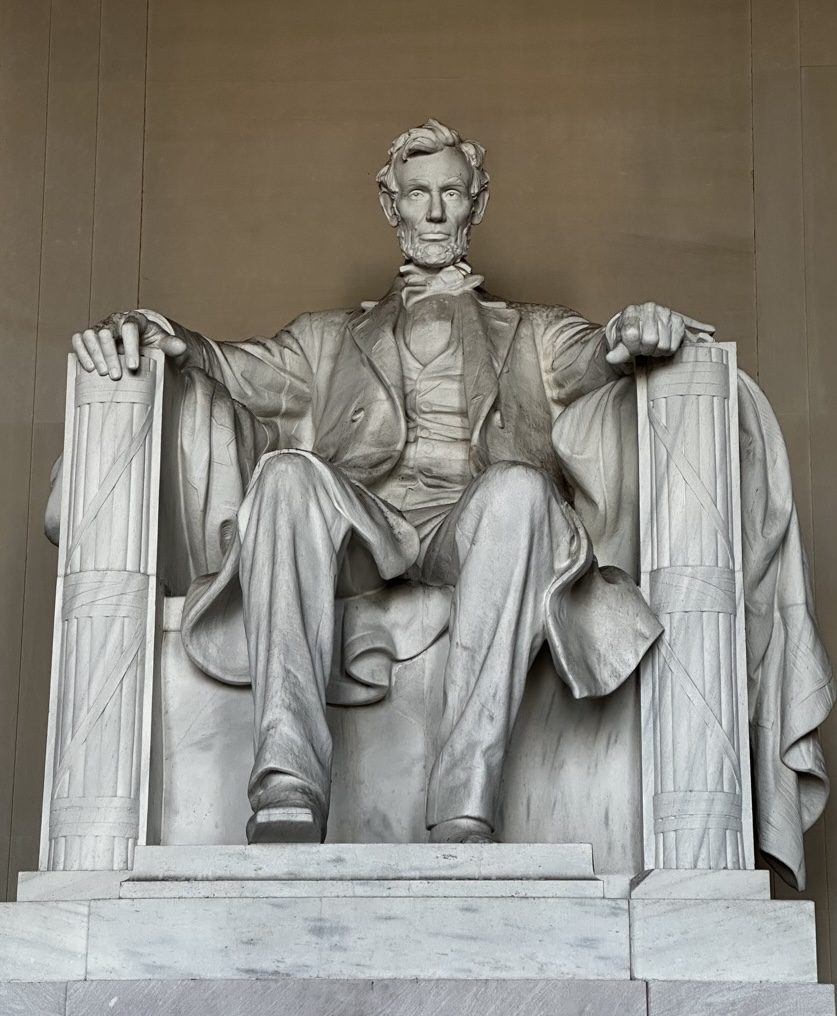
He has been sitting here since 1922. Still watching. Photo by Gaze
During the day, I was mostly taking photos. Too many people. Everyone on the steps, everyone with their phones out, everyone smiling. I did the same. That’s not a bad thing. That’s just what the Lincoln Memorial is during the day.
So I went back at night.
When the lights come on, the memorial changes. It looks larger. People’s voices drop. Nobody runs. The Reflecting Pool holds the moon, holds the lights. Solemn — but not cold. Something in between. The feeling of stepping out of ordinary life for just a moment, and returning to something essential. How this country got here. What it cost. What was promised.
I walked inside. Lincoln was sitting there. Marble, 19 feet tall. But it wasn’t the size that hit me first — it was the gaze. He was looking straight ahead. Past the Reflecting Pool, past the Washington Monument, all the way to the Capitol.
Not exactly looking at me. But that’s what it felt like. Like he was asking first.
Are you doing okay?
I stood there for a while.
Carved in Stone
On the wall, there are words.
“…that government of the people, by the people, for the people, shall not perish from the earth.”
The Gettysburg Address. 1863. Spoken at a battlefield cemetery in the middle of the Civil War, to honor the soldiers who had died. Two years before Lincoln was shot.
My favorite phrase in the English language. Of the people, by the people, for the people.
Nobody forces you to read it. It’s just there, carved into the wall. But I kept reading it. Once wasn’t enough. Slowly, again. Letting it settle.
The man who wrote this was shot two years later. Died in a stranger’s bed at the end of a narrow hallway. And yet these words are still here.
These Steps
There’s a marker at the base of the Lincoln Memorial steps.
August 28, 1963. Martin Luther King Jr. stood on these exact steps and delivered the “I Have a Dream” speech. 250,000 people gathered. Exactly 100 years after Lincoln’s Emancipation Proclamation.
Same place. Same promise. A hundred years apart.
Did You Know
The MLK Memorial sits just beside the Tidal Basin, steps from the Lincoln Memorial. It wasn’t placed there by accident. John Brown → Lincoln → Martin Luther King Jr. The man who fought slavery, the man who ended it through war, the man who spent his life demanding that promise be kept. One thread, a hundred years long.
The next post follows that thread.
The Reflecting Pool
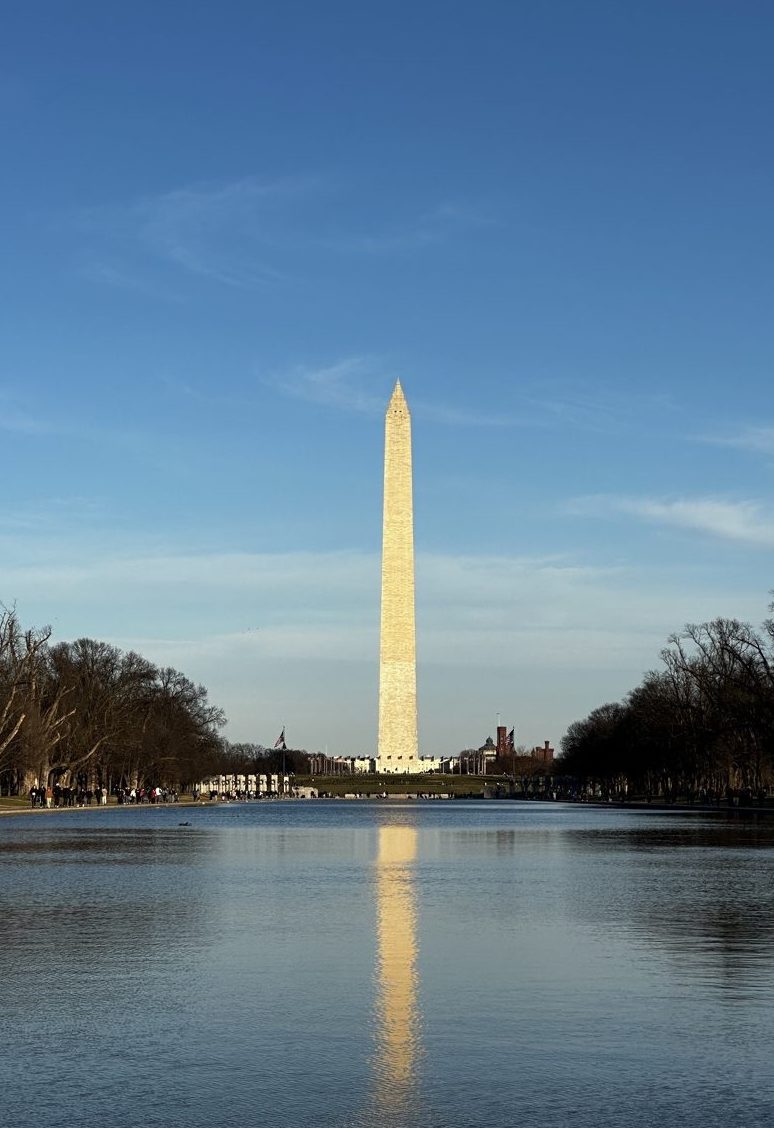
The pool reflects the Washington Monument, not the Lincoln Memorial. Some people never notice. Photo by Gaze
Walking along the Reflecting Pool, I noticed something.
What’s reflected in the water isn’t the Lincoln Memorial. It’s the Washington Monument. The pool is named after Lincoln — but Lincoln isn’t what’s reflected. There’s something in that. This city is always slightly different from what it appears to be.
Stand at the top of the Lincoln Memorial steps and turn around. The Washington Monument, the Reflecting Pool, the Capitol — a perfect straight line. This city was designed this way from the beginning. Who designed it, and why, is a later story.
The Monument That Almost Wasn’t Finished
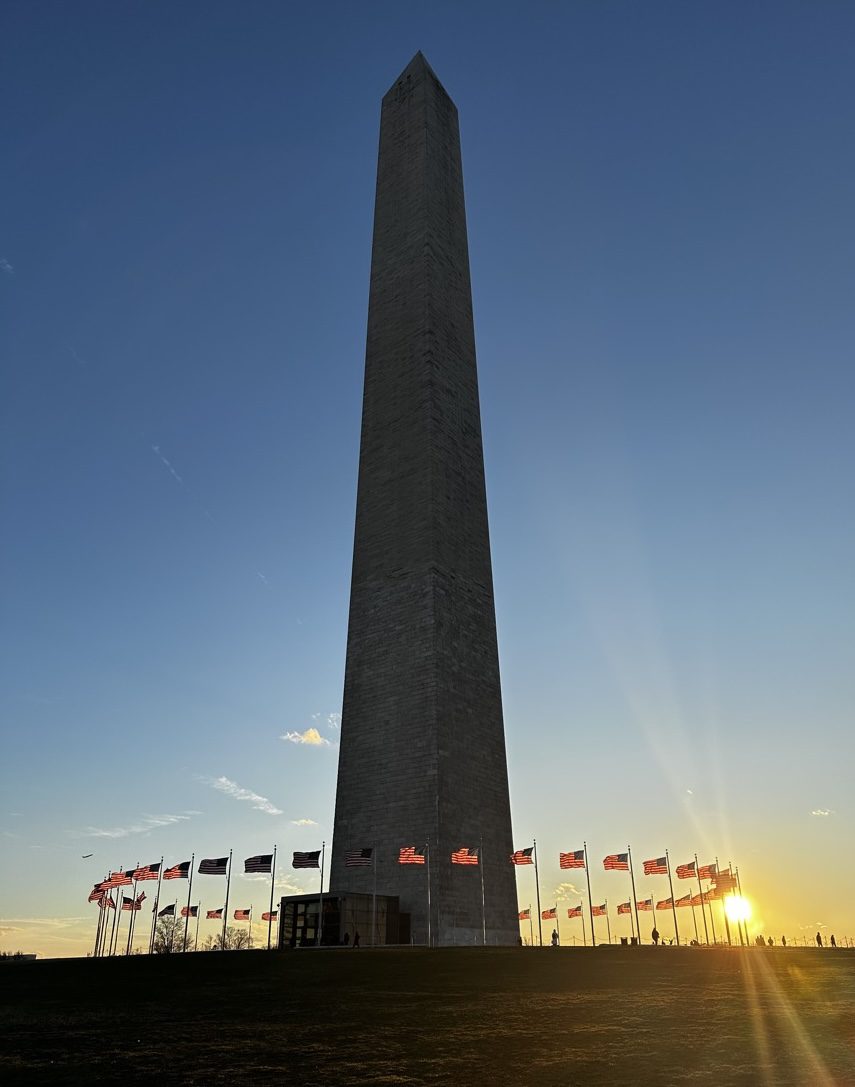
555 feet. Started in 1848. Abandoned. Finished in 1884. The line where it stopped is still visible. Photo by Gaze
Getting closer, I noticed the color was different.
The bottom and the top. A clear shift in shade about a third of the way up. At first I thought it was the light. It wasn’t. Different quarry, different time, different marble. The scar where construction stopped and started again — thirty years later.
1848: construction begins. 1854: stops. Money ran out. Political conflict piled up. The Civil War began. The half-built monument stood abandoned. Mark Twain passed by and called it “a hollow, oversized chimney.” When Lincoln was assassinated in 1865, the monument was still standing there — unfinished, ugly, alone.
The war ended. The country came back together. 1876: construction resumes. 1884: complete.
That color shift — that’s where this country stopped, and where it got back up.
And around the base, American flags. In a circle, every one of them. I’m not American — but something rose up in me anyway. Hard to call it patriotism when it isn’t my country. But that’s what it felt like. Knights guarding something. A circle of things worth protecting. Everything this country fought to hold onto, standing right here.
Of the people, by the people, for the people.
The words came back.
Gaze’s Pick — Where I Stayed
Hotel Washington515 15th St NW · Washington D.C. · $$$Opened in 1918. On Pennsylvania Avenue, next to the White House. From the rooftop VUE bar, you can see the White House and the Washington Monument at the same time. The street Lincoln once walked, visible right below you.Explore →
The Willard InterContinental1401 Pennsylvania Ave NW · Washington D.C. · $$$$The night before his inauguration, Lincoln stayed here. Walking distance from the Lincoln Memorial. History doesn’t get much closer than this.Explore →
Taste — Where I Ate
Old Ebbitt Grill675 15th St NW · Washington D.C. · $$Washington D.C.’s oldest saloon, founded in 1856. Presidents Grant, Andrew Johnson, and Teddy Roosevelt all drank here. The mounted animal heads above the bar are said to have been shot by Roosevelt himself. After a day carrying all of this — this is the right place for a drink.Explore →
Epilogue
Stand on the Lincoln Memorial steps and look out. A straight line: Lincoln → Reflecting Pool → Washington Monument → Capitol.
Someone designed this city this way. There are things in this city that were put here deliberately. That’s a later story.
For now, just this.
In 1963, Martin Luther King Jr. stood on these steps. Right where Lincoln sits and watches. In front of 250,000 people.
I have a dream.
Next: Martin Luther King Jr. — and what he said from these steps.
Ford’s Theatre: The Dark Red RoomReading history is one thing. Standing inside it is another. Ford’s Theatre I knew. The building across the street — I found out about that only when I got there.
The man who watched John Brown hang went on, six years later, to walk into a theatre on 10th Street.
I had been carrying that thread since Harpers Ferry — the small brick building, the Fort, the question it leaves you with. Ford’s Theatre was always on the list. What I didn’t know, until I got there, was the building directly across the street.
But first, the theatre.
Brick facade. Five arches. From the outside, an ordinary building on an ordinary block. Until you walk in.
Did You Know — John Wilkes Booth
Booth came from one of the most famous acting families in America. His father and brother were celebrated stage actors. He was well-known himself — charming, successful, recognizable. A passionate supporter of the Confederacy. In 1859, he stood in the crowd at John Brown’s execution, serving in the Virginia militia.
His original plan wasn’t assassination. He wanted to kidnap Lincoln and exchange him for Confederate prisoners of war. When the South surrendered in April 1865, the plan changed. On the night of April 14, he walked into Ford’s Theatre — a place he knew well, having performed there many times — and found the presidential box unguarded.
The Dark Red
The color hits you first.
Not bright red. Dark red. Curtains, carpet, walls — the whole theatre is saturated in it. Not garish. Heavy. As if that color has been holding the night of April 14, 1865 ever since.
What you see inside is a restoration from 1968, rebuilt to match the 1865 appearance. Not the original carpet, not the original curtains. But the stillness it creates is real. There are things a restored space can make you feel that a perfect replica never could.
I stood in the aisle and looked up at the Presidential Box. 1,700 people sat in these seats that night. The play was a comedy. People were laughing.
The Timeline & The Gun
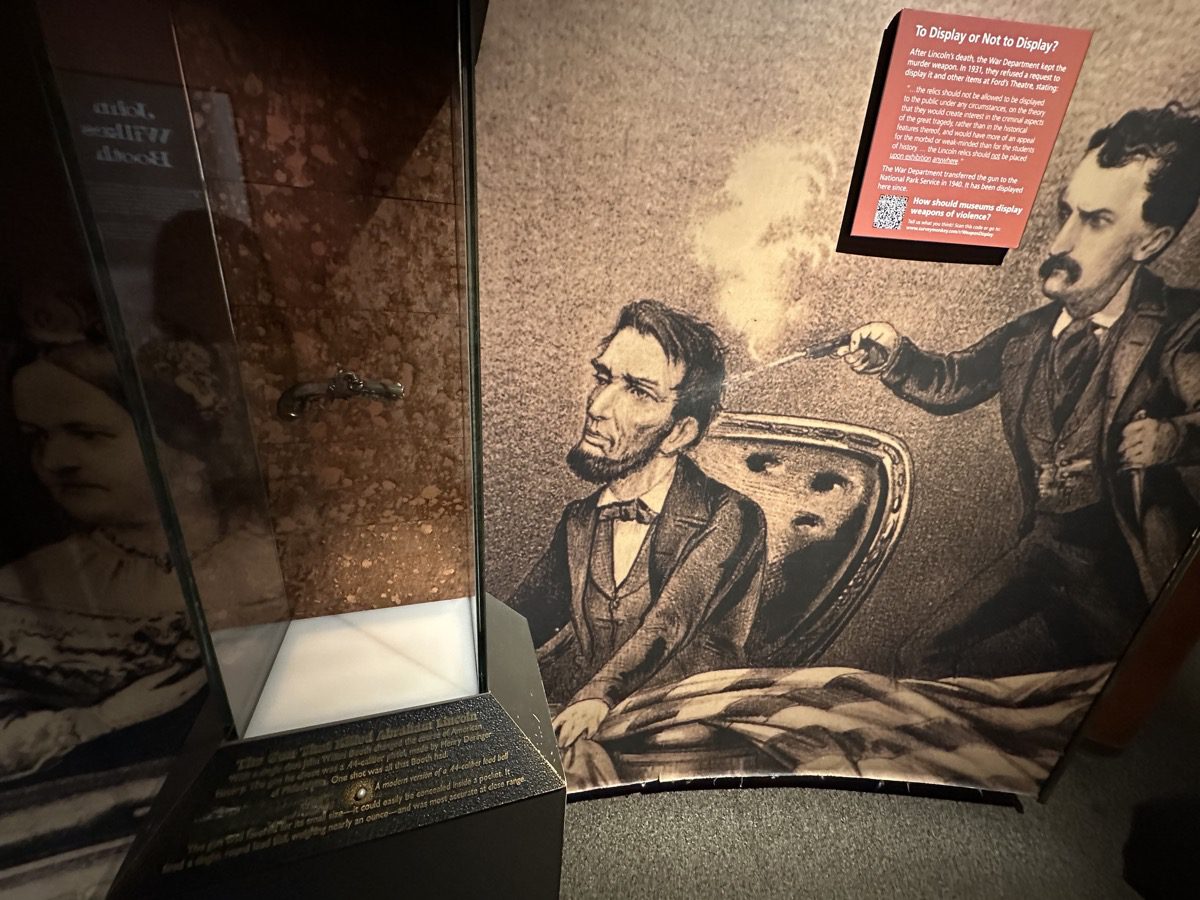
The gun. Small enough to fit in a palm. Photo by Gaze
Inside the museum, there’s a timeline of that night.
Lincoln’s movements. Booth’s movements. Two separate lines, mapped in minutes, moving toward the same point. What time Lincoln’s carriage arrived. What time Booth entered. What time the shot was fired.
Watching two people’s paths converge like that — minute by minute, without either of them knowing — is unsettling in a way that’s hard to explain.
And then the gun.
A .44 derringer. Booth carried it in his pocket. It fits in a palm. The exhibit room was dark — the whole space felt deliberately dim, heavy. Standing in front of that glass case, something felt wrong about being there. That felt like the right response.
Did You Know — That Night
April 14, 1865 was five days after General Robert E. Lee surrendered at Appomattox — effectively ending the Civil War. Lincoln had led the country through four years of the bloodiest war in American history. He didn’t want to go to the theatre that night. Records suggest he was exhausted and would have preferred to stay home. But the presidential party’s attendance had already been announced publicly, and he didn’t want to disappoint.
The play was a comedy called Our American Cousin. The last thing Lincoln heard before the shot was the audience laughing.
The Presidential Box
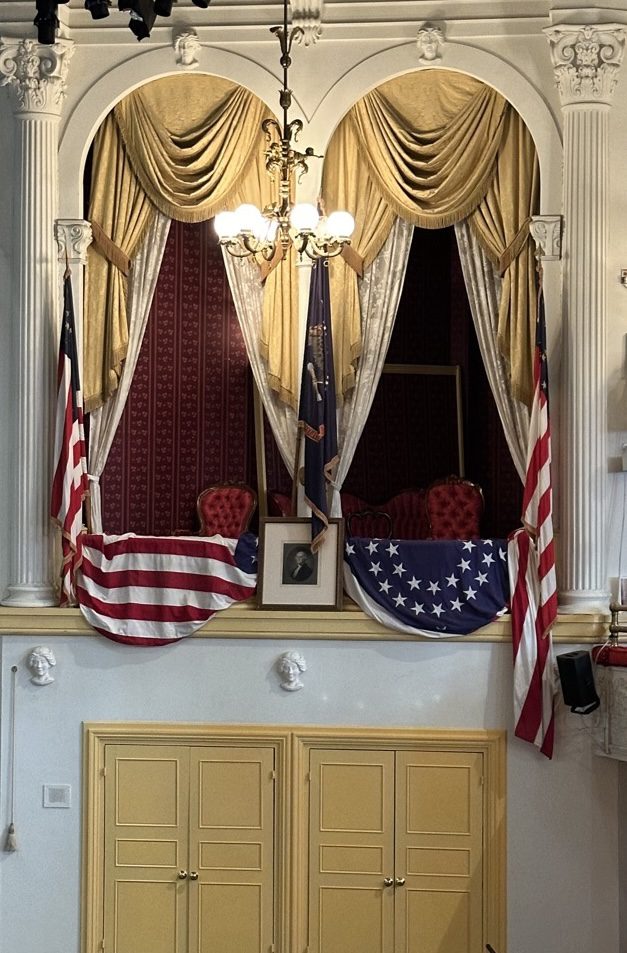
The Presidential Box. April 14, 1865. Lincoln sat here. Photo by Gaze
Upper right. Draped in flags, a portrait of George Washington hanging between them. It looks the same today as it did that night — the theatre dressed it specially for the president’s visit.
The guard assigned to the box had left his post. Booth came through the door. The shot went off at 10:15 p.m. Booth leaped from the box to the stage — a drop of about twelve feet — and broke his left leg on landing. He shouted something, ran, and was gone.
I stood on the theatre floor and looked up at that box for a long time. Nothing came out. Some spaces just don’t give you words.
Petersen House — The Smaller Space
Petersen House. Across the street from Ford’s Theatre. Photo by Gaze
I hadn’t known about Petersen House before that day.
Ford’s Theatre I knew. The assassination, the box, the gun — all of it. But when I came out of the theatre and saw the building directly across the street, with a small sign and a line of people waiting, I stopped.
After the shot, Lincoln was carried out of the theatre. The doctors said he wouldn’t survive a carriage ride to the White House — too far, too rough. Someone pointed to the house across the street. They carried him in through the front door, down a narrow hallway, to a small back bedroom. Lincoln was too tall for the bed. He lay diagonally. Nine hours passed.
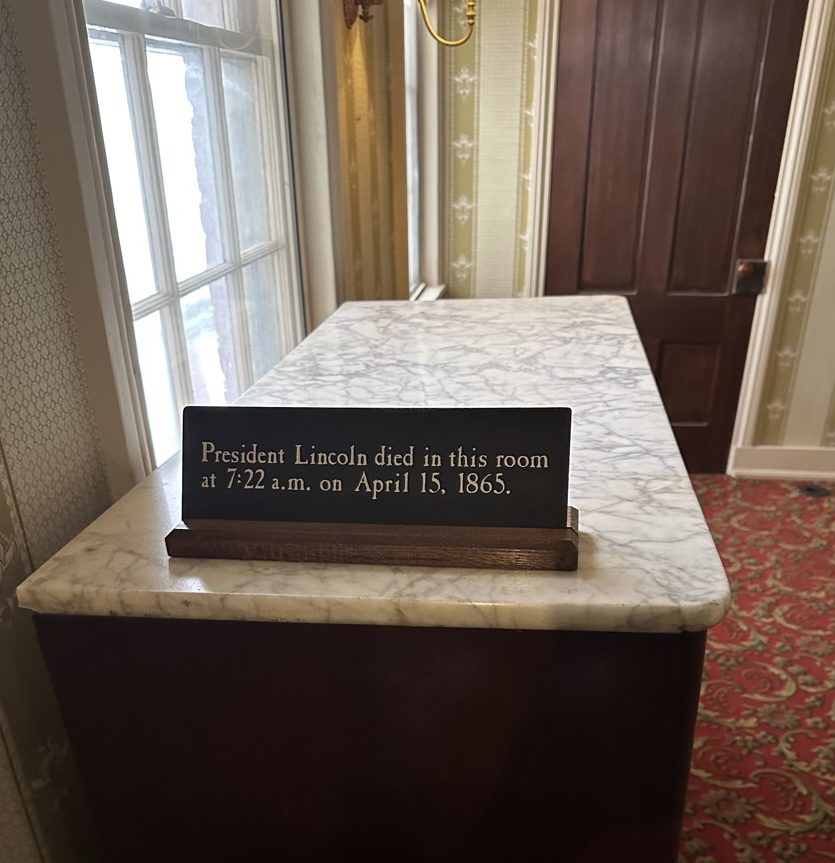
At 7:22 a.m. on April 15, 1865, he died in that room.
Standing in the doorway, I could see the sign on the dresser. Close enough to almost touch. The room was small — smaller than you expect for the last place of someone this large in history. A stranger’s back bedroom. A bed he didn’t fit in.
The John Brown Fort came back to me. A small brick building, 35 by 24 feet. History’s biggest moments keep ending in the smallest spaces.
When Lincoln died, Secretary of War Edwin Stanton stood in that room and said: “Now he belongs to the ages.”
Gaze’s Pick — Where I Stayed
JW Marriott Washington DC1331 Pennsylvania Ave NW · Washington D.C. · $$$$On Pennsylvania Avenue — the same avenue Lincoln’s carriage traveled. Grand without being loud. Ten minutes from Ford’s Theatre on foot.Explore →
The Willard InterContinental1401 Pennsylvania Ave NW · Washington D.C. · $$$$The night before his first inauguration, Lincoln stayed here — arriving in secret, under threat of assassination. Less than four years later, he was shot at Ford’s Theatre. The Willard held him at the beginning. Washington held him to the end.Explore →
Taste — Where I Ate
The Occidental1475 Pennsylvania Ave NW · Washington D.C. · $$$$Open since 1906 on the same avenue Lincoln’s carriage traveled. In 1962, a secret meeting at one of these tables helped end the Cuban Missile Crisis. History doesn’t just hang on the walls here — it sat at the tables. Green velvet, crystal chandeliers, presidential portraits watching from every corner. Order the martini. Order the pork chop. Stay a while.Explore →
Epilogue
John Brown died in Charles Town, Virginia. Lincoln died in a stranger’s back bedroom on 10th Street. Both ended in small spaces, with no way out.
Hamilton designed the system. The Liberty Bell named the ideal. Brown walked into a Fort. Lincoln died trying to hold it all together.
Four posts. One thread.
And the thread continues. What Lincoln fought for — a united country, freedom, democracy on record — is waiting at the next stop. On the banks of the Potomac. In a building with his name on it.
Next: The Lincoln Memorial — and the steps where another chapter of that same story was written.
The Fort at the End of the World: John Brown’s Harpers FerryThe bell named the ideal. John Brown acted on it. I went for the view — and walked straight into both.
Standing in front of the Liberty Bell, I read that word. Abolitionists.
In 1837, abolitionists gave this bell its name — the Liberty Bell. People who genuinely believed the inscription meant what it said: Proclaim Liberty throughout all the land. And during the years that name rang out across the country, the most radical figure in that movement headed toward a small town in the mountains of Virginia.
The bell named the ideal. John Brown acted on it.
I had been to that town. By accident, on the way back from Luray Caverns. Someone had mentioned the view — two rivers meeting, mountains closing in from every side. I pulled off the highway without thinking much about it. It was cold. I found a museum. I went in to warm up.
A man’s face covered the wall. White beard. Intense eyes. Born 1800. Farmer. Devout Christian. The most radical abolitionist in American history. In 1859, he led 21 men into this town, seized the federal armory, and tried to start a slave uprising across the South. Captured in two days. Tried for treason. Hanged.
His closest ally had called the plan suicidal. Brown went anyway.
I read that standing in my coat, still cold from outside. Something shifted.
The Town at the Confluence
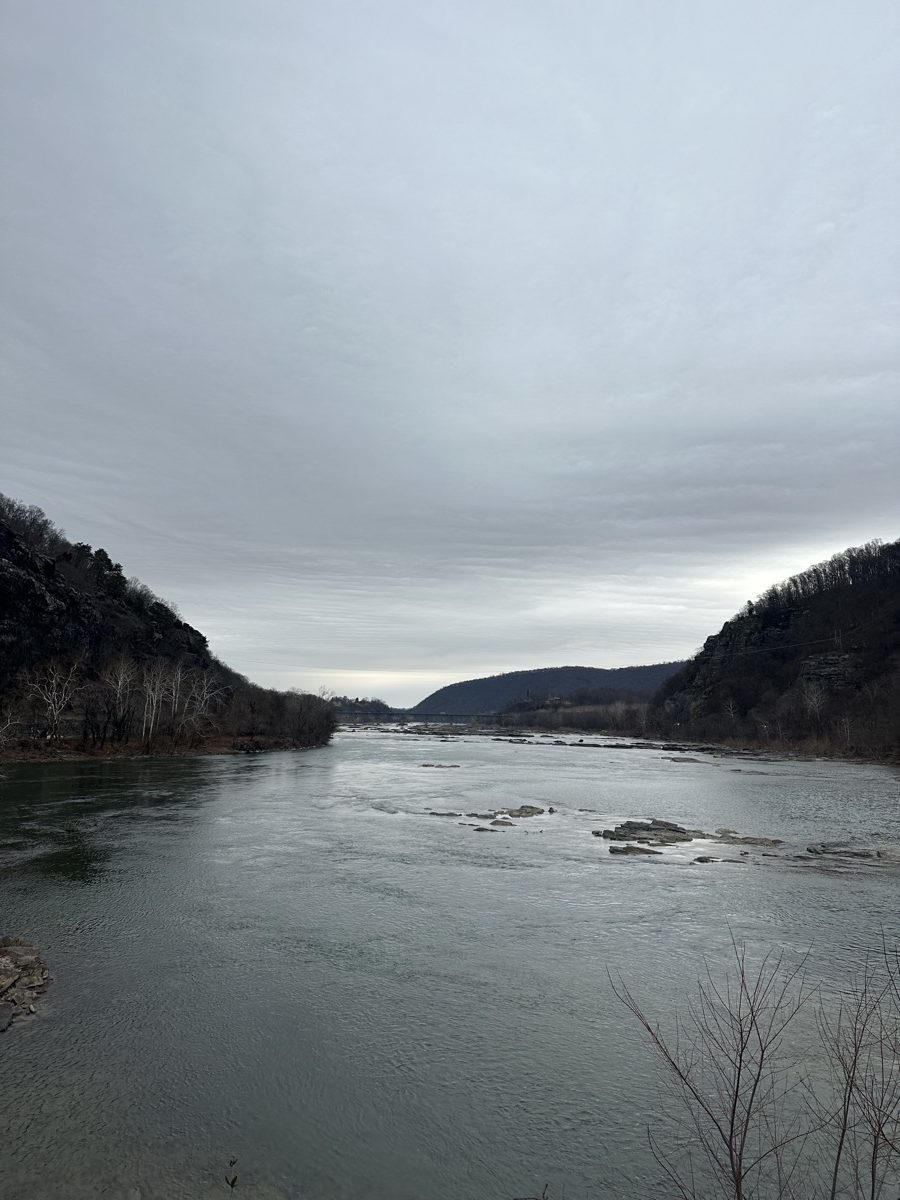
Someone said the view was worth the detour. They weren’t wrong. Photo by Gaze
Harpers Ferry sits where the Shenandoah and Potomac Rivers meet, framed by the Blue Ridge Mountains on every side. People call it one of the most beautiful spots on the East Coast. Thomas Jefferson stood here in 1783 and wrote that the view was worth crossing an ocean to see.
I went in winter. The trees were bare. The rivers were grey. The mountains sat cold and still behind everything. It wasn’t the postcard version — but there was something about that coldness that felt right for this place. Some stories aren’t meant to be told in warm light.
Did You Know — Why Harpers Ferry
The town’s name is itself a clue. Originally called Peter’s Hole — a hole in the mountains — it was renamed after Robert Harper, who bought the land in 1747 and ran a ferry across the Potomac. “Mr. Harper’s Ferry.” The apostrophe disappeared in 1891.
George Washington personally ordered a federal armory built here: the rivers provided waterpower for the machinery, the location was close to Washington D.C. but safe from foreign invasion, and the two rivers made shipping easy. From 1799 to the Civil War, the armory produced over 600,000 rifles and muskets. The Lewis and Clark Expedition was equipped here.
The Broken Bridge
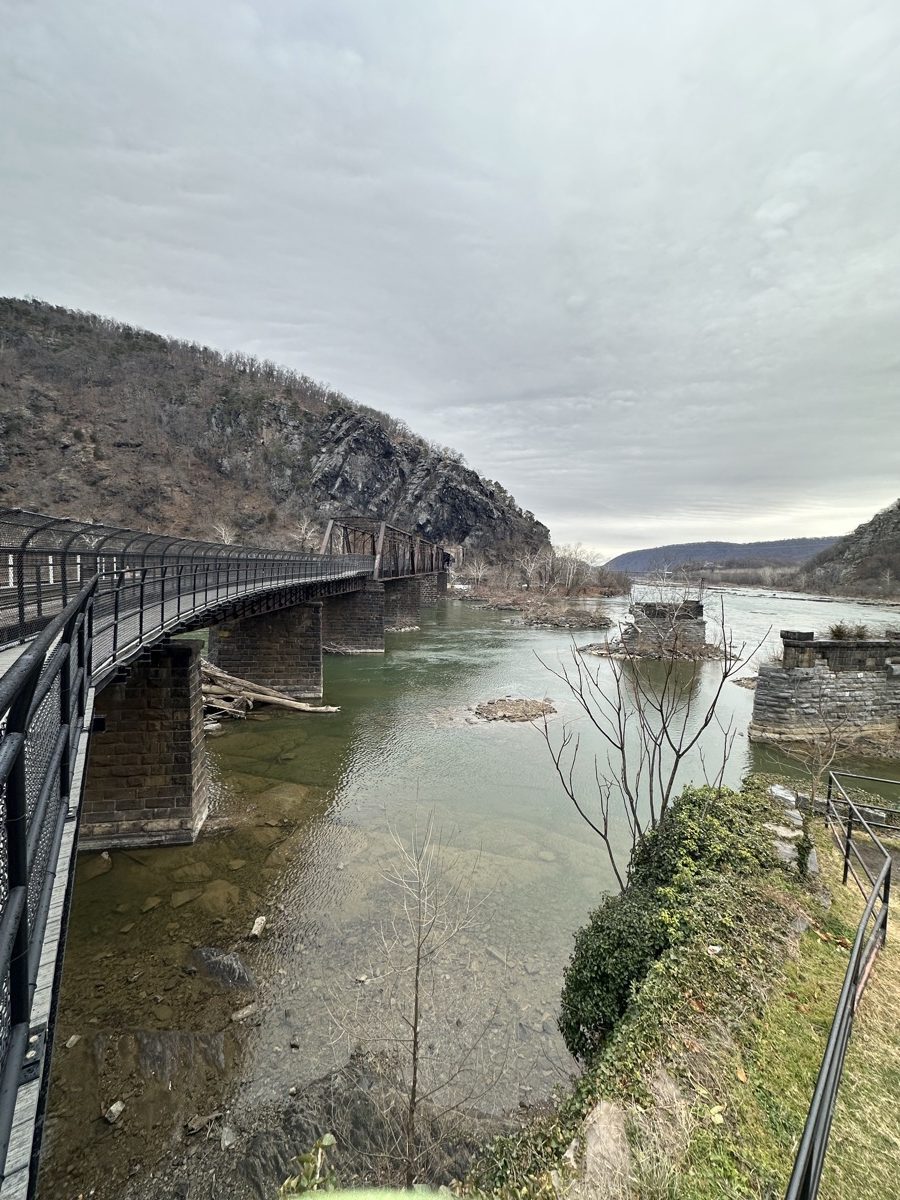
The bridge Brown crossed on the night of October 16, 1859. The collapsed piers are what’s left of the rest. Photo by Gaze
The first thing I noticed outside was the bridge. Or what’s left of it — the stone piers still standing in the current, the rest long gone.
Harpers Ferry sat at the crossroads of the C&O Canal and the B&O Railroad, the arteries connecting the coast to the mountains. Those bridges were everything. Control them and you controlled the movement of people, weapons, and freedom.
Did You Know — The B&O Railroad & the Potomac
B&O stands for Baltimore and Ohio — the first long-distance railroad in America, connecting the East Coast to the interior. The only railroad bridge crossing the Potomac was right here at Harpers Ferry. Control this bridge, and you controlled everything moving across the country.
The Potomac is no ordinary river. Washington D.C. sits on its banks. During the Civil War, it became the boundary between the Union and the Confederacy. And after shooting Lincoln, John Wilkes Booth crossed this river fleeing south. This river runs through everything in this series.
On the night of October 16, 1859, Brown led his 21 men — 16 white, 5 Black — across the Potomac bridge in the dark. They cut the telegraph wires as they moved. By 10 p.m., they held the federal armory. By midnight, the bridges. The plan was to arm the enslaved with the armory’s weapons and let the uprising spread south.
By the following afternoon, the local militia had retaken the bridges. The rivers were too wide. The mountains too close. There was no way out.
Standing at the river’s edge, looking at where the bridge once stood, I tried to imagine October 17, 1859. The cold made it easy to feel. Surrounded.
John Brown’s Fort — Smaller Than You Think
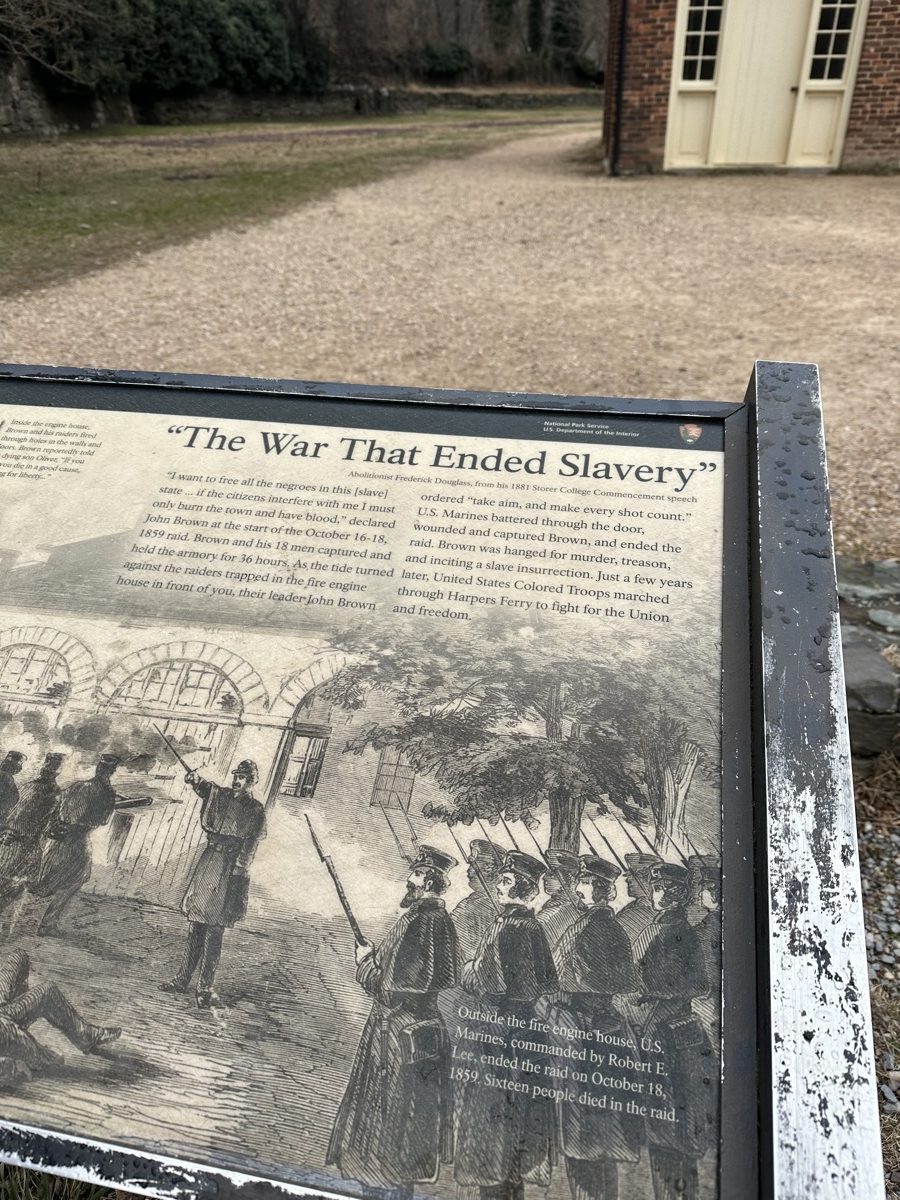
The door behind this sign was broken down in less than three minutes. Photo by Gaze
At the center of it all sits a small brick building.
Built in 1848 as a fire engine house and guardhouse, it measures 35 by 24 feet. One story. Brick walls. A few small windows. This is where it ended.
As the militia closed in, Brown retreated here with his remaining men and hostages — among them Lewis Washington, great-grandnephew of the first president. They barricaded the doors. Fired through gaps in the brick. Waited.
On the morning of October 18, ninety U.S. Marines arrived under Lieutenant Colonel Robert E. Lee. His aide, Lieutenant J.E.B. Stuart, walked forward under a white flag with a surrender demand. Brown refused. Lee ordered the door broken down with a ladder used as a battering ram. The whole thing was over in less than three minutes.
I stood in front of it for a long time. It’s smaller than you expect. That’s the first thing. History has a way of making things seem larger — the speeches, the trial, the legacy. But the actual space where everything collapsed is just a small brick room. No escape route. No reinforcements coming. Just four walls, and outside those walls, the world closing in.
He had been offered safe passage under a white flag. He refused. He knew exactly what was coming.
What do you keep fighting for, when you already know you’ve lost?
The Question He Left Behind
Here’s where the story gets strange.
Three men were at Harpers Ferry that day. Robert E. Lee commanded the federal response — and would later command the Confederate Army of Northern Virginia. J.E.B. Stuart delivered the surrender demand — and would become Lee’s most celebrated cavalry general. And six weeks later, at Brown’s execution, a young actor stood in the crowd: John Wilkes Booth, serving in the Virginia militia.
The man who watched Brown hang was the man who would, five years and four months later, shoot Abraham Lincoln at Ford’s Theatre. Harpers Ferry, the Civil War, Lincoln’s assassination — all connected by a single thread.
Brown was tried for treason, murder, and conspiring with slaves to rebel. He conducted his own defense from a cot, still recovering from a saber wound. Guilty on all counts. On the morning of his execution, December 2, 1859, he handed a note to his jailer.
Brown’s Final Words, Written
“I, John Brown, am now quite certain that the crimes of this guilty land will never be purged away but with Blood.” — December 2, 1859. Sixteen months later, the first shots of the Civil War were fired at Fort Sumter.
History still can’t decide what to do with him. In the North, he became a martyr almost immediately — soldiers marched to battle singing John Brown’s Body, the melody Julia Ward Howe later turned into The Battle Hymn of the Republic. In the South, he was proof that abolitionists would stop at nothing — fuel, some said, for leaving the Union entirely.
Hero? Terrorist? The question tends to reveal more about who’s asking than about Brown himself.
Standing in front of that small building in the cold, I thought about what actually happened here. Sixteen people died in this raid. Brown’s actions deepened the divide between North and South — and pushed the country closer to the war that followed.
Frederick Douglass — his closest friend in the movement — called the plan suicidal and refused to join. Brown went anyway.
Was that conviction or madness? History hasn’t decided. I haven’t either.
Gaze’s Pick — Where I Stayed
Light Horse InnHarpers Ferry, WV · $$Originally opened in the late 1780s as a tavern and stagecoach stop on the Philadelphia-to-Washington route. Travelers heading west stopped here. So did history. Three suites, full breakfast, walking distance to everything Brown’s men crossed that night.Explore →
Hillbrook Inn & SpaCharles Town, WV · 15 min from Harpers Ferry · $$$Built on George Washington’s first land purchase in 1750 — the same man who ordered the federal armory that John Brown came to seize. A Tudor-style estate on 30 acres, with a spa and five-course dining. History has layers here that most guests never notice.Explore →
Taste — Where I Ate
Magnolias at the MillPurcellville, VA · 20 min from Harpers Ferry · $$$A 19th-century steam-powered grain mill, original wooden beams and grain chutes still in place. The building was running when Brown crossed the Potomac. Appalachian-inspired menu, locally sourced. Some spaces hold onto time differently than others — this is one of them.Explore →
Epilogue
The Liberty Bell is inscribed with “Proclaim Liberty throughout all the land.”
Hamilton designed a system. The Liberty Bell named an ideal. Brown walked into this town with 21 men and a plan nobody else would follow.
The Fort is still here. So is the question.
Three posts. One thread. And that thread doesn’t end here. The man who watched John Brown hang went on, five years later, to walk into a theatre in Washington D.C.
Next: Ford’s Theatre — and the memory of that dark red room.