Coming out of the Lincoln Memorial, I walked along the Tidal Basin. The MLK Memorial was supposed to be somewhere here.
The Washington Monument, the Lincoln Memorial, the Capitol — all on the same axis, at the center of everything. The MLK Memorial was one step to the side of that. Tidal Basin, quieter, a little removed.
I thought at first it was just a space issue. But walking back out, I started to think differently.
A Step to the Side
MLK was an outsider while he was alive. The FBI surveilled him for years. The government watched him with suspicion. In a 1966 poll, 63% of Americans viewed him unfavorably. Everyone respects him now — but when he was alive, he was outside that central axis.
The memorial’s location resembles that life.
Completed in 2011 — the most recently built memorial on the National Mall in Washington D.C. And the first African American to receive a solo memorial there. The location is a five-minute walk from the Lincoln Memorial steps — the exact spot where King delivered “I Have a Dream” in 1963. That was not a coincidence.
Out of the Mountain
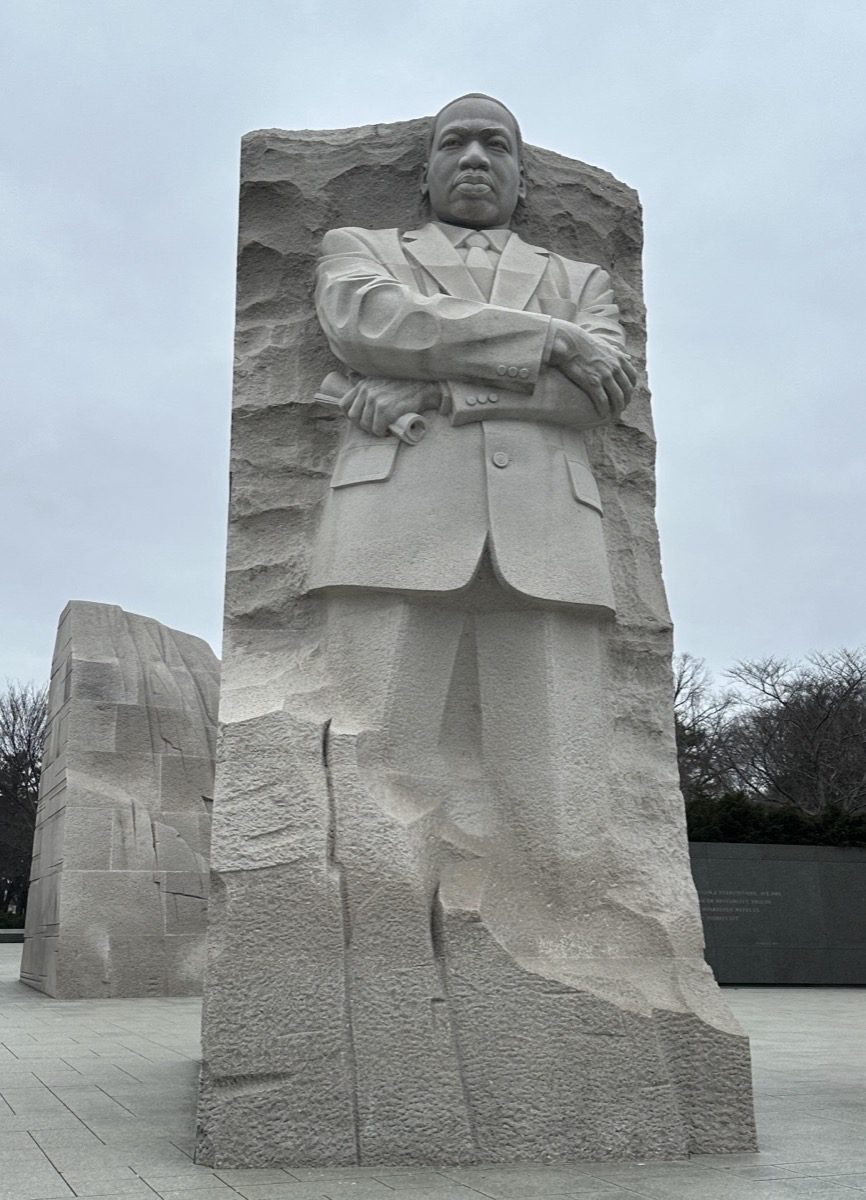
When the statue came into view, I stopped.
30 feet tall. Standing as if carved straight out of a mountain. Arms crossed. Looking straight ahead. Lincoln’s gaze felt like a question — are you doing okay? This was different. This was the face of someone who had already decided. Who knew what was coming and was going anyway.
Behind the statue, two rocks split apart. This isn’t decorative. It comes directly from the 1963 “I Have a Dream” speech.
“Out of the mountain of despair, a stone of hope.”
The split rock is the mountain of despair. The statue emerging from it is the stone of hope. The entire memorial was built from that one sentence.
Lincoln sits protected inside a memorial with a roof and columns. Jefferson stands sheltered beneath a dome. MLK just emerged from the mountain — no roof, no cover, taking the rain, the snow, everything.
That was his life. Nobody protected him. Nobody sheltered him. And he didn’t move.
Tidal Basin
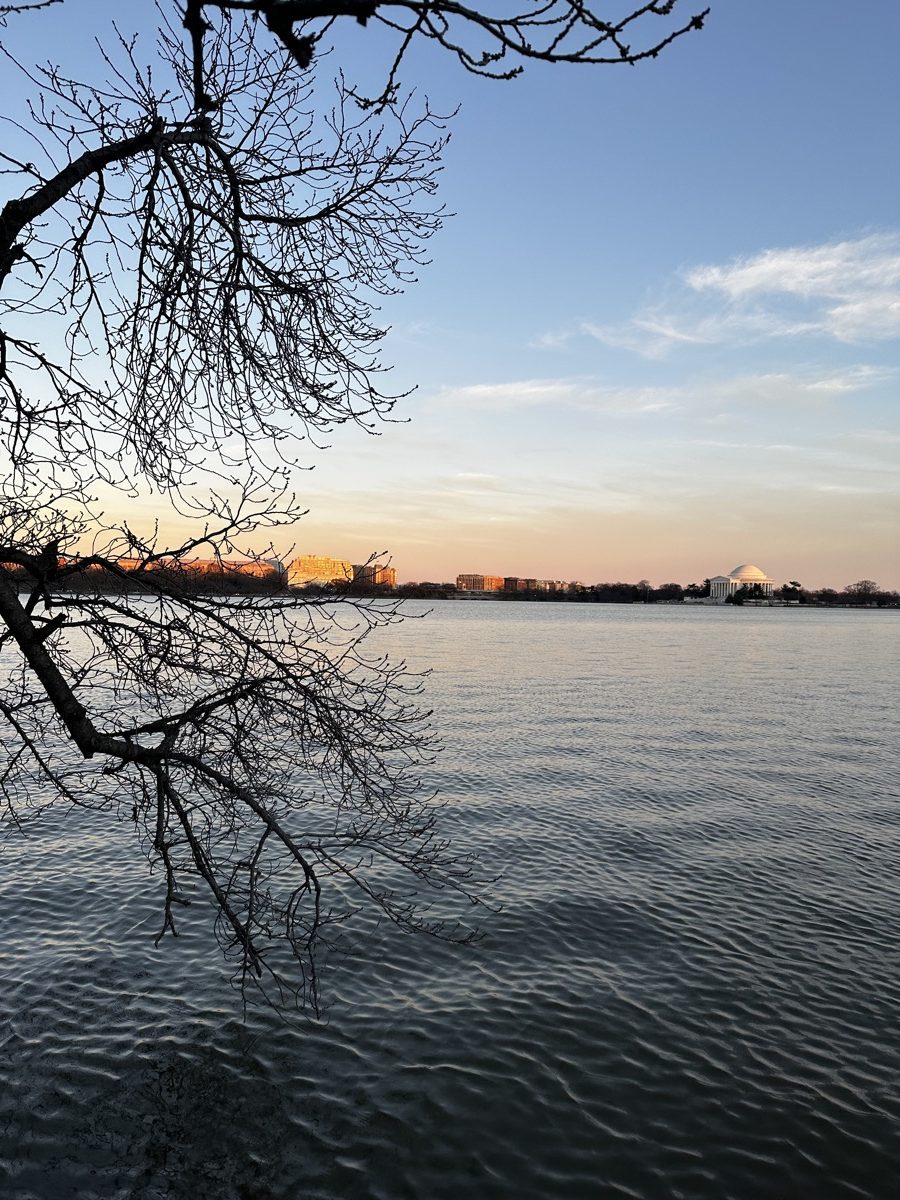
Coming out of the memorial, I stood at the water’s edge.
The Tidal Basin. Connected to the Potomac River. Across the water, the Jefferson Memorial — white dome, quiet, still.
Jefferson wrote the Declaration of Independence. “All men are created equal.” The man who wrote those words owned slaves. The man who spent his life demanding those words be honored is standing right here.
Same waterfront. Facing each other.
In spring, cherry blossoms fill this path. That day it was still winter. Bare branches, quiet water, the last of the light fading. It felt right that way.
Epilogue
Lincoln ended slavery through war. But emancipation wasn’t equality. A hundred years later, Black Americans still couldn’t sit in the same seats on buses, attend the same schools, or vote without obstruction.
MLK fought with words and footsteps instead of guns. He was arrested 30 times. His home was bombed. He didn’t respond with violence. The Civil Rights Act passed in 1964. The Voting Rights Act in 1965. The laws changed.
April 4, 1968. A motel balcony in Memphis. One shot. He was 39.
His autopsy noted that though only 39, his heart was that of a 60-year-old. From stress, they said.
The stone carved out of the mountain of despair is still standing here. Arms crossed, taking the rain, not moving.
Out of the mountain of despair, a stone of hope.
Next: The National Archives — where all of this is on record.
Leave a Reply