• Hamilton’s Philadelphia: He Traded This City for an Entire Economy

    Hamilton’s Philadelphia: He Traded This City for an Entire Economy Philadelphia was the temporary capital of the United States. Then Hamilton made a deal over dinner. Washington D.C. got built. Philadelphia lost its place in history. I live nearby. I walked past what he left behind without ever knowing it was there.

    I found it by accident. A building that didn’t belong.

    I was walking through Old City Philadelphia when I stopped in front of something that made no sense. Everything around it was glass and concrete. But there it stood — alone, out of time. Corinthian columns. An eagle at the top. Like a Greek temple had been dropped into a modern city and nobody bothered to explain why.

    I didn’t know what it was. I took a photo. I always do. Even when I don’t know what I’m looking at.

    I could have kept walking.

    Writing this blog, I found out. The First Bank of the United States. America’s first central bank. 1791. Hamilton built it here.

    That’s when the puzzle started coming together.

    The Dinner That Moved a Capital

    But why did Hamilton build everything here — and then lose the city?

    After the Revolutionary War, America was a mess. Every state had its own debt, its own currency. Hamilton said: let the federal government assume all the states’ debts. That’s how we become one country with one credit system.

    The southern states refused. We already paid our debts. Why should we pay for the north?

    Hamilton was stuck.

    Jefferson wanted something. He wanted the capital moved south. Philadelphia — the temporary capital — was a northern city, and the south felt cut out of power.

    So in 1790, Hamilton and Jefferson sat down to dinner. No public vote. No debate. Two men, one table.

    Hamilton said: Move the capital to the Potomac. I’ll make sure it happens. In return, support my economic plan.

    Jefferson agreed.

    Washington D.C. was born from that dinner. Philadelphia lost its place as capital. Hamilton got what he actually wanted — the financial architecture of a new nation.

    He staked a city on a deal. Philadelphia lost its capital status. Hamilton got the American economy.
    The Compromise of 1790

    Historians call it the Compromise of 1790. Hamilton needed his debt assumption plan — without it, the young nation had no financial credibility. Jefferson needed the capital moved south. The deal was struck over a private dinner. No record of exactly what was said. Two men decided the geography of American power over a meal, and the country has never moved its capital since.

    Independence Hall — The Room Where Hamilton Fought
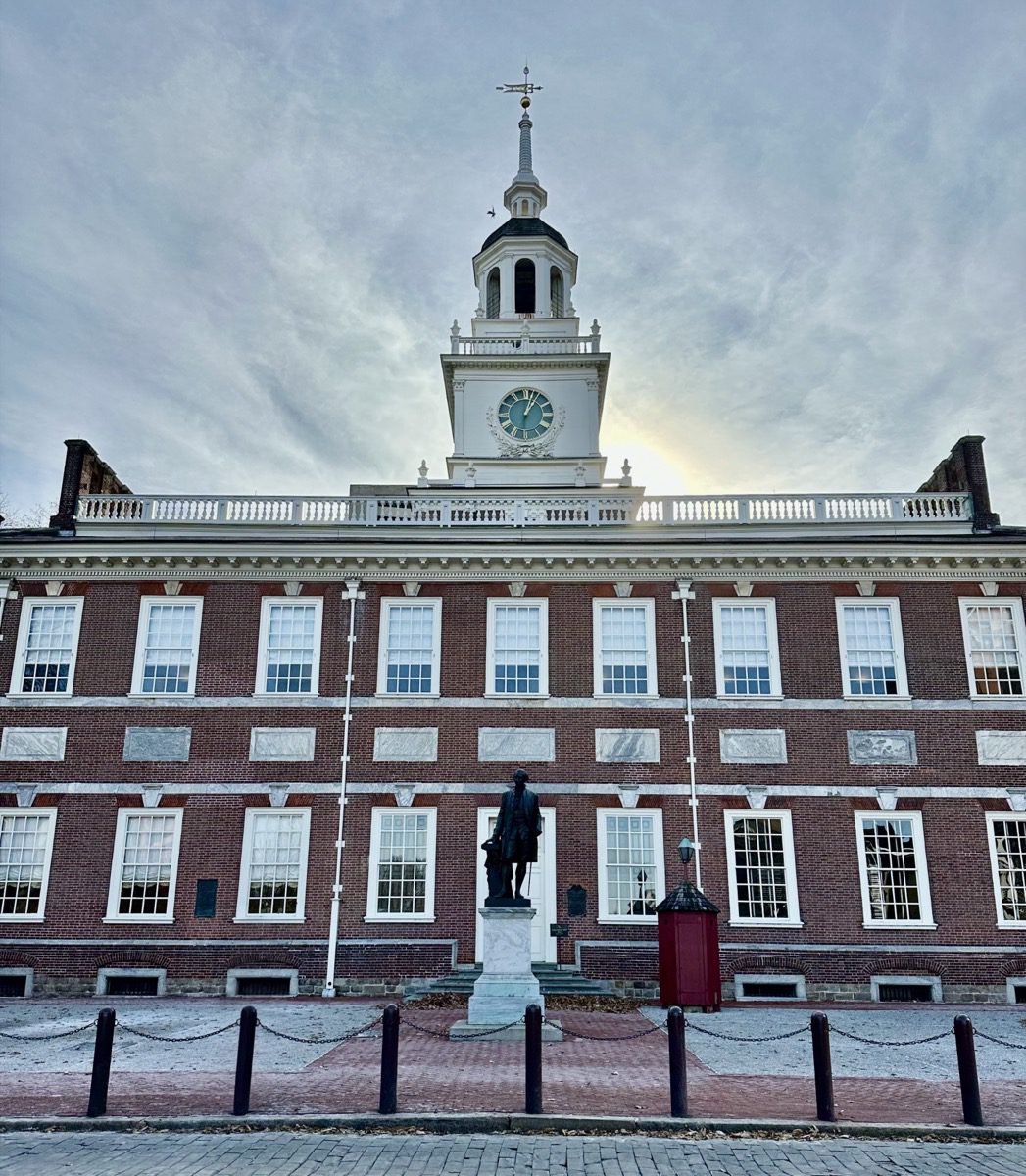
    Independence Hall Philadelphia exterior
    Independence Hall, Philadelphia. The Constitution was written inside. Photo by Gaze

    I lived near Philadelphia for years and never really looked at Independence Hall. It was just there — a backdrop for tourist photos.

    That’s how it works with famous things. New Yorkers don’t visit the Statue of Liberty. Parisians walk past the Eiffel Tower without looking up. When something is always there, you stop seeing it.

    Then I found Hamilton’s grave in New York. And suddenly this building looked different.

    Step inside the Assembly Room. Wooden chairs. Green drapes. Light coming low through tall windows. A quiet, small room. And yet — this is where the direction of America was decided.

    Would America remain a nation of farmers? Or become something built on finance and industry? Hamilton against Jefferson. Against Madison. Against everyone who thought ambition was dangerous.

    Hamilton won. The America we know today is the proof.

    The Constitution said what America was. Hamilton’s bank said how America would work. Both arguments happened within two blocks of each other.
    Gaze’s Tip

    Late afternoon, after the crowds thin. The light through those windows does something to the room. Free timed tickets required in peak season — book ahead at nps.gov/inde · 520 Chestnut St, Philadelphia, PA 19106

    Liberty Bell — A Cracked Bell That Still Rang
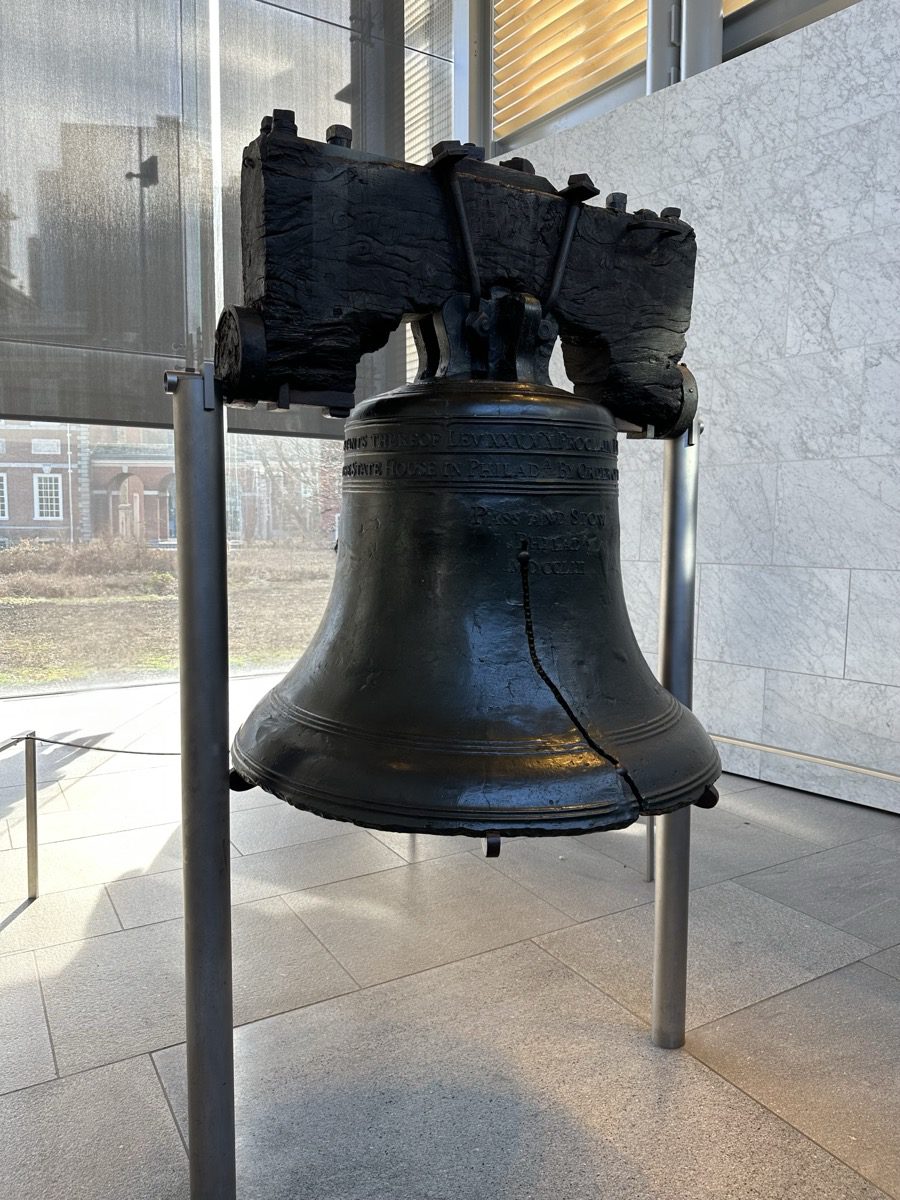
    Liberty Bell Philadelphia
    The Liberty Bell. The crack is the point. Photo by Gaze

    Right next to Independence Hall. A bell that cracked the moment it arrived from London. Recast twice. Still cracked.

    And yet — it became America’s most powerful symbol of freedom.

    Engraved on its surface: “Proclaim Liberty throughout all the land.” In the 1830s, abolitionists found those words and named it the Liberty Bell. Every movement that fought for freedom in America after that — abolitionists, suffragettes, Civil Rights — claimed it as their own.

    The bell didn’t choose to be a symbol. People who wanted freedom chose it.

    Hamilton’s connection to this bell: he was one of the few Founding Fathers who supported abolition. When he died in 1804 — shot by Vice President Aaron Burr — this bell tolled. A bell engraved with the word liberty, ringing for a man who believed in it.

    And now 2026. America’s 250th year of independence. The cracked bell is still there. Still the same question: what does liberty actually mean?

    Did You Know

    The Liberty Bell was not always called the Liberty Bell. It was just the Pennsylvania State House bell — rung to call lawmakers to session, to summon citizens to public meetings. It became the Liberty Bell only in the 1830s, when abolitionists adopted its inscription as their symbol. The bell didn’t make itself famous. People fighting for freedom made it famous. And the bell that came to symbolize American independence from Britain? It was ordered from a foundry in London.

    Gaze’s Tip

    Don’t just stand inside. Cross the street and look back — the Liberty Bell framed against Independence Hall. That’s the real view. Early morning, before the crowds. nps.gov/inde · 526 Market St, Philadelphia, PA 19106

    First Bank & Carpenters’ Hall — The Last Piece
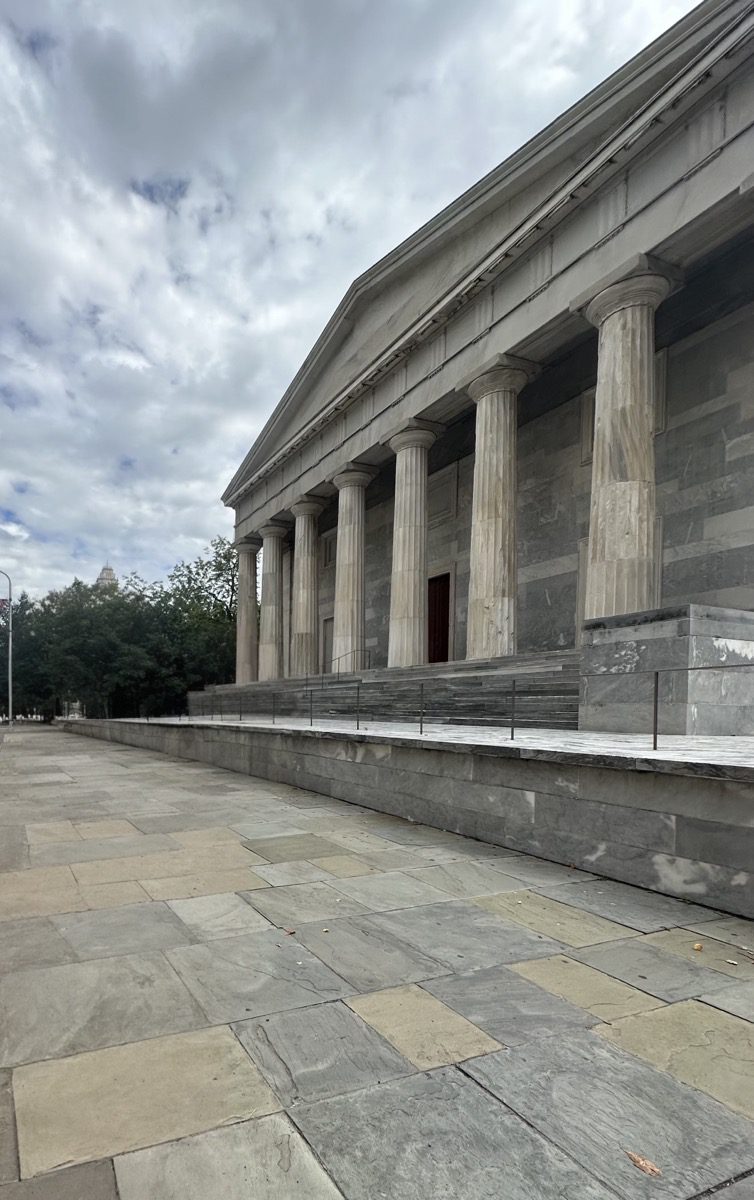
    First Bank of the United States Philadelphia
    The First Bank of the United States. A Greek temple between glass towers. Photo by Gaze

    Back to the building I found by accident.

    Hamilton didn’t start here. He started around the corner — at Carpenters’ Hall. A borrowed room, 200 feet away. America’s most powerful financial institution began in a space Hamilton didn’t own.
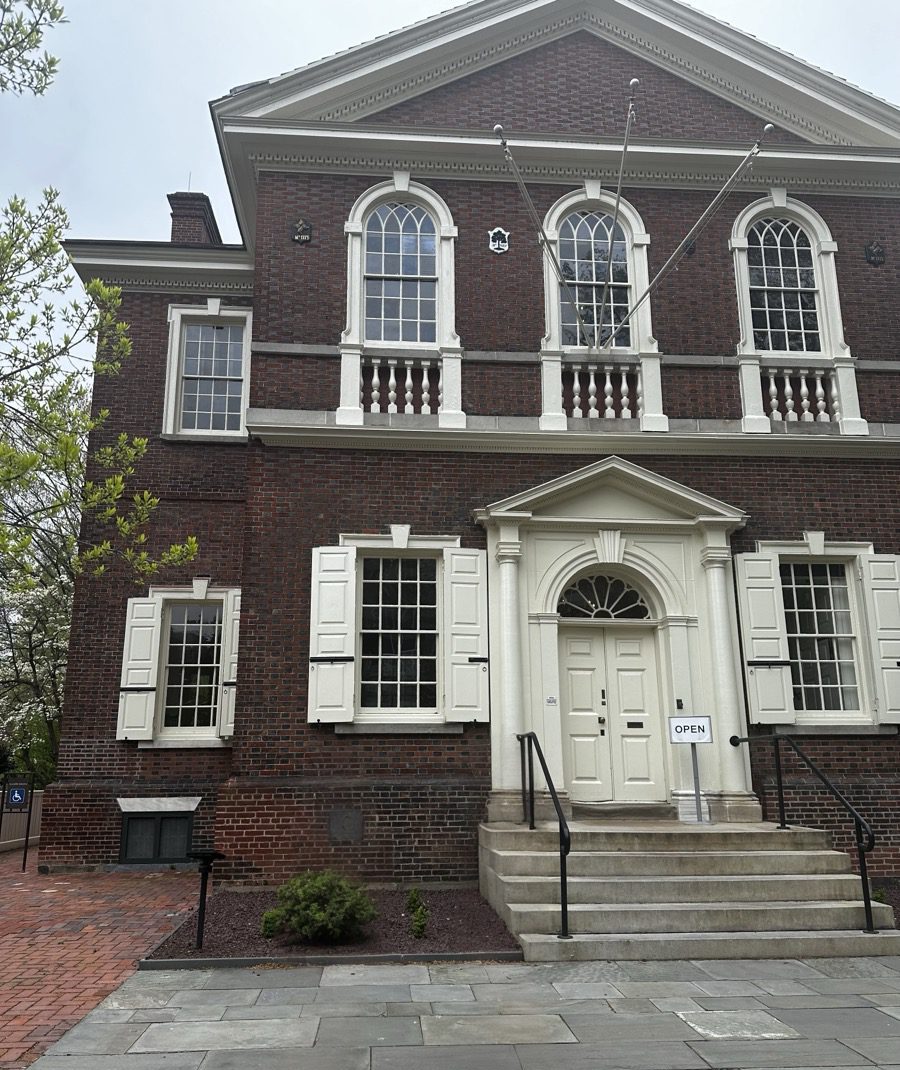
    Carpenters Hall Philadelphia exterior
    Carpenters’ Hall — exterior. Photo by Gaze
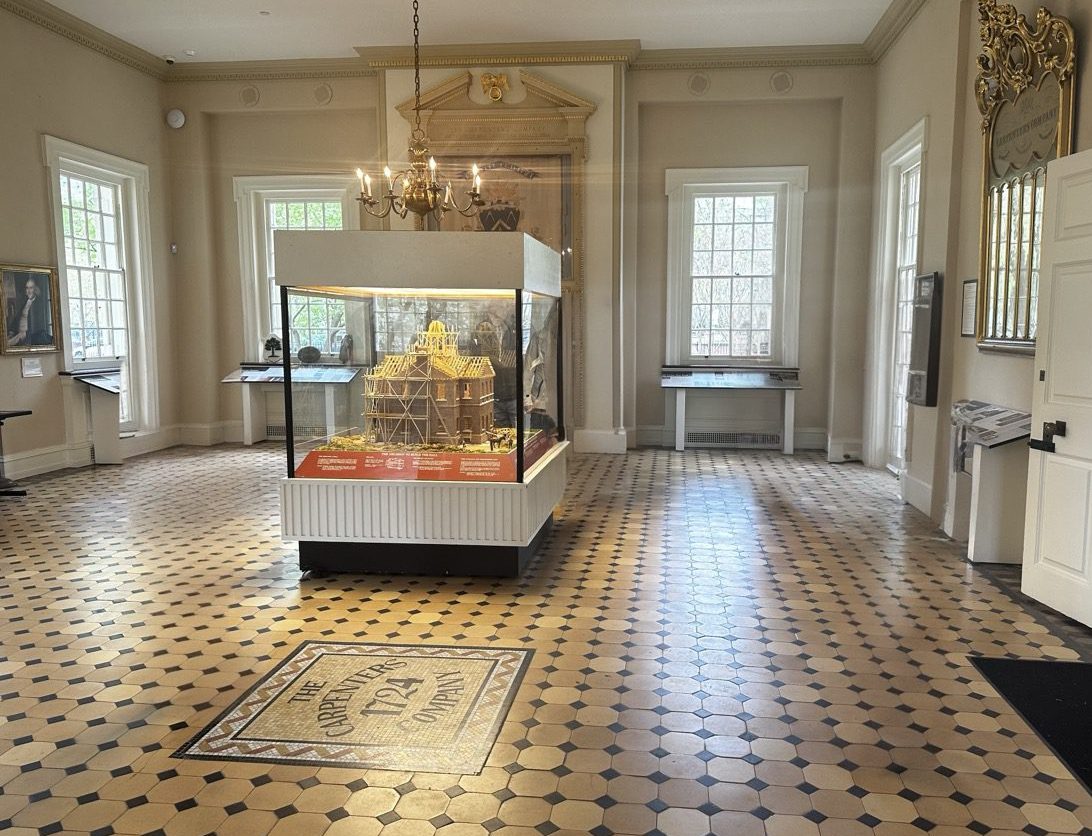
    Carpenters Hall Philadelphia interior
    Inside — where Hamilton’s bank began. Photo by Gaze

    I had been inside Carpenters’ Hall. Walked through it. Thought it was just an old guildhall — a historic building for carpenters. Looked around. Walked out.

    Writing this, I found out what room I had been standing in.

    Six years after starting in that borrowed room, Hamilton completed his own building next door. The Greek temple. The one I stopped in front of without knowing why.

    A photo I took without knowing what I was photographing. A room I stood in without knowing what happened there. And then, writing it all down — everything clicked into place.

    I wasn’t looking for the connections. I was just walking, photographing, wandering. And then one day, it all fit.

    Did You Know

    The First Bank of the United States was not America’s first bank. Regular banks already existed — Hamilton himself helped found the Bank of New York in 1784. The First Bank was America’s first central bank — a federal institution to manage the entire nation’s finances. The equivalent of today’s Federal Reserve. And Hamilton’s idea for it — the concept that would eventually shape the entire global financial system — started in a borrowed room at Carpenters’ Hall.

    Gaze’s Tip

    The First Bank reopens in 2026 as a museum — just in time for America’s 250th birthday. For now, the exterior only. Worth standing in front of. Also visit Carpenters’ Hall, 320 Chestnut St — free entry, and worth knowing what room you’re standing in. firstbankphilly.com · 120 S 3rd St, Philadelphia, PA 19106
    Gaze’s Pick — Where I Stayed
    Morris House Hotel 225 S 8th St · Washington Square · $$$ Built in 1787 — the same year the Constitution was drafted two blocks away. A National Historic Register property. Georgian brick, antique furniture, a garden that hasn’t changed in centuries. To sleep here is to understand that this city was, once, the center of everything. Explore →
    The Logan Philadelphia One Logan Square · Benjamin Franklin Pkwy · $$$$ Named for James Logan — William Penn’s secretary, the man who built Philadelphia’s intellectual foundations. The lobby holds a monumental portrait of Benjamin Franklin, assembled from thousands of fragments. History here isn’t preserved behind glass. It’s hanging on the wall. Explore →
    Taste — Where I Ate
    Barclay Prime 237 S 18th St · Rittenhouse Square · $$$$ Inside The Barclay — a 1929 building that was once the address of Philadelphia’s upper class, the kind of place where deals were made and power changed hands quietly. The steakhouse that occupies it now keeps that weight. Rittenhouse Square through the window. The city Hamilton built, viewed from the city that outlasted him. Explore →
  • Who Is the Man Inside Your $10 Bill?

    Who Is the Man Inside Your $10 Bill? Most people have no idea who’s on the $10 bill. I lived six blocks from his grave for four years. I walked past it every single day. I never once knew he was there.

    We all carry him in our wallets. Nobody ever asked who he was. Neither did I.

    I lived six blocks from his grave for four years. Walked past it every morning. Never once went in.

    That’s the thing about being young in a city — you’re so busy surviving it that you miss what it’s actually telling you. New York in 2004 was just a map I hadn’t learned yet. The subway lines were foreign. The skyline had a wound where two towers used to be. I was twenty-something, running late, carrying too many textbooks.

    The city didn’t care. It never does.

    Twenty years later, I came back. And it finally started talking.

    The man on your $10 bill

    Alexander Hamilton. America’s first Secretary of the Treasury, appointed by George Washington in 1789. Born in the Caribbean island of Nevis — no money, no family name, no connections. Arrived in New York as a teenager, alone. By thirty, he had designed the entire financial architecture of a new nation: central bank, national credit, the U.S. dollar. He died in 1804, shot in a duel by the sitting Vice President Aaron Burr. The only non-president on U.S. currency still in circulation. If you’ve seen the musical — this is where the story actually happened.

    Trinity Church — The Door I Never Opened

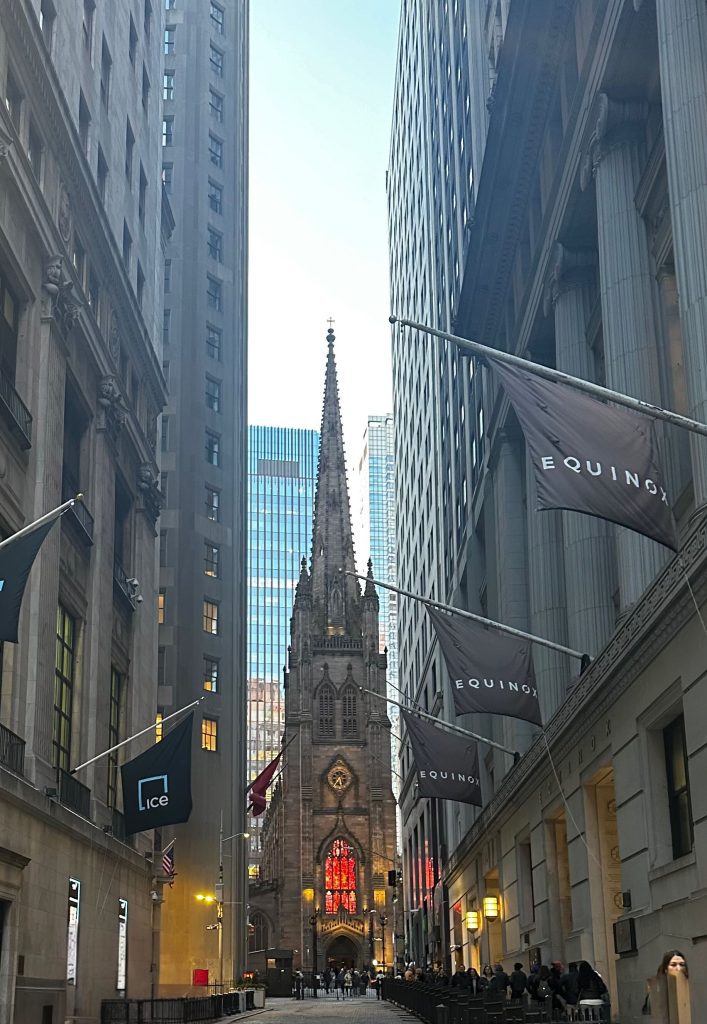
    Trinity Church interior stained glass Financial District New York
    A sanctuary of stillness inside the most restless neighborhood in America. Photo by Gaze

    89 Broadway. A Gothic spire wedged between glass towers. As a student I cut through the front steps when I was running late. That was my entire relationship with one of the oldest churches in America — a shortcut.

    Twenty years later I finally opened the door.

    Stained glass throwing color across stone floor. The noise of the city — gone. Just like that. Outside, someone was closing a deal. In here, time moved differently.

    I walked through to the south churchyard. Old trees, white marble monuments, the smell of winter stone. And at the end of a gravel path — a white pyramid.

    Alexander Hamilton. 1755–1804.

    At the base of the monument, $10 bills. Several of them, left by strangers. The man who designed America’s currency, still being paid in it. Two hundred years later.

    Four years. Every single morning. I never knew he was here.

    Hamilton came to New York the same way I did — knowing nobody, understanding nothing. He was seventeen. I was twenty-two. Two hundred years apart, same island, same starting point: complete overwhelm, and nowhere to go but forward.

    The difference is what he built while he was here.

    What Hamilton built on these streets

    Bank of New York, 1784 — still operating today as BNY Mellon. Law practice on Wall Street. Cases that shaped American property rights. The financial district you’re walking through isn’t an accident. It’s what Hamilton deliberately built here, block by block, after the Revolution.

    Finding the grave

    South churchyard — left as you face Trinity from Broadway. Look for the white marble pyramid. The $10 bills are almost always there. Go on a weekday morning before the tourists arrive. trinitywallstreet.org · 89 Broadway, NY 10006

    84 William Street — The Building That Remembers

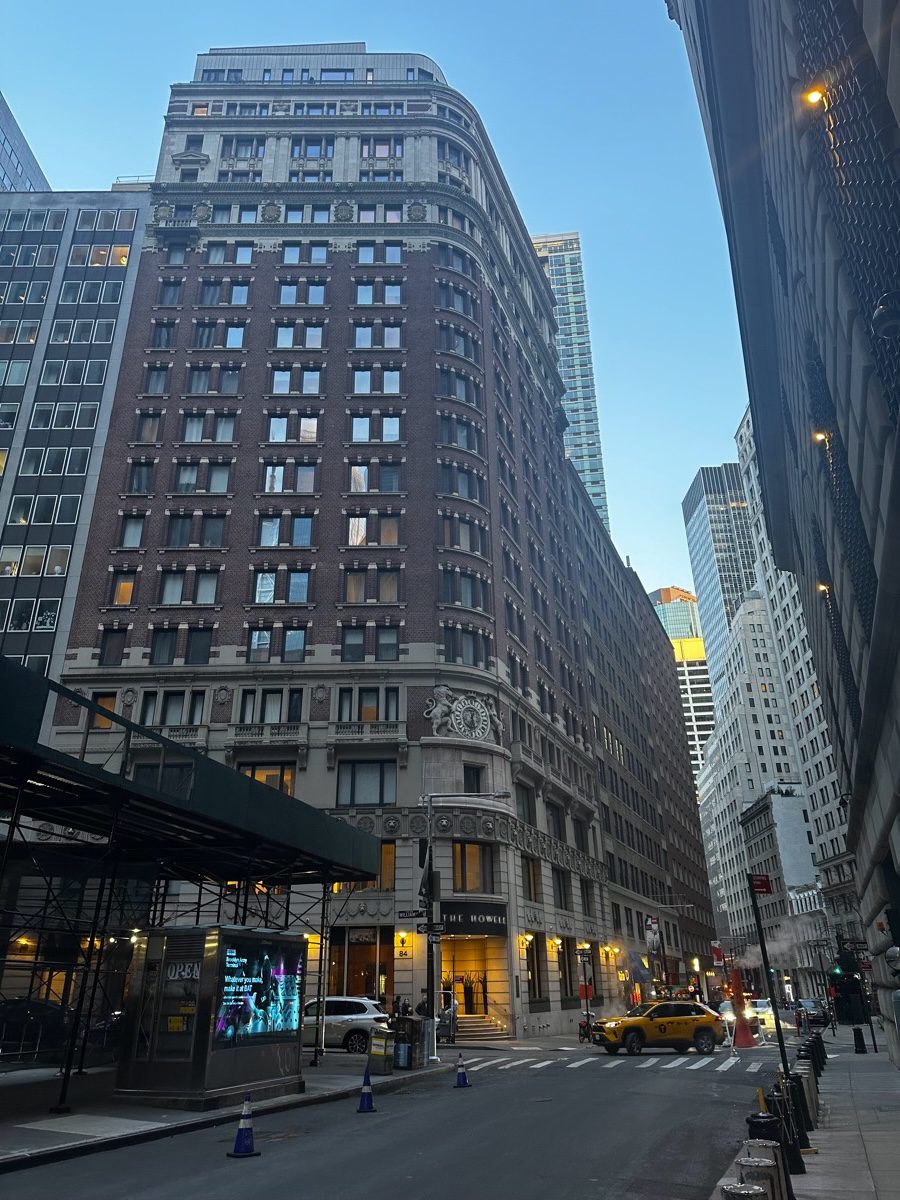
    84 William Street The Howell Neoclassical building Financial District New York
    84 William Street — once a worn-out dormitory, now The Howell. The lion carvings are still there. Photo by Gaze

    Two blocks from Trinity Church. I stopped without meaning to.

    The building went up in 1907 — Neoclassical, lion carvings on the facade. Back then it was a dormitory where I ate bagels and drank black coffee and had no idea I was living inside one of the most consequential blocks in American financial history. Now it’s called The Howell. Luxury residences. The lions are still there.

    Hamilton’s law office was on this street. His bank was two blocks away. The system he was building — the invisible architecture of credit and currency that would eventually become the most powerful economy in the world — he was working on it right here. And I was eating bagels on the same sidewalk, thinking about nothing except whether I’d finish my readings before class.

    The city was always showing me. I just wasn’t ready to look.

    Why this neighborhood matters

    Wall Street takes its name from an actual wall — a wooden palisade built by Dutch colonists in 1653. The New York Stock Exchange, founded in 1792 partly through Hamilton’s push to stabilize national finances, still stands two blocks from here.

    The building today

    Now The Howell — luxury residences, open lobby worth a look. thehowell.com · 84 William St, NY 10038

    The Map He Left Behind

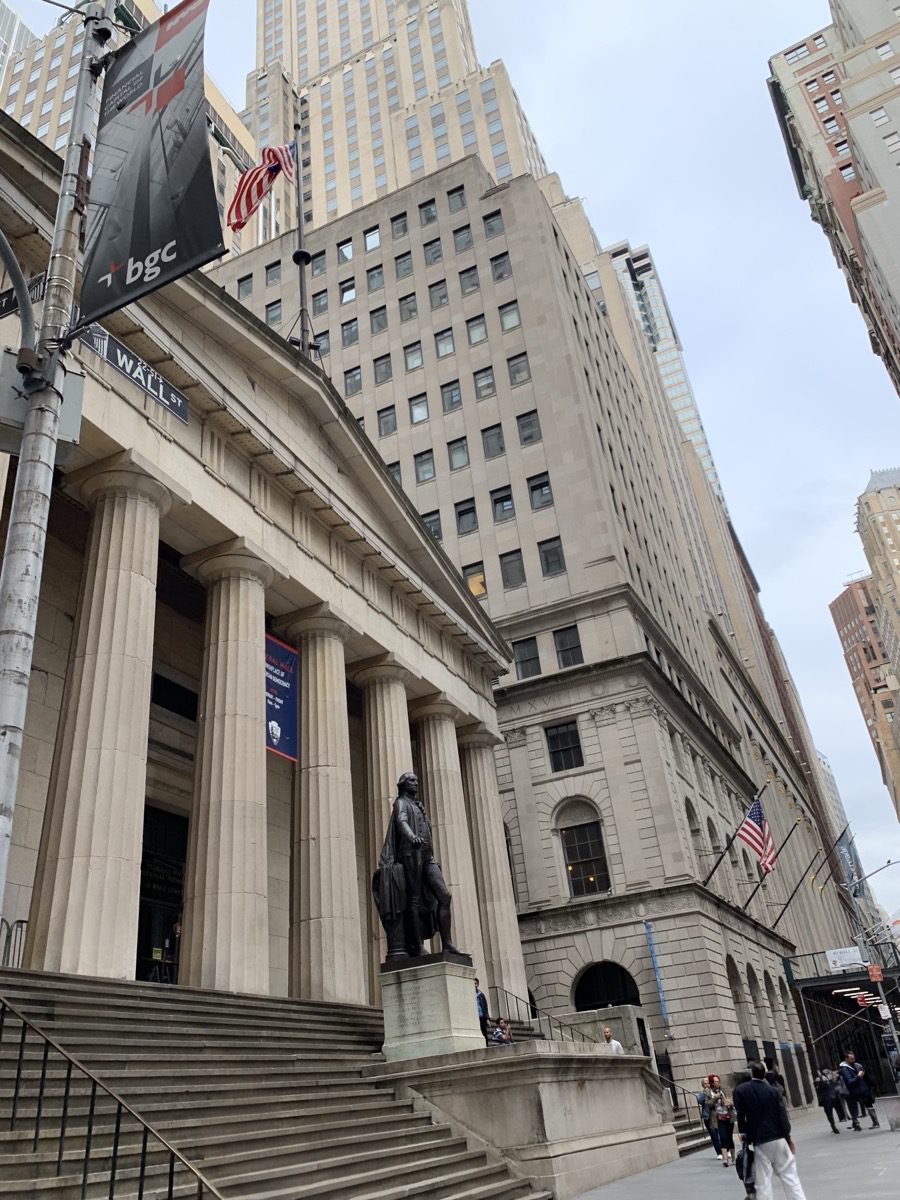
    Federal Hall Wall Street New York Washington statue
    Federal Hall, Wall Street, New York. Where Washington took the oath. Where Hamilton’s economy began. Photo by Gaze

    I spent that afternoon in the Trinity churchyard, reading about Hamilton on my phone. I missed every meeting I had scheduled.

    I didn’t care.

    Hamilton didn’t just build institutions. He built a logic — a way of thinking about money, credit, and national identity that was completely new. Before Hamilton, America was thirteen states with thirteen currencies and no shared future. After Hamilton, it was one economy.

    He did all of it before he was forty. In a city he arrived in as a stranger. On streets I walked every day without knowing any of this.

    The map doesn’t end here. It leads south to Philadelphia — where he built the First Bank of the United States, the physical home of everything he’d been designing in his head on these blocks.

    Twenty years later, I’m still following his trail.

    I just finally know I’m on it.

    Gaze’s Pick — Where I Stayed
    The Beekman 123 Nassau St · Financial District · $$$$ A 19th-century landmark with a nine-story atrium that stops you cold the moment you walk in. This is what the Gilded Age looked like when it was trying to impress you. Two blocks from Hamilton’s grave. Explore →
    Casa Cipriani 10 South St · Battery Park · $$$$ On the water, facing the harbor. Hamilton arrived by boat, somewhere near here. The view hasn’t changed as much as you’d think. Explore →
    Taste — Where I Ate
    Conwell Coffee & Cocktail Hall 6 Hanover St · Financial District · $$ A former bank hall — Art Deco ceilings, marble teller counter, the original vault still visible. Order a coffee in the morning or a cocktail at night. Either way, you’re sitting inside the financial history Hamilton built on these blocks. Explore →
    Delmonico’s 56 Beaver St · Financial District · $$$$ America’s first fine dining restaurant, opened in 1837 — three decades after Hamilton designed the financial district that made this neighborhood possible. The Delmonico steak, Eggs Benedict, Baked Alaska: dishes that were invented here, in a room that still feels like it belongs to old New York. Explore →