I realized the date only after I’d already started writing.
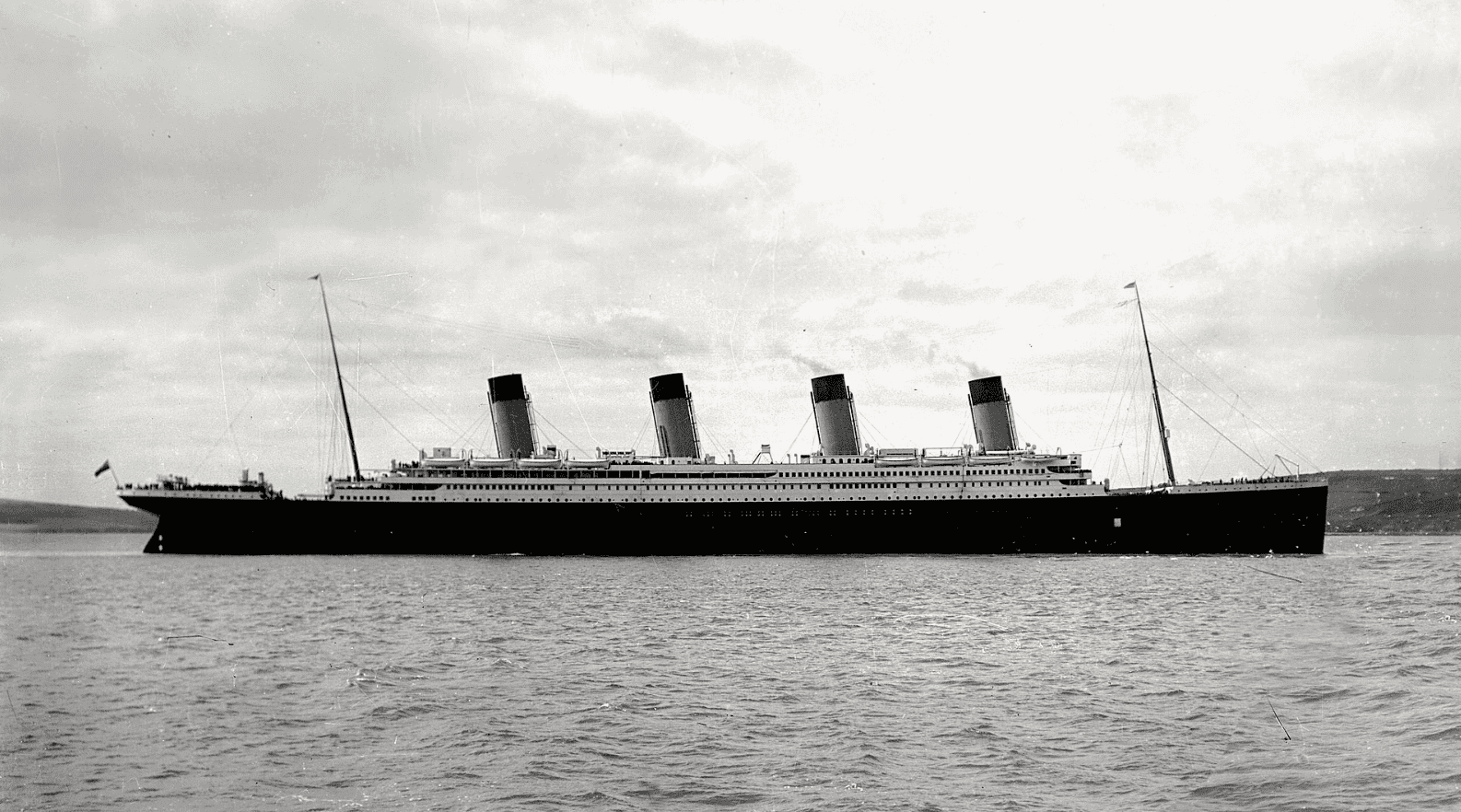
April 14th. Tonight, one hundred and twelve years ago, the Titanic struck an iceberg in the North Atlantic. I didn’t plan this. But some coincidences are too precise to dismiss.
He was leaning against the railing, smoking a cigarette.
The lifeboats were already descending. His wife Madeleine was in one of them — five months pregnant, lifted through the porthole by his own hands and placed into Lifeboat 4. He had asked the officer on deck whether he might join her. She was pregnant, he explained. The officer said no. He nodded, stepped back, and walked to the railing.
Witnesses said he was calm. No sign of panic. No argument.
His name was John Jacob Astor IV.
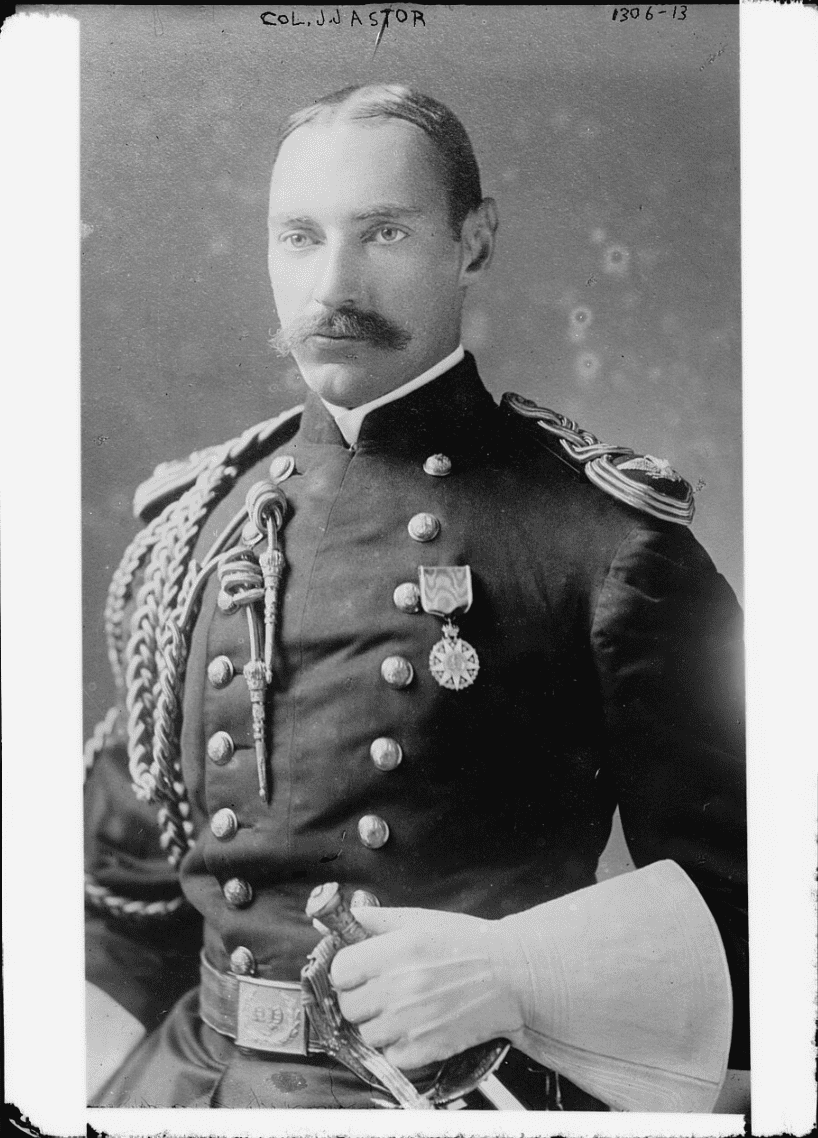
Eighty-seven million dollars. The wealthiest passenger aboard the most advanced vessel human engineering had yet produced. The ship was sinking. He didn’t try to leave.
What the witnesses left us is only the image: the railing, the cigarette, the stillness. Whatever was behind it — composure, resignation, something else entirely — no record survives to say.
The Others on That Ship
Astor was not alone in that company.
Isidor Straus was there — the man who built Macy’s into what it became. He and his wife Ida had a first-class cabin. When the lifeboats filled, Ida refused her seat. “Where you go, I go,” she told him. Isidor refused his as well. He was an old man, he said. He would not take a place that belonged to someone else. The two of them found deck chairs and sat down together. Witnesses saw them talking quietly. That was the last anyone saw of them. Neither body was ever recovered.
Benjamin Guggenheim went below when the ship began to list. He returned to the deck in a dinner jacket, his valet beside him, also dressed. He had removed his life vest. “We’ve dressed in our best,” he told the people around him, “and are prepared to go down like gentlemen.” His body was never found.
Same class, same ship, same night. Each of them chose differently. Each arrived at the same place.
The Year It All Came Apart
The Titanic was not the only thing that went under in 1912.
The year before, in 1911, the Supreme Court had ordered the breakup of Standard Oil. The monopoly Rockefeller had spent thirty years assembling was ruled illegal and dissolved. In 1913, the Federal Reserve was established — the government planting itself permanently inside the machinery of American finance. That same year, the Sixteenth Amendment was ratified: a federal income tax. For the first time, private wealth was subject to the reach of the state.
The structures that had made the Gilded Age possible — unchecked monopoly, untaxed accumulation, individuals who operated above and around government — were being dismantled, one law at a time. The Titanic sinking was the most dramatic moment in that unraveling. But it was a moment inside a longer collapse, not the cause of it.
The age didn’t end that night. It had been ending for years. History made the rest.
The Hotel He Built
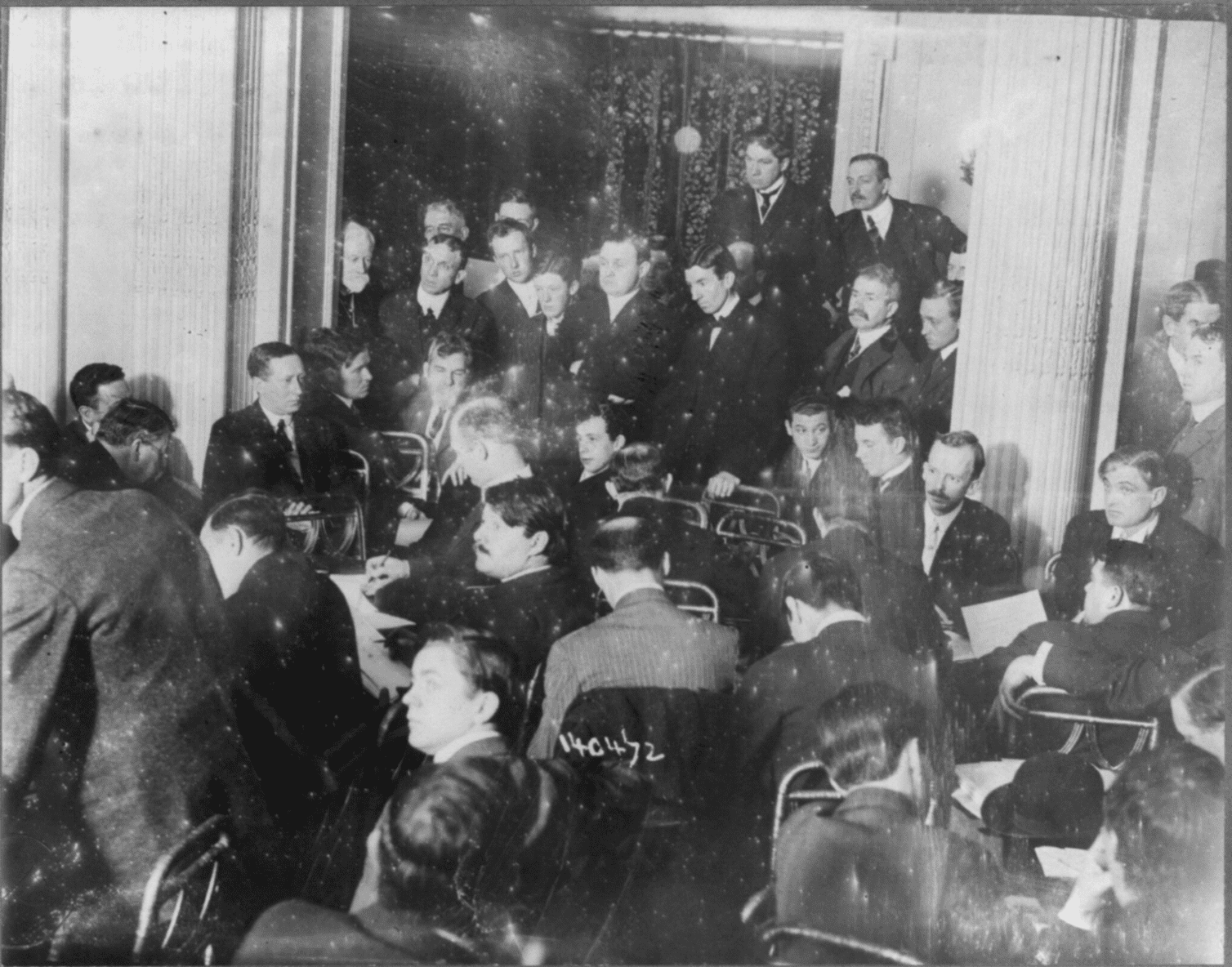
Five days after the ship went down, the United States Senate opened its inquiry.
The hearings were held at the Waldorf-Astoria — the hotel Astor himself had built, the one born from his family’s feud, the one that had made his name synonymous with New York luxury. He had been dead for less than a week. For eighteen days, in the ballroom of his own hotel, eighty-six witnesses sat and described what they had seen. Survivors reconstructed the night, hour by hour, in the room where he had once hosted presidents and kings.
History arranges its ironies without comment. You either notice them or you don’t.
How They Each Ended
Rockefeller lived to ninety-seven. After Standard Oil was broken up, he grew richer — he owned shares in every successor company, and their combined value exceeded the original. In his final years, he carried dimes in his pocket and handed them to strangers. Good luck, he would say. Whatever he was trying to settle, he never said.
Morgan died in the spring of 1913, in a hotel room in Rome. He was seventy-five, still traveling, still acquiring. When the news reached New York, the stock market dropped. The library he built on Madison Avenue — the one that was his private sanctuary, the one no one entered without his permission — is open to the public now. Anyone can walk in.
Carnegie died in 1919, at eighty-three. He had built more than 2,500 libraries and given away the vast majority of his fortune. It still wasn’t enough to settle the account. The name Homestead outlasted him.
Cornelius Vanderbilt II collapsed from a stroke in 1899, four years after The Breakers was finished. He was fifty-five. The house outlasted him by more than a century. There’s a gift shop now.
Astor died on April 14th, 1912, in the North Atlantic. He had leaned against the railing and smoked a cigarette. The lifeboat descended. He did not. His body was recovered a week later by a cable ship. He was identified by the initials sewn into the lining of his jacket. His son kept his watch for the rest of his life.
And that was the end of that gilded age.
The Titanic hearings at the Waldorf-Astoria ran for eighteen days — April 19 to May 25, 1912. Senator William Alden Smith of Michigan presided. Eighty-six witnesses testified, including surviving officers, crew members, and passengers. The inquiry led directly to sweeping changes in maritime safety law, including requirements for sufficient lifeboats for all passengers aboard any vessel.
When I was writing the Vanderbilt episode, I stood in front of a sculpture at the Whitney Museum. A male figure with arms outstretched — made by Gertrude Vanderbilt Whitney as a memorial to the men who stayed behind on the Titanic so that women and children could go first. I photographed it. I didn’t know what it was.
A Vanderbilt had made a monument to Astor’s death. I stood in front of it without understanding what I was looking at.
This series has been full of moments like that.
Nobody knows they’re living at the end of an era.
Astor imagined the year 2000. He wrote a novel about Jupiter. He could not imagine the spring of 1912. Rockefeller did not believe Standard Oil could be taken from him. Morgan did not picture strangers walking through his library. Carnegie could not outrun Homestead.
They each believed, as people in every age believe, that the world as they knew it would continue.
On the night of April 14th, 1912, the Titanic went down. What we call the Gilded Age went with it.
The age we’re living in now — when does it end?
Leave a Reply