The exit sign appears for about three seconds. Valley Forge. I’ve been driving past it for years — heading into the city, heading back out — and every time it comes and goes before I do anything about it.
I still haven’t stopped.
A Place to Wait
In the fall of 1777, the British took Philadelphia. Washington tried twice to stop them. Lost both times. He pulled his army back and needed somewhere to put twelve thousand men until spring.
He found a burned-out iron forge along a creek, twenty miles northwest of the city. High ground. Two rivers. Terrain that made a surprise attack unlikely. A defensible place to disappear into until the weather changed.
Twelve thousand men marched in on December 19th.
That Winter
Two thousand of them didn’t make it to spring. Not in battle — the enemy wasn’t the British. It was the winter itself, and a supply chain that had completely collapsed, and Pennsylvania farmers selling grain to the British in Philadelphia, who paid in cash, twenty miles away.
One in three soldiers had no shoes. Washington wrote to Congress that his men were leaving bloody footprints in the snow. He wasn’t speaking figuratively.
Two Things
In February, a Prussian officer arrived on a sleigh — fur coat, Italian greyhound in his lap, almost no English. Baron Friedrich von Steuben. Trained under Frederick the Great. Vouched for by Benjamin Franklin. He drilled them. Bayonets, formations, how to hold a line under fire. He swore at them in French and had someone translate. The army that marched out of Valley Forge six months later was not the army that had stumbled in.
Washington, meanwhile, did something quieter. He stayed. There were people in Congress that winter who wanted him replaced. He ignored them and kept writing letters — send food, send shoes — and kept showing up on the same frozen ground as his men.
Holding on was the strategy. There wasn’t another one.
June 19th, 1778
In May, word came that France had entered the war. The soldiers marched out onto the meadow and fired their muskets into the air. Someone handed out rum.
On June 19th, they broke camp. Nine days later, at Monmouth, they held their ground against the British for the first time. The army that had stumbled into Valley Forge six months earlier was not the one that walked out.
The Park
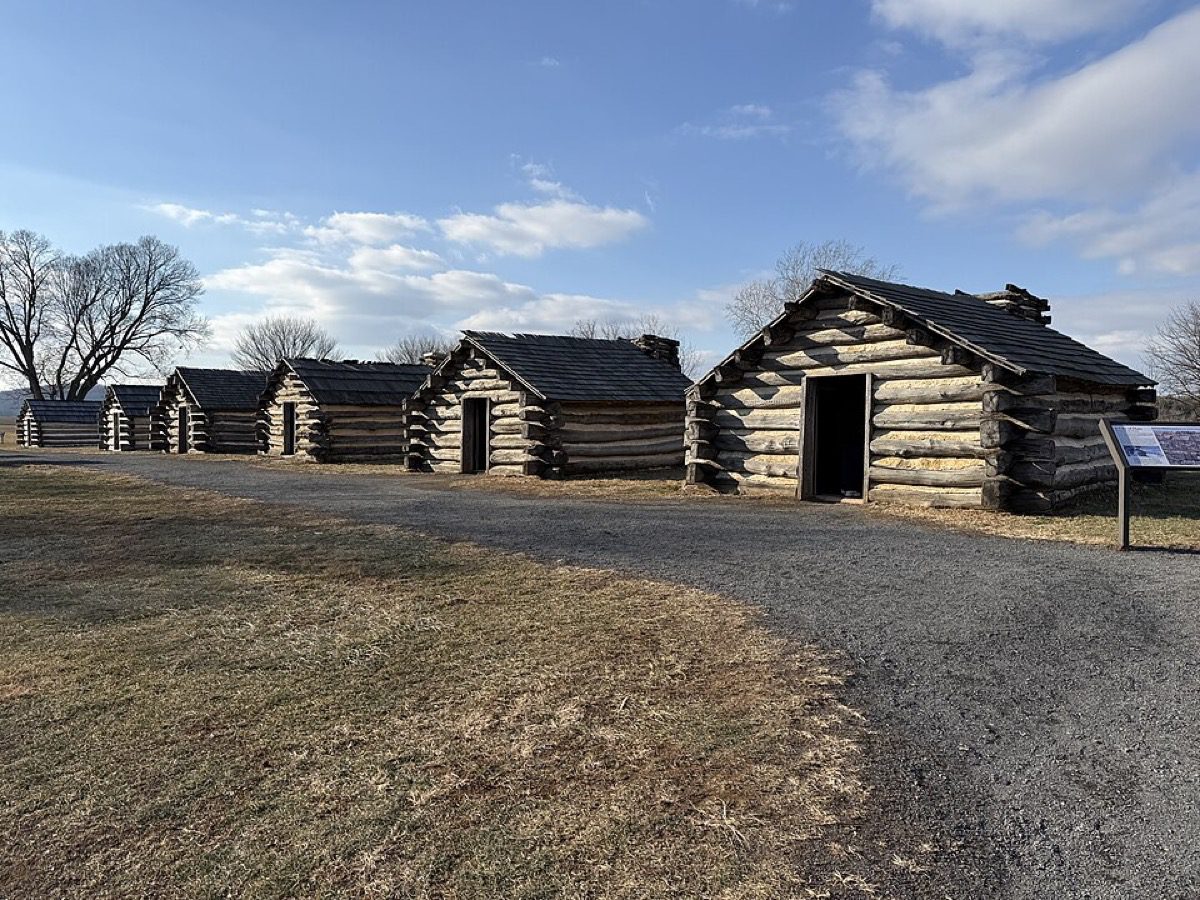
It’s a national park now. No admission fee. Two million people come every year — joggers, school groups, families with strollers, people who just want somewhere quiet to walk on a Sunday afternoon. The reconstructed log huts are still there, twelve men to a room, exactly as Washington ordered them built. You can walk inside. The doorframes are low. The rooms are smaller than you’d expect.
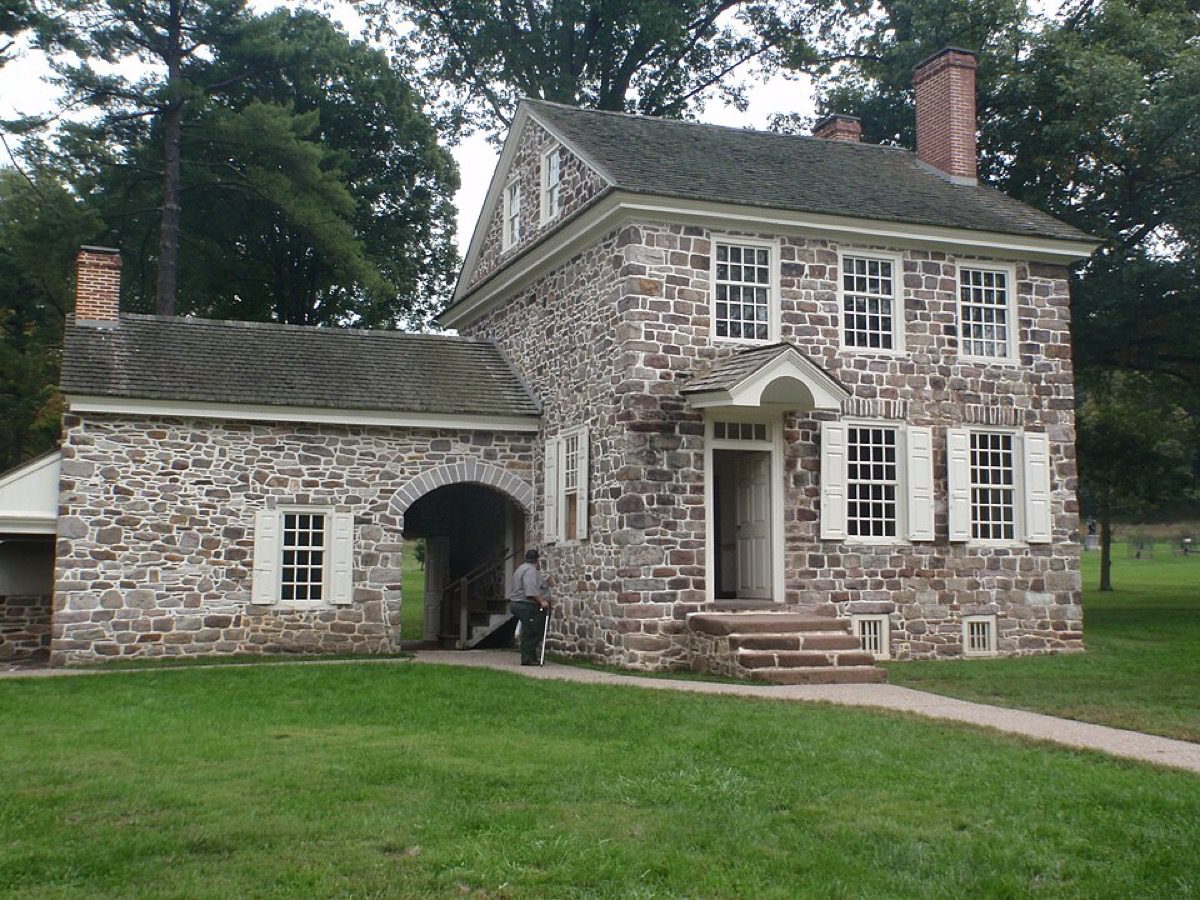
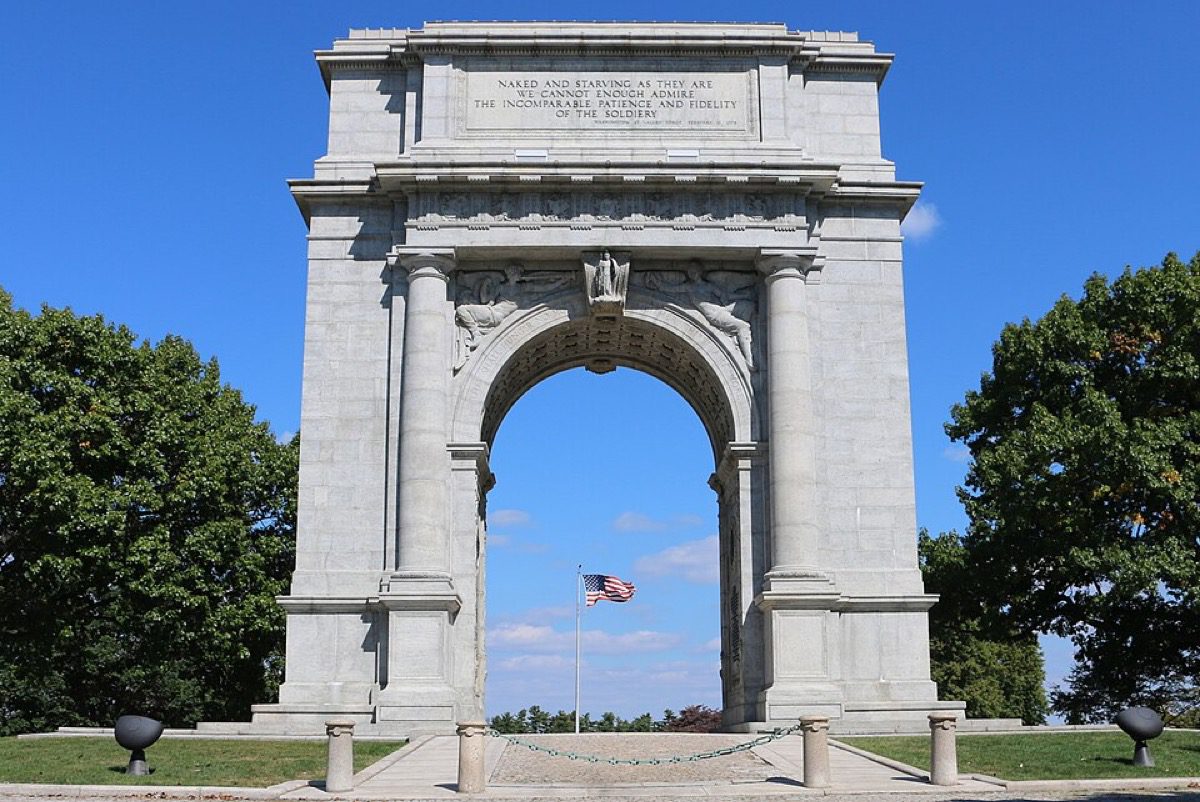
Washington’s headquarters — the actual stone building — still stands. Von Steuben has a statue. There’s a Memorial Arch. The trails run for miles through meadows that were once a city of twelve thousand.
I still haven’t gone in.
Those two thousand who died there — farmers, tradesmen, teenagers — most of them left no record at all. They had no idea what they were part of. They were just trying to make it to morning, staying because the man beside them was staying.
The sign comes and goes at seventy miles an hour.
These days, I look at it a little longer.
Valley Forge was the site of the first large-scale government-mandated inoculation campaign in American history. Washington, having nearly lost his army to smallpox the previous year, ordered every soldier who hadn’t had the disease to be inoculated. It was controversial, it was compulsory, and it worked. The army that left Valley Forge was not only better trained — it was healthier than the one that arrived.
Valley Forge National Historical Park · 1400 North Outer Line Drive, King of Prussia, PA 19406
Open daily, dawn to dusk · Visitor Center: 9am – 5pm · No admission fee · Free parking
From Philadelphia: approximately 30 minutes via I-76 West · Exit: Valley Forge / Route 422
Hours and conditions subject to change — verify at nps.gov/vafo before your visit.
Leave a Reply