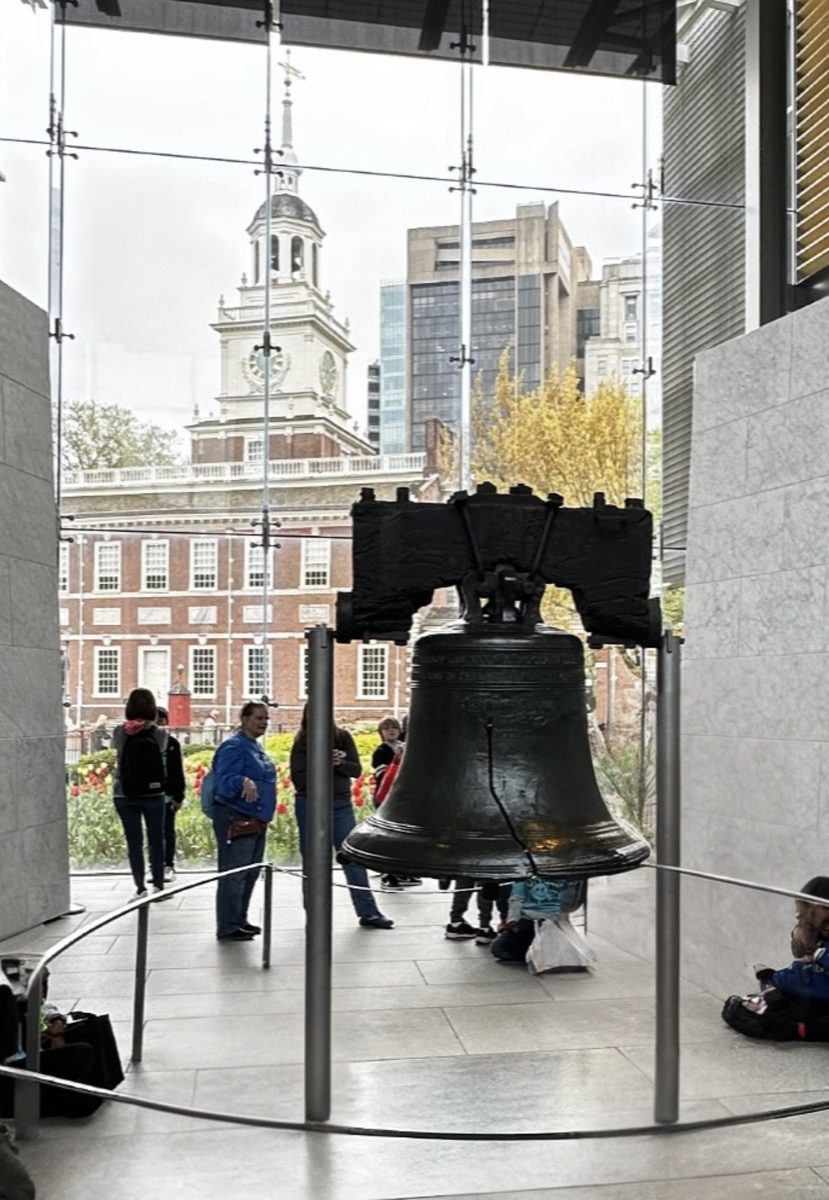
There is always a line in front of the Liberty Bell.
The first time I came to Philadelphia’s Independence Hall and Liberty Bell, the second time, and every time after that — the line was there. I never questioned it.
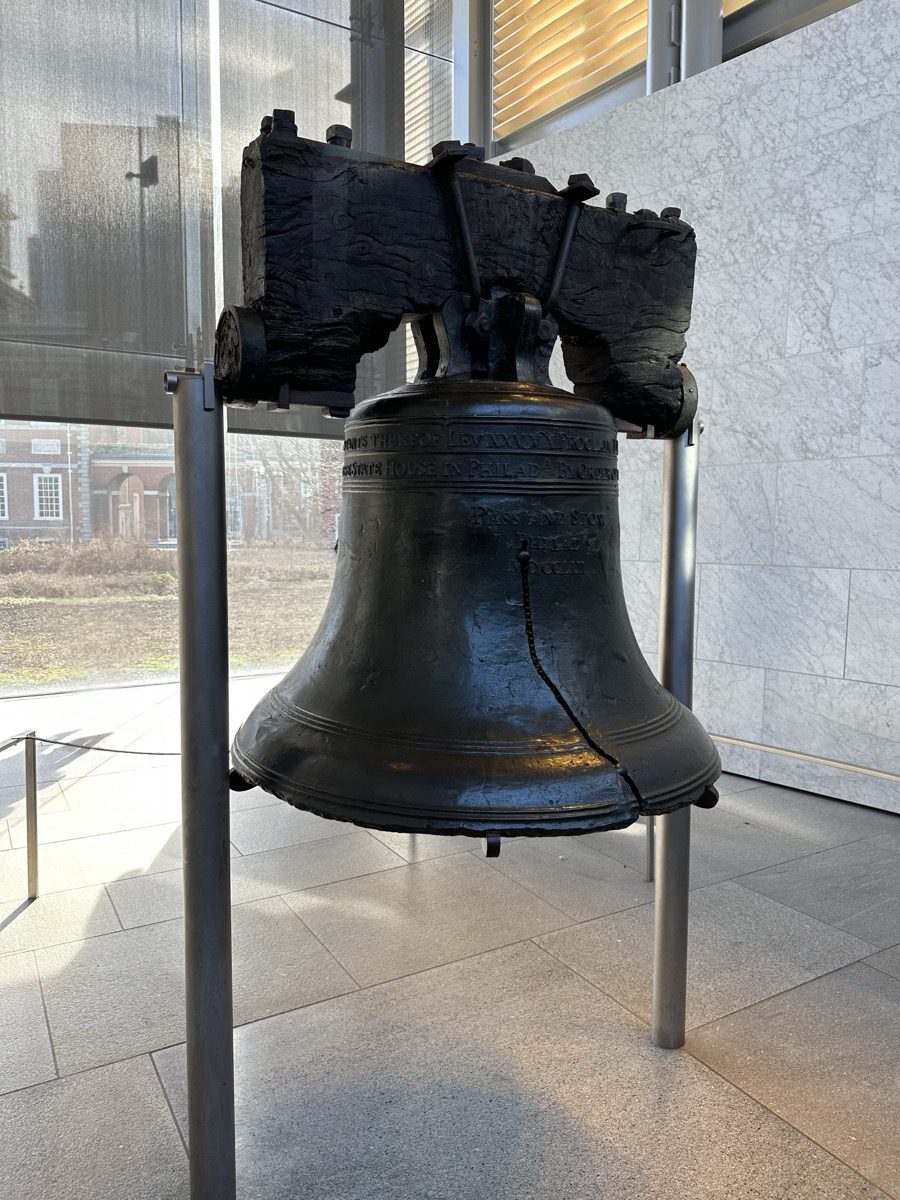
You can stand very close to it. There’s no glass between you and the bell — just a low railing, and then the thing itself. I stood close enough that I could read the inscription along the rim. I looked at the crack. It runs along the lower half of the bell, wider than I expected, the edges slightly raised. It didn’t look ancient. It looked like something that had broken and been left that way.
Standing there, I had a thought I couldn’t quite shake: why is this a symbol of liberty? It’s a bell. Someone cast it, hung it in a tower, rang it too hard, and it broke. At some point, people decided it meant something. But when, exactly? And who decided?
A Name Given Later
The name “Liberty Bell” didn’t exist when the United States declared independence. The bell was cast in 1751 and hung in the steeple of the Pennsylvania State House — which is what everyone called Independence Hall before it had that name. For decades, it was simply the State House Bell.
It was abolitionists in the 1830s who first called it the Liberty Bell. They were looking for a symbol, and they found one in the bell’s inscription: Proclaim Liberty Throughout All the Land. The name caught on slowly, and then it stuck. By the time the Civil War came, the bell had become what everyone now assumes it always was.
The crack is its own mystery. No one knows exactly when it first appeared. A repair record from 1846 documents a significant widening during a ceremonial ringing, but earlier accounts suggest the fracture existed before that. The bell may have been cracked for years before anyone thought to write it down. Today it cannot be rung. It sits, stationary, under a building designed specifically to display it — and people line up every day to stand in front of something that hasn’t made a sound in nearly two centuries.
“Liberty Bell” first appeared in print in 1835 — in an abolitionist pamphlet, nearly sixty years after independence. The bell was not rung on July 4th, 1776. It was rung on July 8th, when the Declaration was read aloud in public for the first time. No one knows exactly when the crack first appeared.
Across the Street
One street over, it is quiet.
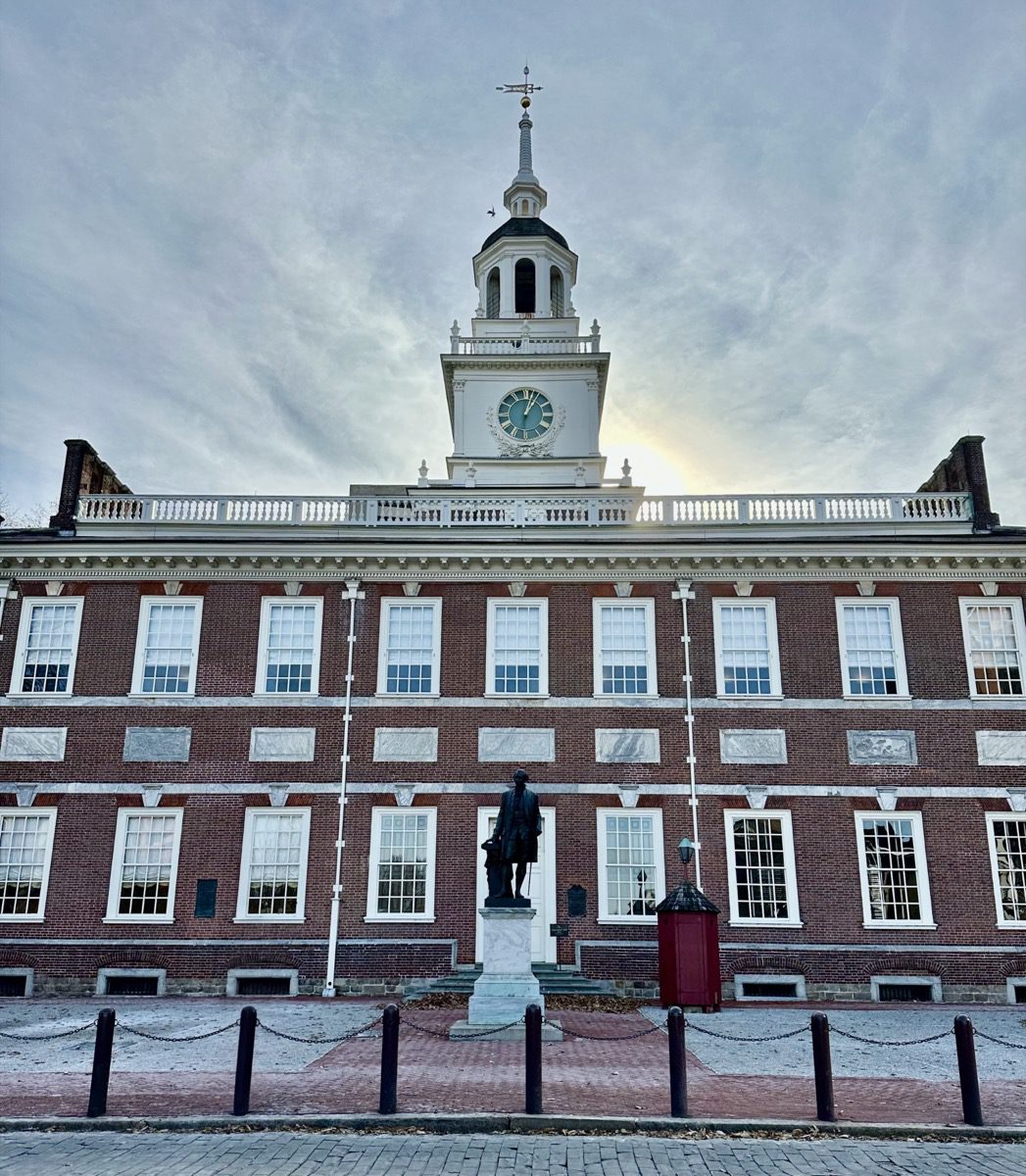
Independence Hall sits behind a low chain barrier, its red brick facade running the full width of the block. The clock tower rises from the center — white cupola, Roman numerals on the face, a weather vane at the top. The proportions are exact. The symmetry is total. On the day I visited, there were maybe a dozen people in the courtyard. A few were taking photographs. Most were just standing there, looking up.
To enter, you need a timed ticket and a guide. That’s why it’s quiet. The Liberty Bell Center is free and open; Independence Hall requires planning. So the crowd stays on the other side of the street, and Independence Hall — the place where the Declaration of Independence was actually debated, adopted, and eventually signed, where the Constitution was drafted eleven years later — gets the tourists who came prepared.
The Building That Didn’t Know
The building was not built for history. Construction began in 1732 as the Pennsylvania State House — a seat of colonial government, nothing more. It took twenty-one years to finish because the money kept running out. They built it in pieces, as funds arrived. There was no grand vision behind the facade. It was practical architecture for a practical purpose: a place for the assembly to meet.
It wasn’t called Independence Hall until 1824, when the Marquis de Lafayette — the French general who had fought alongside Washington — returned to America for a triumphal tour. Philadelphians welcoming him back began referring to the east room as “the Hall of Independence.” The name spread slowly, and then all at once, until the whole building wore it. Nearly fifty years had passed since the signing.
The choice of Philadelphia itself was not symbolic. It was logistical. When the Second Continental Congress needed to convene, this was one of the few cities with enough lodging to house dozens of delegates from across the colonies. The Pennsylvania Assembly lent them the room. It was the largest official building available — and that was enough.
The Rooms Where It Happened
The delegates didn’t stay in grand houses. They spread out across the boarding houses and taverns within walking distance of the State House. James Madison returned to a lodging house he had used before. Alexander Hamilton took rooms nearby. John Adams, who kept meticulous records of everything, noted that his accommodations cost thirty shillings a week — candles and firewood extra. He wrote to Abigail that Philadelphia’s hospitality was almost overwhelming: dinners with the city’s prominent families, wine flowing until seven in the evening, a schedule that left little room for the solemnity the history books would later assign to those months.
Benjamin Franklin, who lived close enough to walk, was brought to the State House by sedan chair each day. His gout had worsened. He sat in the assembly room and watched the younger men argue.
The windows were nailed shut during the Constitutional Convention of 1787. The delegates had agreed to secrecy — no one outside the room was to know what was being debated — and an open window was a risk. Philadelphia in August is brutal. They sat in that closed room through the heat, in wool coats, and wrote a constitution. It took four months.
One more thing worth knowing: the date most people associate with the signing of the Declaration of Independence is not quite right. July 4th, 1776, is when the document was adopted by the Continental Congress. Most historians now believe the actual signing took place on August 2nd, nearly a month later. Not everyone was present even then. Some delegates signed on different days. Some never signed at all.
The scene we carry in our heads — all the founders gathered, the room hushed, history being made in a single afternoon — did not happen that way.
The Declaration of Independence was likely signed on August 2nd, 1776 — not July 4th. July 4th was the date of adoption. Several delegates were absent on August 2nd and signed later; a few never signed at all. The famous painting by John Trumbull, often assumed to depict the signing, actually shows the committee presenting its draft — a different day entirely.
I stood in the courtyard for a while after. The symmetry of the building holds up at any distance. The clock in the tower still keeps time. Whatever was decided inside — over weeks and months, in a room with the windows nailed shut — has been holding up for 250 years. Independence Hall and the Liberty Bell are America’s anniversary, still standing.
The line was still there when I walked back. It will be there tomorrow.
Liberty Bell Center — Free admission, no tickets required. Open daily. Expect lines on weekends and in summer. The bell is visible through floor-to-ceiling glass even after hours. nps.gov/inde
Independence Hall — Free timed-entry tickets required March through December. Book in advance at recreation.gov ($1 processing fee). Guided tours only; tours run every 15–30 minutes. The West Wing does not require tickets.
Leave a Reply