That day, Manhattan was empty.
Wind chill of minus twenty-three. I know every season this city has. I had never seen streets like that. I needed to be inside something.
I opened a door — and the room was full. Same city, different world. Everyone quiet, all of them looking up.
The ceiling stopped me.
Frescoes. Gold lattice. A stained-glass skylight at the center. It felt like a Renaissance church. Someone had built this on 36th Street in 1906, when the rest of Manhattan was racing toward the sky.
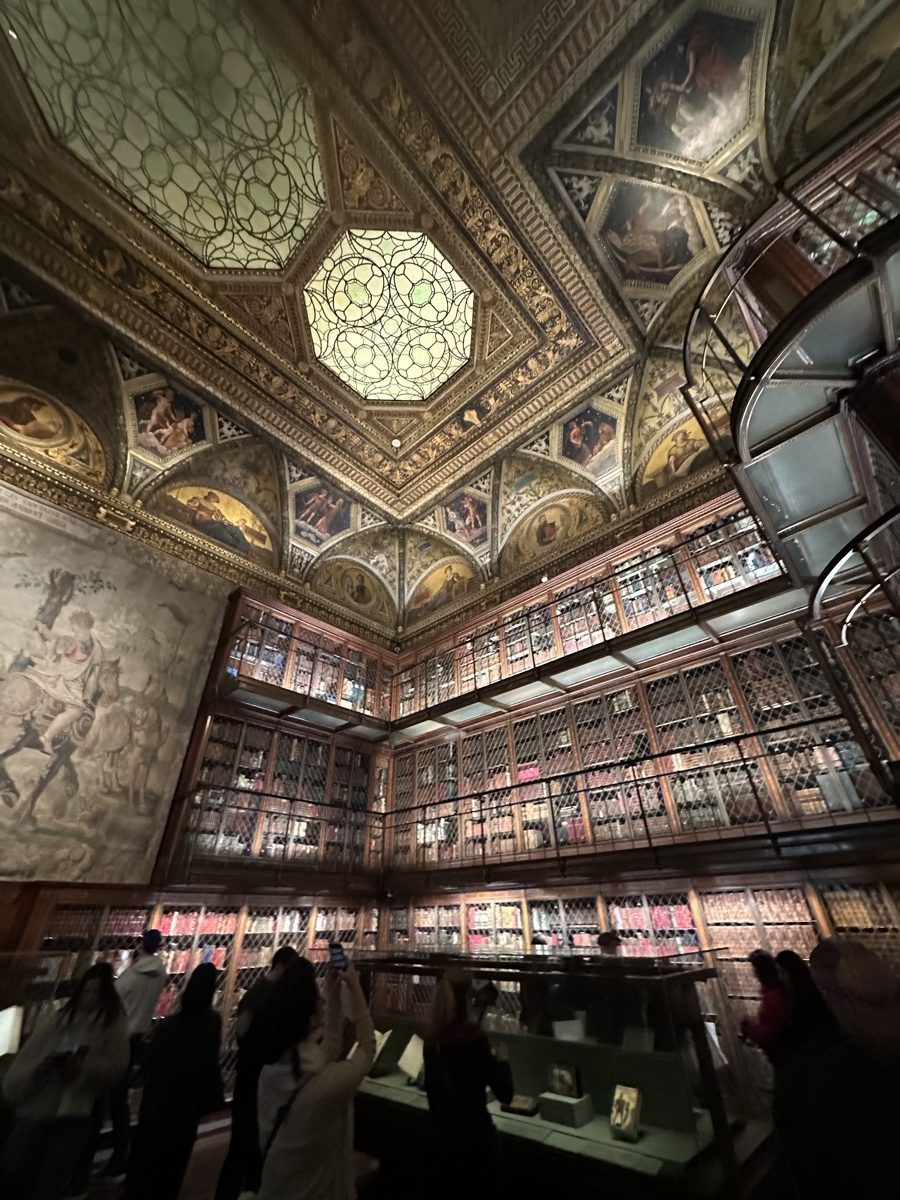
The Study
Pierpont Morgan built this as a private study. Not open to anyone. The man who ran the American economy from 23 Wall Street came here afterward — alone, after hours. Outside, he explained nothing. This room was no different.
He traveled Europe constantly, and everywhere he went he found things that had lasted centuries. Cathedrals. Monastery libraries. Illuminated manuscripts. The numbers on Wall Street change every morning — he knew that better than anyone. The space he made for himself looked like the Renaissance.
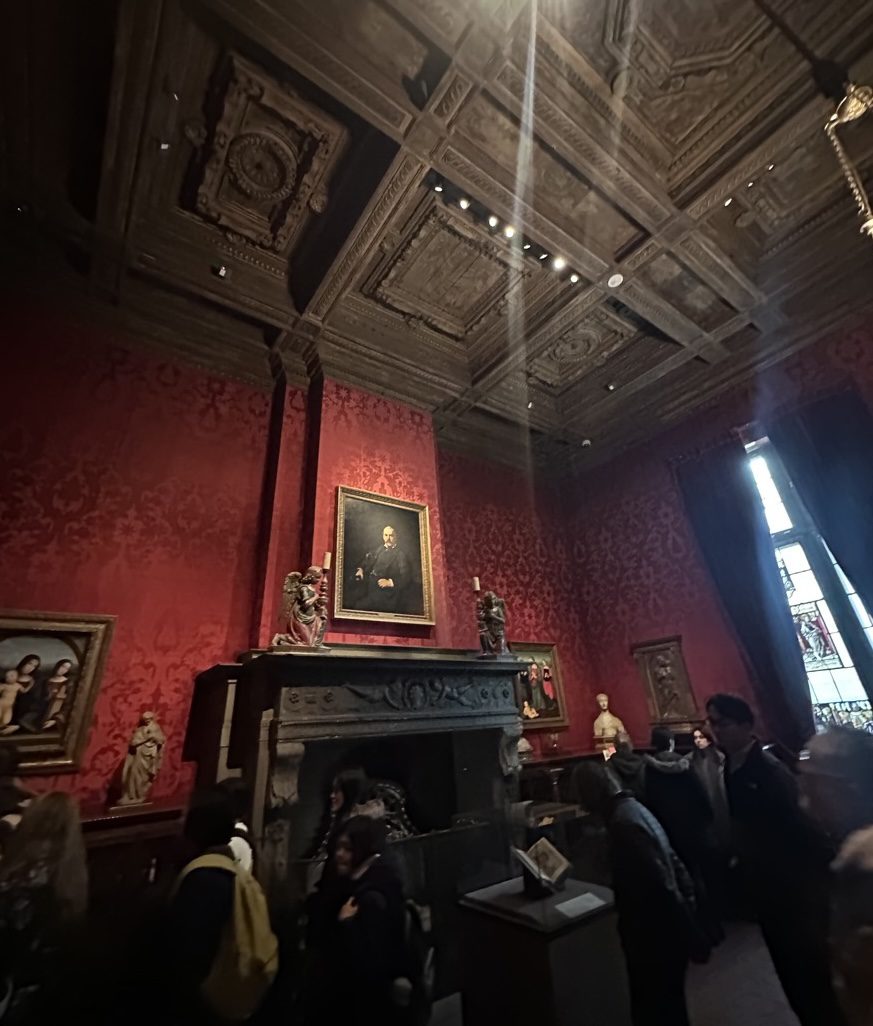
There is a red room. Walls in damask, a black marble fireplace, and above it — his portrait. Morgan sits with his hands folded. Not looking at the camera. Visitors took photographs in front of him. He still didn’t look.
What did he think about, alone in this room.
The Collection
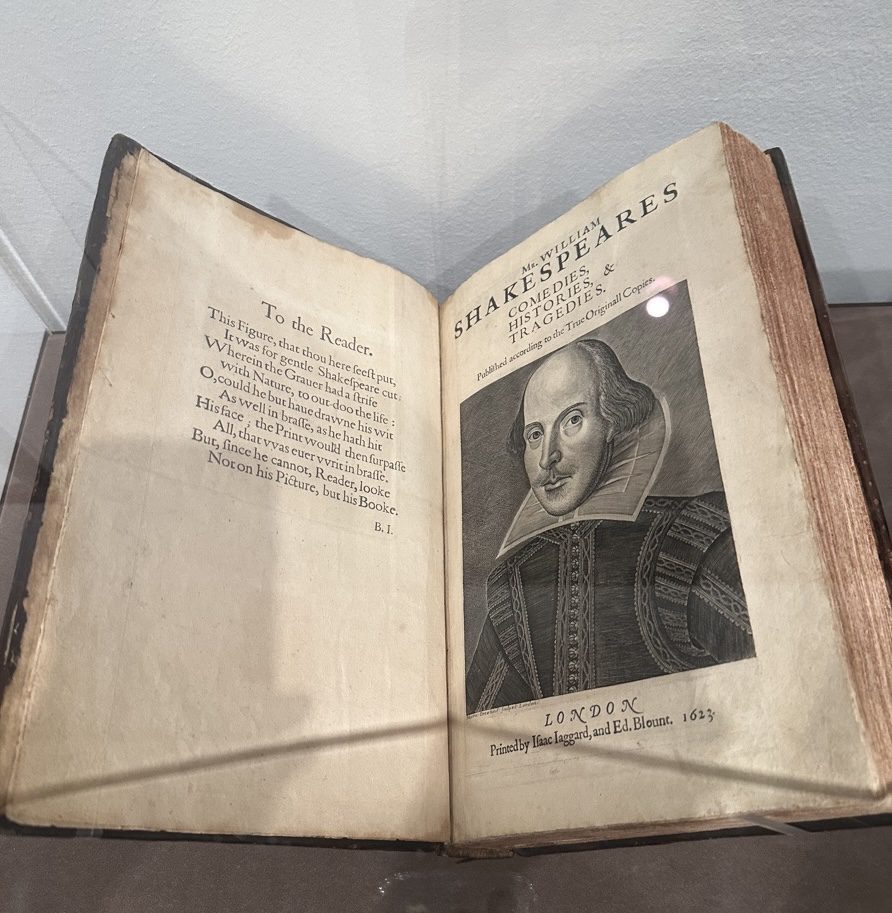
Inside a glass case, a book.
1623. Seven years after Shakespeare died, two of his fellow actors gathered his plays into a single volume — the first time anyone had. The First Folio. Two hundred and thirty-five copies survive in the world. One of them was here, in a building on 36th Street, because Pierpont Morgan bought it.
He bought Beethoven manuscripts. A medieval Book of Hours made in Paris in the 1460s. A handwritten letter from Einstein, dated 1917, working through what would become his theory of spacetime. A Gutenberg Bible. He acquired them from auction houses, from European aristocratic families, from monasteries that needed the money.
People called him a collector. He didn’t like the word. He preferred to say he was preserving things. Whether that distinction matters is hard to say. What’s harder to explain is this: the man who single-handedly stopped the Panic of 1907 — who the President telegrammed, who assembled twenty-five million dollars in ten minutes — came here in the evenings and turned the pages of a book printed four hundred years ago.
What was he looking for.
The Last Chapter
He died in a Rome hotel in 1913. When his estate was valued, people were surprised — more than half of it was art. Not securities. Not real estate. Paintings, books, musical scores. His son gave much of the collection to the Metropolitan Museum. The rest he left with this building, for whoever wanted to come.
The room he had never opened to anyone became, at last, a place anyone could enter.
I stood there for a long time, looking up. The ceiling hadn’t changed. The frescoes were the same ones he had chosen, the same ones he had sat beneath, alone, after the markets closed. Why he built his Renaissance here — on 36th Street, in a city that had no use for the past — I never worked out.
Maybe he hadn’t either.
The most consequential business deal in American history was negotiated in this building. In 1901, Morgan purchased Carnegie’s steel empire for $480 million — more than the entire annual budget of the United States government at the time. The company that emerged, U.S. Steel, was the world’s first billion-dollar corporation.
225 Madison Avenue, between 36th and 37th Streets · Subway: 6 to 33rd St
Tuesday – Sunday, 10:30am – 5pm · Friday until 8pm · Closed Monday
Admission $25 · Free every Friday 5–8pm (reservation required)
Leave a Reply