The meeting that moves the world economy is held here, they said. I assumed it would be state of the art. Real-time market screens. Microphones. Translation earpieces. Flags of every nation.
When I arrived in Jackson Hole — it was logs.
Rockefeller’s name had come this far.
The Lodge
Stone walls, wooden beams, low ceilings. A taxidermied grizzly bear in the lobby. A European central bank governor wheeling luggage in beside an American tourist who rode up on a Harley. A lodge inside a national park. Open to anyone.
For the venue of the world’s most influential economic symposium — it was too modest.
I stood inside for a long time. Then I saw the window.
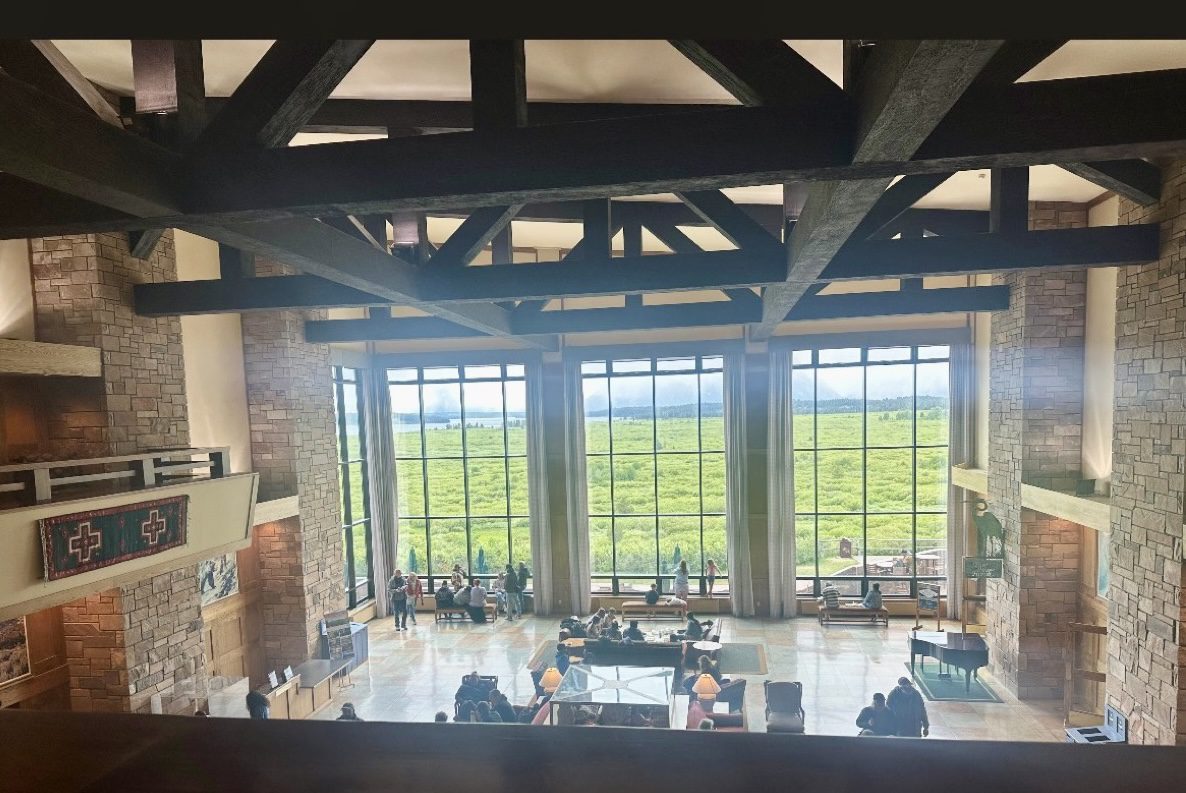
The Window
I had nothing to say.
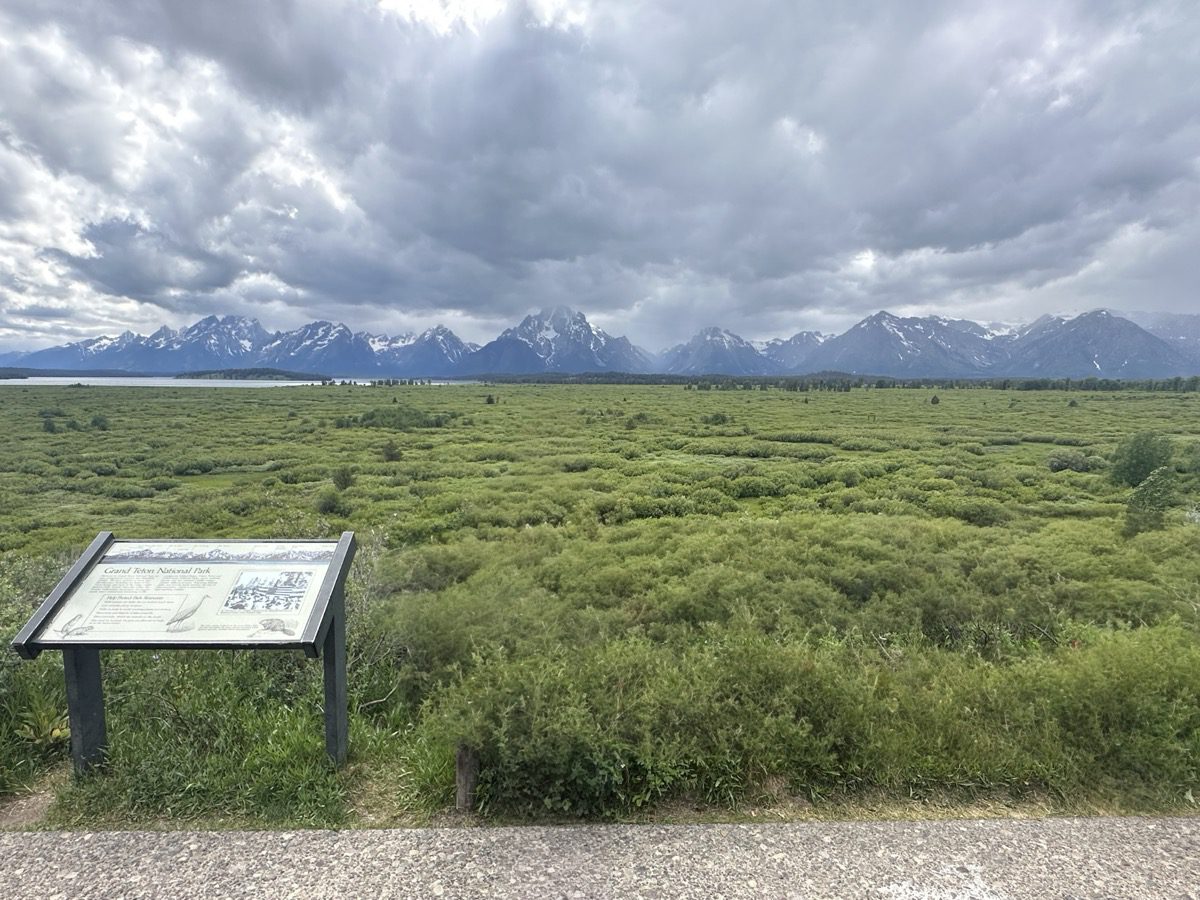
Beyond the floor-to-ceiling glass, Grand Teton stood. That day it was overcast. The three peaks weren’t completely clear. It didn’t matter. It was overwhelming — one of the most spectacular views I have ever seen.
The meeting that moves the world economy is, in front of those mountains, just a small building.
The Federal Reserve’s symposium has been held in Jackson Hole since 1982. The Kansas City Fed wanted to invite then-Fed Chair Paul Volcker to attend. Volcker was an avid fly fisherman. Jackson Hole is famous for fishing. “If we hold it there, he’ll come” — that was how it started. Volcker showed up to the opening dinner in his fishing gear. That became a tradition lasting more than forty years. Today, representatives from 70 countries attend. One economist’s hobby shaped where the world’s most watched central banking conference is held.
The Land
But how did this national park come to exist?
1926. A man came to this valley for the first time. Yellowstone superintendent Horace Albright took him on a tour of Jackson Hole. The man was overwhelmed by what he saw. He made a decision on the spot — he would buy this land and turn it into a national park.
That man was John D. Rockefeller Jr.
The son who inherited his father’s name. But he hid his own. He created a shell company — the Snake River Land Company. Nobody knew Rockefeller was behind it. If the name got out, land prices would explode. Quietly, over twenty years, he assembled 33,000 acres.
Then he tried to donate it to the federal government.
The Wyoming state legislature blocked it for twenty years. “Rockefeller’s people are trying to monopolize our land,” they said. In 1942, Rockefeller issued an ultimatum — “If the government won’t take it, I’ll sell it on the open market.” President Roosevelt designated it a national monument. In 1950, under President Truman, it became a full national park.
The road at the entrance to this national park is now called the John D. Rockefeller Jr. Memorial Parkway. He tried to hide his name. History remembered it anyway.
The Irony
Then something happened.
It became a national park. Ninety-seven percent of the land became public. Only three percent remained available for private ownership. With supply so limited, land prices exploded. Billionaires poured into Wyoming — no state income tax, no corporate tax.
Teton County is now the highest per capita income county in the United States. The top one percent earns 221 times more than the bottom ninety-nine. Median home price: seven million dollars. A billionaire’s tax haven.
He tried to protect nature — and created a paradise for the ultra-wealthy.
Was this what Rockefeller wanted?
Leave a Reply